Torsional Rigidity in Vehicles Explained
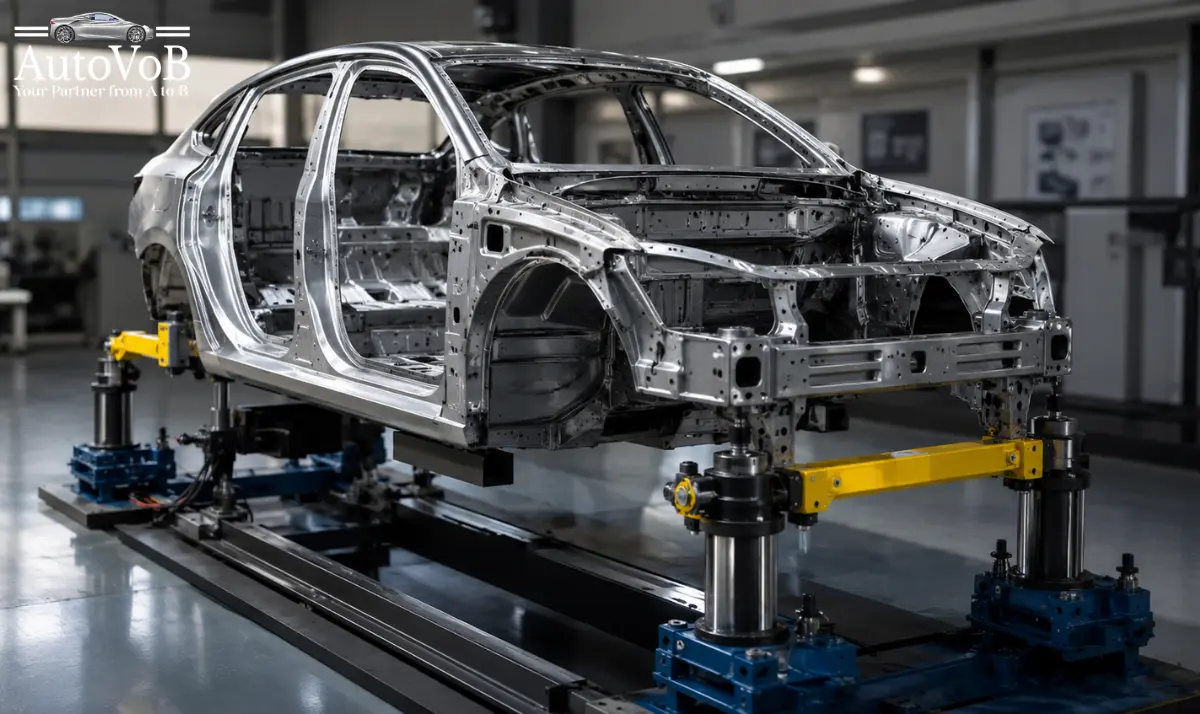
When people compare cars, they often talk about horsepower, acceleration, fuel economy, or safety ratings. Yet one of the most important engineering qualities of a vehicle rarely appears in advertisements. That quality is Torsional Rigidity.
It is the hidden strength that determines how solid a car feels on the road. It affects handling, ride comfort, safety, and even how quiet the cabin remains over years of use.
Modern vehicles are expected to be lighter, safer, and more comfortable at the same time. Achieving all three goals depends heavily on the structural stiffness of the chassis. This is where Torsional Rigidity becomes one of the most important measurements in automotive engineering.
What is Torsional Rigidity?
Torsional Rigidity is the resistance of a structure to twisting when a rotational force is applied to it.
In a car, twisting occurs when one corner of the vehicle experiences a different load than the others. Imagine driving over a speed breaker diagonally, where one wheel climbs before the others. The chassis naturally wants to twist under this uneven force.
A vehicle with high Torsional Rigidity resists this twisting and keeps its body shape stable. A vehicle with low rigidity flexes more, which affects the suspension, steering, and overall driving feel.
Engineers usually measure this property in Newton meters per degree, written as Nm/deg. The higher the number, the stiffer the vehicle structure. Modern passenger cars typically achieve values ranging from around 9,000 to 18,000 Nm/deg, while high performance sports cars often exceed 30,000 Nm/deg.
Why Does a Car Twist?
No road is perfectly flat.
Potholes, speed bumps, uneven surfaces, and cornering forces constantly apply different loads to each wheel. If the chassis is not stiff enough, these forces twist the body structure.
This twisting changes how the suspension behaves because part of the movement is absorbed by the body itself instead of the springs and dampers.
Ideally, engineers want the suspension to handle road imperfections while the chassis remains stable. A stiff structure allows the suspension to work as intended and deliver predictable performance.
Why Torsional Rigidity Matters
Many people assume that chassis stiffness is important only for sports cars. In reality, every vehicle benefits from a rigid structure.
Better Handling
When the chassis resists twisting, the suspension geometry stays consistent.
This means the wheels maintain better contact with the road during cornering, braking, and acceleration. Steering becomes more precise because the driver's input goes directly to the wheels instead of being partially absorbed by chassis flex.
A rigid chassis also allows engineers to tune the suspension more accurately, leading to sharper handling and greater confidence behind the wheel.
Improved Ride Comfort
A stiff chassis can actually make a car more comfortable.
That sounds counterintuitive, but it makes sense when you think about it. If the body flexes excessively, vibrations travel through the cabin and create unwanted movement.
When the structure remains stable, the suspension absorbs bumps more effectively. The result is a smoother and more controlled ride.
Passengers often describe cars with high Torsional Rigidity as feeling solid or planted, even on rough roads.
Better Safety
Crash safety depends on how well a vehicle manages energy during an impact.
A strong body structure helps direct crash forces away from passengers and into designated crumple zones.
High Torsional Rigidity does not automatically guarantee better crash performance, but a stiff and well engineered chassis provides a stronger foundation for modern safety systems.
This is one reason why manufacturers invest heavily in body structure design and advanced materials.
Reduced Noise and Vibrations
Have you ever sat in an older car that creaks or rattles over bumps?
This often happens because years of repeated twisting and flexing weaken joints and connections.
Vehicles with greater structural stiffness experience less body movement. As a result, they tend to remain quieter over time, with fewer squeaks and vibrations inside the cabin.
How Is Car Torsional Rigidity Measured?
Measuring car torsional rigidity is a carefully controlled engineering process.
Typically, engineers secure one end of the chassis and apply an upward or downward force at another point, usually near the suspension mounting areas.
They then measure the amount of twist that occurs.
The basic formula is:
Torsional Rigidity = Applied Torque ÷ Angular Twist
The result is expressed in Newton meters per degree.
For example, if a chassis requires 20,000 Newton meters of torque to twist by one degree, its torsional rigidity is 20,000 Nm/deg.
Today, manufacturers rely heavily on computer simulations and finite element analysis before validating their designs through physical testing.
What Makes a Vehicle More Rigid?
Several factors influence Torsional Rigidity.
Body Structure Design
The shape of the chassis plays a major role.
Closed sections and reinforced joints resist twisting better than open structures. Modern unibody vehicles are designed with carefully engineered load paths that distribute forces efficiently across the entire body.
Advanced Materials
High strength steel remains the most common material used in car bodies.
However, manufacturers increasingly use aluminum, magnesium, and carbon fiber to increase stiffness without adding unnecessary weight.
Carbon fiber monocoque structures are especially popular in supercars because they provide exceptional rigidity while remaining lightweight.
Additional Reinforcements
Cross members, strut braces, bulkheads, and reinforced floor sections all help increase structural stiffness.
These components connect different areas of the chassis and reduce flex under load.
Many performance cars include additional bracing specifically to improve car torsional rigidity and handling precision.
Can Too Much Rigidity Be a Problem?
Higher stiffness is generally desirable, but there is a practical limit.
A chassis that is extremely rigid may require more material or expensive manufacturing techniques, increasing cost and weight.
Engineers constantly search for the right balance between rigidity, weight, cost, and crash safety.
Research on racing and performance vehicles has shown that beyond a certain point, increasing chassis stiffness delivers diminishing returns. Suspension tuning and weight distribution then become more important factors in improving lap times and vehicle dynamics.
The goal is not maximum stiffness at any cost. The goal is achieving the optimum stiffness for a vehicle's intended purpose.
Why Electric Vehicles Need High Torsional Rigidity
Electric vehicles have made chassis rigidity even more important.
Battery packs are heavy and are often mounted beneath the floor. This changes how loads travel through the vehicle structure.
Manufacturers use the battery pack as a structural element in many EVs, helping increase overall stiffness.
A rigid structure is especially valuable in EVs because it improves handling, reduces vibrations, and helps compensate for the additional weight of large battery systems.
It also contributes to a quieter cabin, something EV buyers expect due to the absence of engine noise.
Is There an Ideal Torsional Rigidity Number?
There is no universal target.
A compact hatchback, luxury sedan, pickup truck, and supercar all have different requirements.
Sports cars prioritize handling precision and therefore aim for very high stiffness values.
Luxury cars focus on balancing rigidity with comfort and refinement.
Commercial vehicles may require more flexibility depending on how they carry loads.
Engineers evaluate the intended use of the vehicle and then design the structure accordingly. The ideal number is not necessarily the highest one. It is the one that delivers the best overall performance.
Also Read: All About Car Chassis: Types and Its Benefits
Final Thoughts
Torsional Rigidity is one of those engineering concepts most drivers never think about, yet they experience its effects every day.
It influences how a car corners, how stable it feels at highway speeds, how comfortable the ride is, and even how quiet the cabin remains after years of use.
Modern vehicles are stronger and more refined than ever because manufacturers place enormous importance on structural stiffness. Whether it is a family SUV, an electric sedan, or a high performance sports car, car torsional rigidity plays a major role in shaping the driving experience.
The next time you hear someone describe a car as solid, planted, or well built, chances are they are feeling the benefits of excellent Torsional Rigidity, even if they do not realize it.
FAQs
1. What is Torsional Rigidity in a car?
Torsional Rigidity is a vehicle's ability to resist twisting when uneven forces act on the chassis. Higher rigidity helps maintain structural stability, allowing the suspension and steering to work more accurately and improving ride quality.
2. Why is car torsional rigidity important?
Car torsional rigidity affects handling, ride comfort, cabin refinement, and safety. A stiffer chassis flexes less, giving the suspension a stable platform and helping the vehicle feel more controlled on uneven roads and during cornering.
3. How is Torsional Rigidity measured?
Engineers apply a twisting force to the chassis and measure the resulting angle of twist. The torque is divided by the twist angle, producing a value expressed in Newton meters per degree, which indicates chassis stiffness.
4. Does higher Torsional Rigidity improve safety?
A rigid chassis creates a stronger foundation for crash structures and helps manage impact forces effectively. While safety depends on many factors, higher structural stiffness generally supports better crash performance and occupant protection.
5. Are electric vehicles more rigid than regular cars?
Many electric vehicles have very high torsional rigidity because their battery packs are integrated into the floor structure. This design increases chassis stiffness, improves handling, reduces vibrations, and enhances overall driving refinement.
AutoVoB makes buying and selling vehicles worldwide simple.