Inboard vs Outboard: Which Boat Engine Should You Buy?
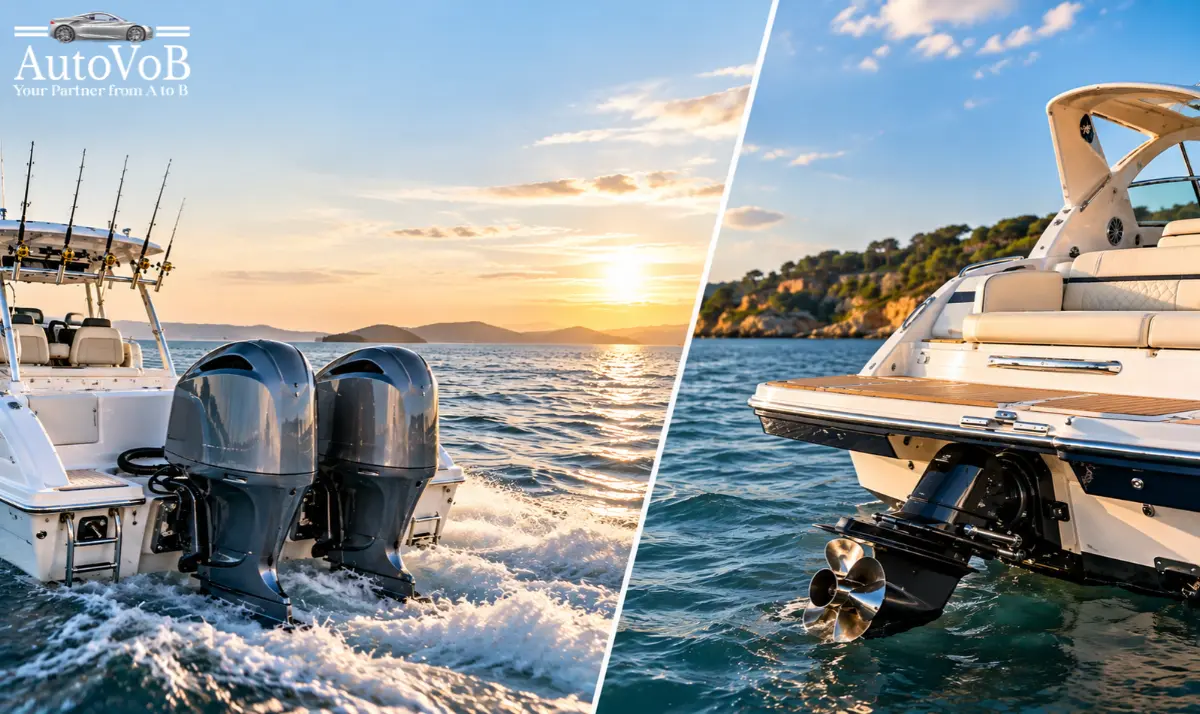
If you're shopping for a family boat, the inboard vs outboard decision will shape what you pay, how you maintain the boat and what you can do on the water more than the hull color ever will. My short answer is that most buyers are better off with an outboard motor. A few aren't, and the reasons are specific enough to sort out before you sign anything.
What inboard vs outboard really means
The word inboard covers two different setups, and mixing them up causes most of the confusion in this debate. A true inboard puts the engine inside the hull and turns a fixed propeller under the boat, with a separate rudder handling steering. You'll find that layout mostly on dedicated watersports tow boats and some larger cruisers.
The one most family boats actually use is the sterndrive, also called an inboard/outboard or I/O. An automotive style engine sits inside the boat, and a steerable, trimmable drive unit hangs off the transom. That's why sterndrive vs outboard is the comparison most people end up making when a dealer offers both on the same bowrider or deck boat.
An outboard motor is a complete marine engine bolted to the outside of the transom. Outboards run from 2 horsepower kickers up to 600 horsepower, and for family boating the usual range is 90 to 300. Sterndrives are currently offered from 200 to 430 horsepower.
Why the outboard motor wins most arguments
Weight is the starting point. An outboard is lighter than a sterndrive, and that weight sits behind the boat instead of inside it. The practical result is that a 200 horsepower outboard will usually match the performance of a 250 horsepower sterndrive. Less weight and a more efficient design also mean better fuel economy, so the horsepower number on the cowling matters less than what the boat does with it.
Space is the second win. With the whole engine outside the hull, you get seating or storage where an engine box would have been. Newer outboards are also cleaner, quieter and more powerful than the ones sold a few years ago, which is why they've spread onto cabin cruisers and day boats that once came with inboard power. Some of those boats now carry three or four outboards that together make more power than the biggest pair of sterndrives on sale.
Then there's salt water. Most outboards tilt fully out of the water, and most sterndrives don't. If the boat sits on a mooring or at a dock all week, tilting the drive clear stops marine growth and corrosion from working on it. For a boat that lives in the water, I'd treat that as a bigger deal than most buyers do.
Sterndrive vs outboard: what the extra complexity buys you
The sterndrive's best argument is how the boat looks and lives. The drive sits low on the transom, so you get a full-width swim platform with no motor in the way, and the engine can sit under a padded sun lounge. People who spend the day anchored and swimming often like that layout more than they expected.
Price is the other point in its favor, though the gap is small. An outboard boat often costs 2 to 4 percent more than a similar sterndrive boat, even with less rated horsepower, because you're paying for performance rather than the number on the engine. That difference is too small to decide anything on its own.
Wakesurfing is where the sterndrive vs outboard question gets blunt. Behind a traditional sterndrive or an outboard, the spinning propeller sits too close to the rider, which makes the sport unsafe and, on most waters, illegal. Drives with forward-facing propellers, such as Volvo Penta's Forward Drive or MerCruiser's Bravo Four, solve that problem. For plenty of boating families, that alone settles the choice.
Maintenance and ownership costs
The National Marine Manufacturers Association notes that both types need similar annual maintenance. The difference is access. With an outboard on a trailer, you stand next to the engine and work on it in daylight. With an inboard or sterndrive, you're under an engine hatch in cramped quarters. Over a few seasons, that access gap is what drives the inboard vs outboard cost debate. A job you can do yourself in an afternoon costs more when it needs a shop and a technician who knows the drive.
An outboard is also self-draining, so many owners handle their own off-season service. In cold climates, most sterndrive cooling systems need an antifreeze flush, and that's usually a job for a marine service center.
Sterndrives carry wear items that outboards simply don't have. The rubber bellows around the exhaust, U-joint and shift cable need a look every year, and when one cracks, water gets into the boat. Replacement intervals vary by manufacturer and model, so follow your manual. One MerCruiser service schedule calls for greasing the gimbal bearing every 100 hours or once a year, whichever comes first. Modern drives resist corrosion far better than older ones, and many offer closed cooling that keeps most salt water out of the engine. The old horror stories are mostly outdated. The chores are not.
Repowering matters too. When an outboard wears out, swapping in a new one is relatively simple. Repowering an inboard boat is possible, but it's a bigger project, and on an older boat that can shape what the boat is worth.
Diesel inboards are the exception to the idea that outboards are always cheaper to own. Gasoline marine engines are commonly quoted at around 1,500 to 2,000 hours before major work, while a well-maintained diesel often runs several times longer. For a heavy cruiser that racks up hours, that longevity can justify the higher purchase and service costs.
Safety and rules that change by country
Every gasoline engine produces carbon monoxide, and exhaust from inboard or outboard engines can build up around a boat, especially at slow speed. The US Coast Guard warns that teak surfing, dragging someone behind a slow boat or letting people sit on the swim platform while the engine runs puts them directly in the path of that exhaust. Some jurisdictions have banned teak surfing outright. Whichever engine you pick, fit a marine rated carbon monoxide detector and keep people off the platform when the engine is running.
Wakesurfing limits, carbon monoxide rules, emissions standards, registration and licensing requirements all differ from one country or state to the next. This article reflects current data, and governments can change those rules at any time, so check with your local boating authority before you buy or modify anything.
Also Read: Yacht vs Boat: Which is Right for Dubai Life?
How to decide
Pick an outboard motor if the boat will spend time in salt water, if you want to do some of your own service, or if fuel use and cockpit space matter to you. That describes most buyers. A sterndrive suits people who value the swim platform and sun lounge over easy maintenance, and it's worth looking at forward-facing drives if wakesurfing is on the list. A true inboard belongs on a boat that tows skiers and surfers all season, or on a heavy diesel cruiser that will log serious hours.
Used boats add a wrinkle. Many compact pre-owned runabouts carry an older sterndrive, such as a 130 horsepower unit that's no longer in production, so check parts and service support before the low price talks you into it.
Before you commit, ask for a sea trial on the exact boat in each configuration. Then ask the dealer what a drive service costs and when the bellows were last replaced.
For most buyers I'd still pick the outboard, just not by default. Match the engine to your normal Saturday on the water, and the spec sheet will matter a lot less.
FAQs
1. Is an outboard motor better than an inboard?
Better depends on use, but for most family boats an outboard motor wins. It weighs less, usually burns less fuel, frees up cockpit space and is easier to service and replace. Inboards make sense for tow boats and heavy diesel cruisers that log long hours.
2. What is the difference between a sterndrive and an outboard?
A sterndrive, also called an inboard/outboard, keeps an automotive style engine inside the hull and uses a steerable drive on the transom. An outboard puts the entire engine outside the boat. The sterndrive gives a cleaner swim platform, the outboard gives easier service.
3. Which is cheaper to maintain, inboard or outboard?
Outboards are usually cheaper and easier to maintain because you can reach the whole engine without opening an engine hatch. Sterndrives need bellows inspection, gimbal bearing greasing and, in cold climates, an antifreeze flush of the cooling system each season.
4. Can you wakesurf behind an outboard or a sterndrive?
Not safely. A propeller spinning behind a traditional sterndrive or an outboard sits too close to the rider, and wakesurfing is illegal on most waters with those setups. Drives with forward facing propellers or a true inboard tow boat are built for the sport.
5. Is an outboard better in salt water?
Often, yes. Most outboards tilt fully out of the water, which stops marine growth and corrosion from attacking the drive while the boat sits at a dock or mooring. Most sterndrives can't tilt completely clear, though modern ones resist corrosion far better than older units.
Don't miss out on more such informative content; keep following AutoVoB Blogs.