Is DC Fast Charging Killing Your EV Battery?
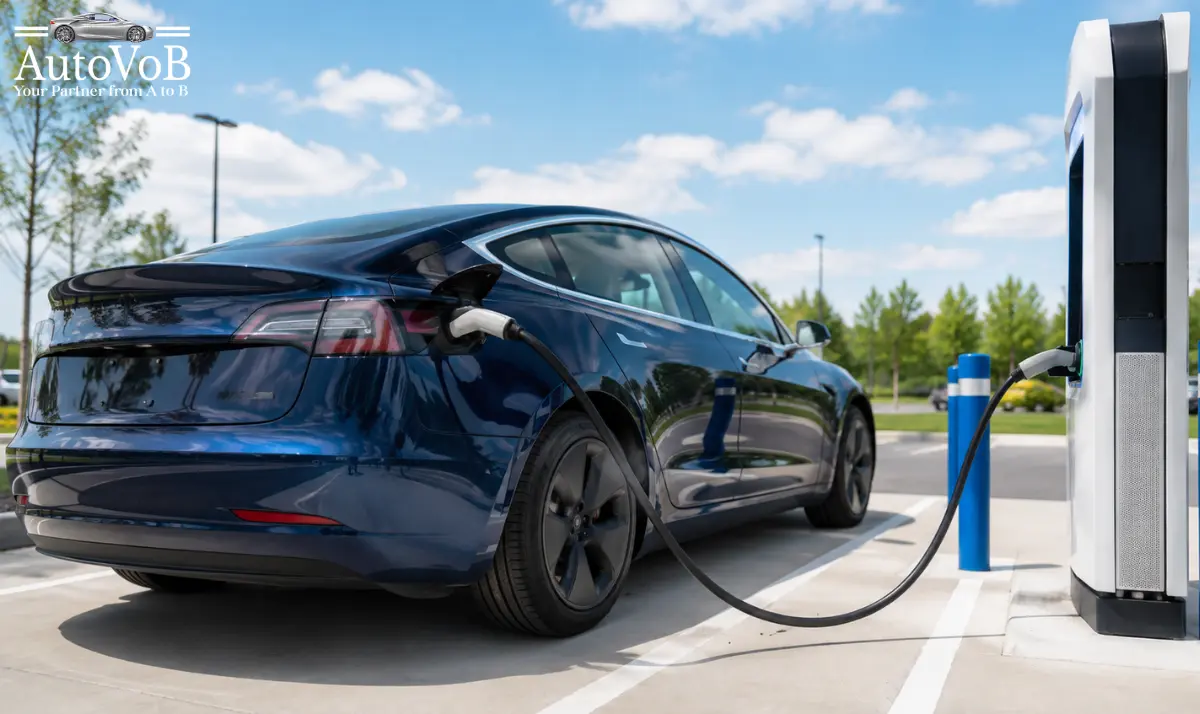
You pull into a highway charging stop, plug into a DC fast charger, and in 25 minutes you're back on the road with 80% charge. It feels like a win. But somewhere in the back of your head, there's that nagging question, is doing this regularly going to cost you battery life down the road?
The short answer is: it depends. The long answer is more interesting.
What Actually Happens Inside Your Battery During DC Fast Charging
DC fast chargers bypass the vehicle's onboard charger to supply direct current at high power levels, often 50 kW to 350 kW or more. Unlike Level 1 or Level 2 charging, which may take several hours, DC fast chargers can restore 80% capacity in 20 to 40 minutes.
That speed comes at a price, not always a dramatic one, but a real one. When charging too fast, lithium ions can't intercalate into the anode graphite quickly enough. Instead, they plate out as metallic lithium on the anode surface, a process that's largely irreversible. This loss of lithium inventory permanently reduces the battery's usable capacity and is confirmed as the primary degradation pathway for DC fast charging at high charge rates by multiple peer-reviewed studies from 2024 to 2025.
There's also a secondary effect: heat. Fast charging generates significant heat, accelerating side reactions that grow the Solid Electrolyte Interphase layer thicker over time. That layer is supposed to be protective, but when it keeps expanding, it reduces how efficiently ions move through the battery.
What the Real-World Data Actually Shows
This is where it gets more reassuring than the chemistry might suggest.
Geotab's 2025 analysis of over 22,700 electric vehicles across 21 different models confirms that modern EV batteries are built to last beyond a typical vehicle's service life. But the same study flags a warning: vehicles relying on high-power DC fast charging above 100 kW experience degradation rates of up to 3.0% per year, roughly double that of vehicles primarily using lower-power charging.
The updated Geotab analysis shows an average annual battery degradation rate of 2.3%, compared to 1.8% in their 2024 findings. The increase reflects changes in how EVs are being used, notably a growing reliance on high-power DC fast charging.
On the other end, a 2024 study of 13,000 Tesla vehicles from 2012 to 2023 found no statistically significant difference in battery range between vehicles that used DC fast chargers for more than 70% of charging sessions versus those that used them for less than 30%. That's a notable finding, though it mostly covers newer models and may not apply equally to older battery packs.
The honest takeaway: occasional DC fast charging is not going to destroy your battery. Daily reliance on it, especially at high power levels and in hot climates, is a different story.
Battery Chemistry Makes a Huge Difference
Not all EV batteries respond the same way to fast charging, and this is the part most people skip over.
Battery chemistry matters enormously. LFP cells tolerate fast charging far better than NMC or NCA. LFP batteries handle fast charging with near-zero extra degradation, while NMC batteries show the steepest decline under heavy fast-charging use.
Modern LFP chemistries are typically rated for 3,000 to 5,000 full equivalent cycles before dropping to around 80% of original capacity, versus roughly 1,500 to 2,500 cycles for NMC.
If your EV runs on LFP, like the standard-range Tesla Model 3 or most BYD models, you can be considerably more relaxed about fast charging. If it runs on NMC, it pays to be a bit more strategic.
When DC Fast Charging Becomes a Problem
The issue isn't really the charger. It's the combination of factors that stack up against the battery at the same time.
EV battery degradation accelerates when vehicles spend more than 80% of their time at very high or very low states of charge. EVs operating in hot climates also degrade around 0.4% faster per year than those in mild conditions, though charging power has a greater overall impact on battery health overall.
Temperature, charge window, and overall care matter as much as the absolute kilowatt number on the charger. The biggest concern arises when high-power charging is combined with heat and a high state of charge.
So hitting a 350 kW charger in summer, starting at 5% and charging to 100%, repeatedly, that's where the damage compounds. A road trip stop where you charge from 20% to 75% on a moderate day? Far less concerning.
The Hot Climate Factor
This matters especially if you're driving in regions like the GCC, South Asia, or the American Southwest. LFP maintains performance significantly better in hot weather above 40°C, while NMC requires active cooling to prevent accelerated degradation at sustained high temperatures.
Older EVs without active thermal management suffered most in heat. The early Nissan Leaf, with no active thermal management, degraded at 4.2% per year in warm states like Arizona, nearly double the Tesla Model S rate of 2.3% per year with liquid cooling. Modern EVs have improved considerably, but the underlying chemistry is still sensitive to sustained heat.
If you live somewhere hot and rely heavily on DC fast charging, keeping your state of charge within a moderate range and not fast charging an already warm battery is worth the discipline.
How to Use DC Fast Charging Without Wrecking Your Battery
None of this means you should avoid DC fast charging. It means you should use it intelligently.
Keep the battery at 20 to 80% charge for daily use to avoid faster degradation. Charging to 100% regularly is best avoided unless you need the full range for a long journey.
If you must DC fast charge frequently, staying between roughly 10 and 70% state of charge and letting the car manage pack temperature is more important than the headline kilowatt number on the charger.
Reserve DC fast charging for road trips and situations where time genuinely matters. For daily commuting and routine top-ups, Level 2 AC charging is kinder to the battery and cheaper on the electricity bill.
Some smart charging systems can adjust charging rates based on battery temperature, which helps reduce thermal stress during rapid charging sessions. If your car supports scheduled or smart charging, use it.
Also Read: Problems With Electric Cars: What Owners Don’t Always Hear
The Verdict
DC fast charging is not inherently bad for your EV battery. Used occasionally and sensibly, it adds only around 0.1% extra annual capacity loss compared to AC-only charging, a number that's negligible for most drivers. The technology has improved, batteries are better managed, and modern thermal systems absorb most of the stress.
Where it becomes a problem is consistent, high-power fast charging in hot conditions, charging to full repeatedly, and ignoring your battery's preferred operating window. That combination, sustained over years, will show up in reduced range.
Use fast charging as the tool it was designed to be: for long trips and time-sensitive situations. Keep Level 2 as your everyday default. Know your battery chemistry. And don't obsess over every fast charge session, that's not the point either.
Your battery is tougher than the fear-mongering suggests. But it's not invincible. Treat it like something worth looking after, and it will hold up for a very long time.
FAQs
1. What is DC fast charging?
DC fast charging is a high-power charging method that delivers direct current directly to an EV battery, bypassing the onboard charger. It typically ranges from 50 kW to 350 kW and can charge most EVs to 80% in 20 to 40 minutes.
2. Is DC fast charging bad for your EV battery?
Not when used occasionally. Real-world data shows it adds roughly 0.1% extra annual capacity loss for moderate users. Heavy daily reliance, especially above 100 kW in hot climates, can double the normal degradation rate of around 2.3% per year.
3. How often should I use DC fast charging?
Use it for road trips and time-sensitive situations. For daily charging, Level 2 AC is better for battery longevity. Limiting DC fast charging to a few times per month keeps degradation within a manageable range for most EV owners.
4. Does battery chemistry affect how DC fast charging impacts degradation?
Yes, significantly. LFP batteries handle fast charging with near-zero extra degradation. NMC batteries are more sensitive, particularly when charged at high speed in hot temperatures or kept at a high state of charge for extended periods.
5. What state of charge range should I maintain to protect battery health?
Keep your battery between 20% and 80% for everyday use. Avoid sitting at 100% unless you need the full range for a long trip. Staying in this window reduces stress on the cells and slows long-term capacity loss noticeably.
Explore more automotive insights and EV content on the AutoVoB blogs.
AutoVoB is built for global vehicle buying and selling.