Crossover vs SUV: The Better Choice?
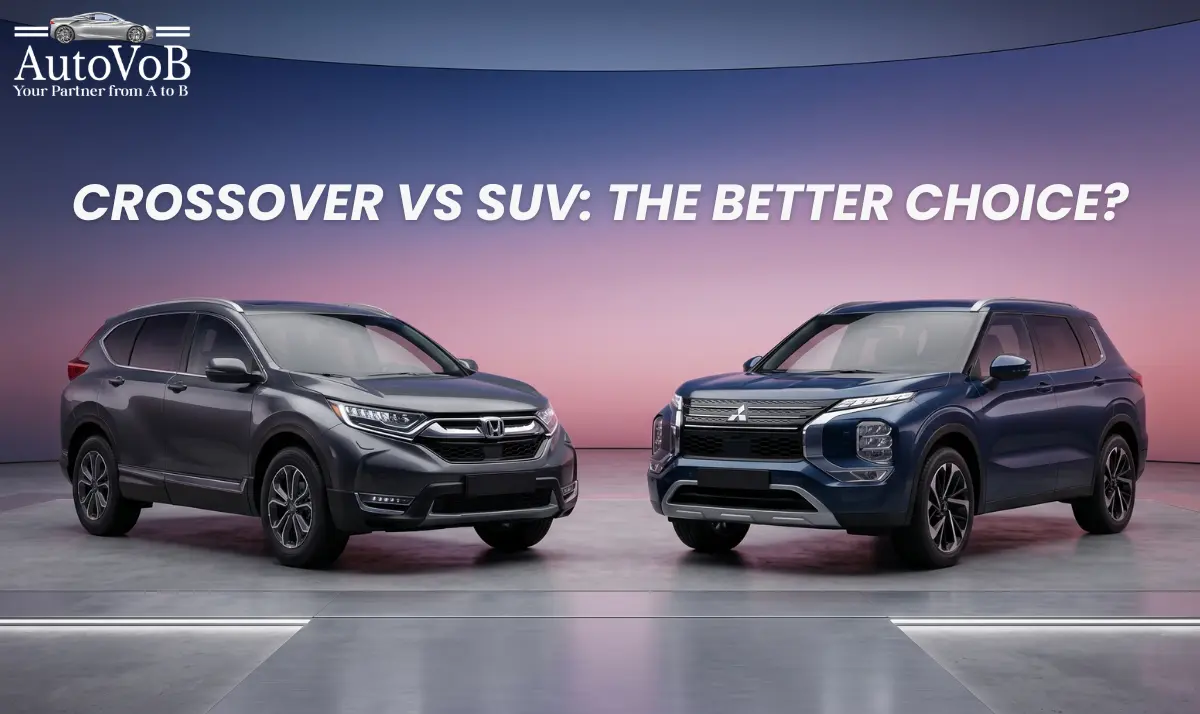
The debate around crossover vs suv is not just about size or looks anymore. It is about how you drive, where you drive, and what you expect from your vehicle every day. For some, comfort and fuel efficiency matter more. For others, strength and capability take priority.
The lines between crossover cars and traditional SUVs have blurred over the years. Many buyers struggle to tell them apart, let alone choose between them. This guide breaks it down clearly so you can make a decision based on logic, not assumptions.
What Is a Crossover?
A crossover suv is built on a car platform. That is the simplest way to understand it. It uses a unibody construction, which means the body and frame are integrated into one structure.
This design is similar to sedans or hatchbacks. The result is a vehicle that drives more like a car but offers the height and space of an SUV.
Crossover cars are designed for urban driving, comfort, and efficiency. They are lighter, easier to handle, and typically more fuel efficient.
What Is an SUV?
A traditional SUV is built on a body-on-frame structure. This is similar to trucks. The body sits on a separate chassis, which makes the vehicle stronger and more durable.
SUVs are designed for tougher conditions. Off-roading, towing, and rough terrain are where they shine. They tend to be larger, heavier, and more powerful than crossovers.
Design and Build Differences
The biggest difference in crossover vs suv comes down to construction.
Crossovers use unibody construction. This makes them lighter and improves ride quality. It also helps with fuel efficiency.
SUVs use body-on-frame construction. This adds strength but also weight. You feel that weight in handling and fuel consumption.
In simple terms, crossovers are refined. SUVs are rugged.
Driving Experience
This is where crossover cars clearly stand out for most users.
Crossovers offer smoother rides, better steering response, and easier maneuverability. They are ideal for city traffic and highways.
SUVs feel heavier. They are not as agile, especially in tight urban spaces. However, they provide better control on uneven roads and in off-road conditions.
If your daily driving is mostly in cities, a crossover suv will feel more natural. If you deal with rough roads or rural terrain, an SUV makes more sense.
Fuel Efficiency
Fuel efficiency is a major factor in the crossover vs suv decision.
Crossovers are generally more fuel efficient. Their lighter weight and car-based design reduce fuel consumption.
SUVs consume more fuel due to their size, weight, and powerful engines. If you are concerned about running costs, crossover cars are usually the better option.
Space and Practicality
SUVs are known for space, and that reputation still holds.
They offer more cargo capacity, higher towing limits, and often more seating options. Large families or those who need to carry heavy loads will benefit from this.
Crossovers also offer good space, but they are more compact. They strike a balance between passenger comfort and practicality.
For most urban families, a crossover suv provides enough space without feeling bulky.
Off-Road Capability
This is where SUVs dominate.
Body-on-frame construction, higher ground clearance, and advanced four-wheel-drive systems give SUVs a clear advantage off-road.
Crossovers can handle light off-roading, like gravel roads or mild trails. But they are not built for extreme conditions.
If off-roading is a priority, the crossover vs suv debate ends quickly in favor of SUVs.
Safety Considerations
Both crossovers and SUVs come equipped with modern safety features. Airbags, stability control, and driver assistance systems are standard in most models.
Crossovers often have an advantage in handling, which can help avoid accidents. Their lower center of gravity reduces rollover risk.
SUVs, being taller and heavier, can feel more stable in certain conditions but may have a higher rollover risk in sharp turns.
Cost and Maintenance
Crossovers are usually more affordable. Both in terms of initial price and maintenance.
SUVs are more expensive to buy and maintain. Their larger engines and heavier components lead to higher service costs.
Insurance can also be higher for SUVs due to their size and repair costs.
For budget-conscious buyers, crossover cars offer better value.
Who Should Buy a Crossover?
Choose a crossover suv if:
- You mostly drive in cities or on highways
- You want better fuel efficiency
- You prefer a smoother driving experience
- You need a practical family vehicle without excessive size
Crossovers are ideal for daily use. They fit modern lifestyles where convenience matters more than extreme capability.
Who Should Buy an SUV?
Choose an SUV if:
- You need strong off-road capability
- You frequently drive on rough or uneven terrain
- You require higher towing capacity
- You prefer a larger and more powerful vehicle
SUVs are built for demanding conditions. If your usage justifies it, they are worth the extra cost.
Also Read: Sedan vs SUV. Which One Fits Your Life Better?
The Final Verdict
The crossover vs suv decision is not about which is better in absolute terms. It is about what fits your needs.
For most people, crossover cars make more sense. They are efficient, comfortable, and practical for daily use.
SUVs still have their place. If you need durability, power, and off-road performance, nothing replaces them.
Think about how you drive, not just how the vehicle looks. That is where the real answer lies.
FAQs
1. What does crossover mean in cars ?
A crossover means a vehicle built on a car platform but styled like an SUV. It combines comfort, efficiency, and practicality. It uses unibody construction, making it lighter and easier to drive compared to traditional SUVs built on truck frames.
2. Which is better in crossover vs suv for daily use?
For daily use, crossovers are usually better. They offer smoother rides, better mileage, and easier handling in city traffic. SUVs are more suitable for rough conditions but may feel bulky and less efficient for regular commuting.
3. Are crossover cars good for long drives?
Yes, crossover cars are excellent for long drives. They provide comfortable seating, stable handling, and good fuel efficiency. Their car-like driving feel reduces fatigue, making them ideal for highways and extended travel.
4. Is a crossover suv safer than an SUV?
Safety depends on design and features, but crossovers often have better handling and a lower center of gravity. This can reduce rollover risk. SUVs may feel stronger but can be less stable in sharp turns due to their height.
5. Do SUVs last longer than crossover cars?
SUVs can last longer in tough conditions due to their strong build. However, with proper maintenance, crossover cars also offer long lifespan. Durability depends more on usage and care than just vehicle type.
List or find any vehicle globally on AutoVoB.