How to Avoid Used Car Scams in the Gulf: 8 Warning Signs
Knowing how to avoid used car scams in the Gulf comes down to a few habits: never pay before you see the car, make sure the name on the registration card matches the seller's ID, check for fines and bank loans, and get an independent inspection. If the price looks too good or the seller rushes you, walk away.
Scams aren't common, but they turn up in every GCC country, and most follow the same handful of patterns. Learn the eight signs below and you'll spot nearly all of them before any money leaves your account.
1. The price is far below the market
A car listed 30 percent or more under similar cars is a red flag. Scammers use a low price to make you hurry. Compare at least five similar ads, for example used cars in the UAE or used cars in Oman, and ask the seller plainly why this one is so cheap.
2. The seller wants a deposit before you meet
Never send a deposit, reservation fee or "transfer fee" to someone you haven't met. The usual story is an owner who is abroad and asks you to pay an agent who will bring the car later. That car rarely exists.
3. The name on the papers doesn't match the seller
Ask for the registration card and the seller's ID, and read both. If the car belongs to a relative or a company, ask for a signed authority letter and call the owner yourself on a number you found, not one the seller gave you.
4. Hidden fines, loans or a bank mortgage
A car with an unpaid loan can't change owner until the bank is paid off. Check traffic fines and any bank lien through your country's official traffic or police service before you pay a single riyal or dirham. In Qatar, for instance, fines show up on the Metrash app.
Also Read: Qatar Traffic Violations: Check and Pay via Metrash
5. Signs of accident repair or tampering
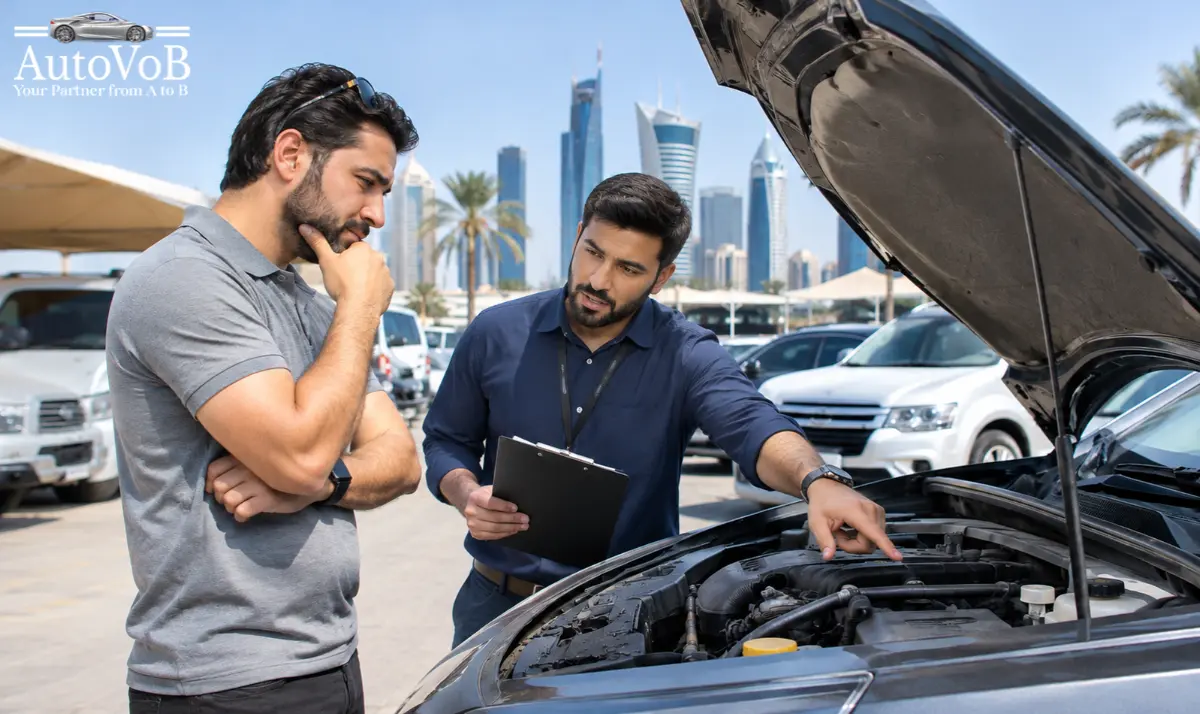
Compare the odometer with the wear on the pedals, steering wheel and driver's seat. A car showing 60,000 km with a shiny, worn steering wheel deserves questions. Look for mismatched paint, uneven panel gaps and fresh welding underneath. An inspection costs far less than a hidden repair.
6. Pressure to decide today
"Another buyer is coming in an hour" is the oldest push in the book. An honest seller gives you time for an inspection and a history check. If you feel rushed, leave and come back with a mechanic.
Also Read: Car Accident History in UAE: What Buyers Must Know
7. Unsafe ways of paying
Avoid large cash payments without a signed receipt. Pay by bank transfer or manager's cheque, and complete the ownership transfer at the traffic department or an approved centre on the same day. Don't take the keys, and don't hand over the money, until the transfer is done.
8. Fake listings and copied photos
Photos lifted from other websites, no picture of the plate and a seller who refuses a video call all point to a fake ad. Ask for a short live video that shows the plate, the chassis number and the odometer. Real sellers send it in minutes.
What to do if you suspect a scam
Stop every payment and keep all messages, photos and receipts. Report the ad to the platform and to the police or traffic authority. If you've already sent money, call your bank at once and ask whether the payment can be stopped or traced. The first hours matter most.
Extra checks for imported cars
Ask for the customs and export papers, and check that the chassis number on the car matches the registration card and every document. A recently arrived car with incomplete papers can be slow and costly to register, and that cost lands on you.
Buy where listings are clear
Choose a marketplace that shows seller names and real photos. Browse used cars in Saudi Arabia or used cars in Qatar, meet in a public place, see the car and the papers in person, and pay only at the transfer.
This information is based on current data and can change at any time, so confirm the rules with your local traffic authority before you buy.
Sources: UAE Government portal, Royal Oman Police, Qatar Ministry of Interior.
FAQs
1.What are the most common used car scams in the Gulf?
The usual ones are cars priced far below the market, sellers who want a deposit before you meet, papers in another person's name, hidden fines or bank loans, rolled back odometers and fake ads with copied photos. Always see the car and check the papers in person before paying.2.How do I check if a used car has fines or a loan in the GCC?
Ask the seller for the registration card and ID, then check traffic fines and any bank lien through your country's official traffic or police service. A car with an unpaid loan can't be transferred until the bank is paid, so confirm it is clear before you pay anything.3.Is it safe to pay a deposit for a used car before seeing it?
No. Never send a deposit, reservation fee or transfer fee to someone you haven't met. A genuine seller lets you see the car and the papers first. Pay only when you complete the ownership transfer at the traffic department or an approved centre, which protects both sides.4.What is the safest way to pay for a used car in the Gulf?
Use a bank transfer or a manager's cheque, get a signed receipt, and finish the ownership transfer the same day at the traffic department or an approved centre. Avoid large cash payments and never hand over money before the paperwork is complete and checked.5.What should I do if I think a used car ad is a scam?
Stop all payments and keep every message, photo and receipt. Report the ad to the platform and to the police or traffic authority. If you already paid, call your bank straight away and ask whether the payment can be stopped or traced. Acting in the first hours helps most.
Before your next deal, browse AutoVoB Blogs for more practical buying advice from the Gulf car market.