Sedan vs SUV. Which One Fits Your Life Better?
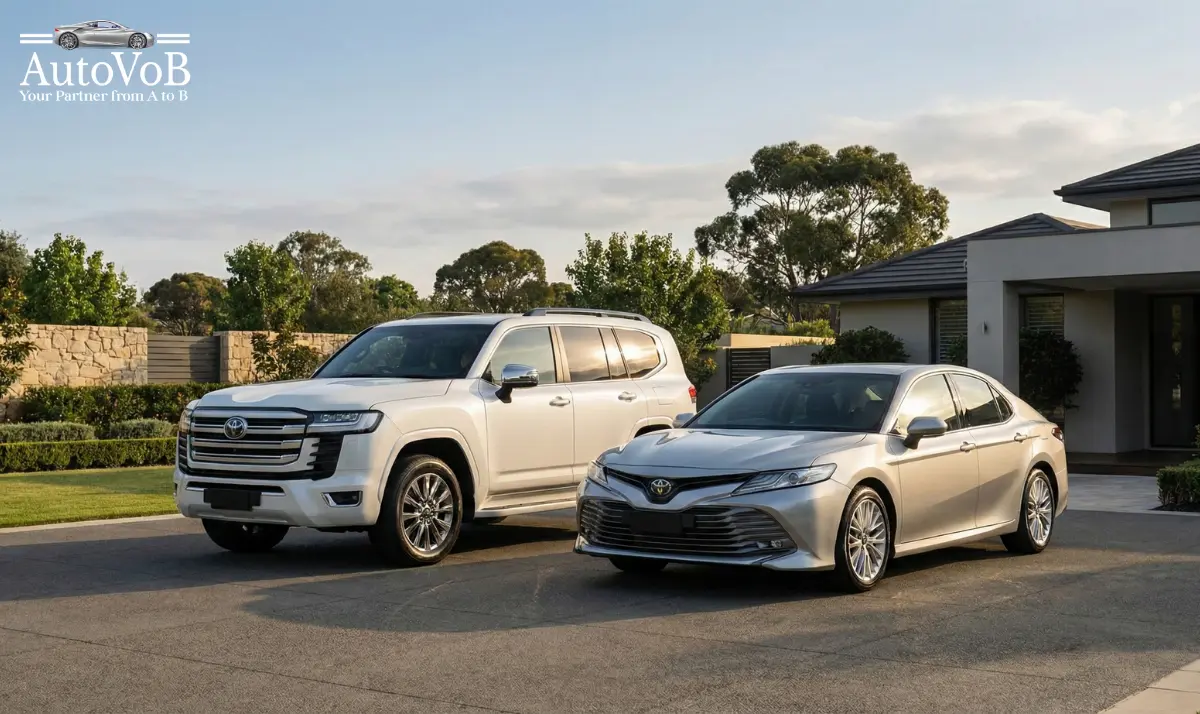
Sedan vs SUV has become the default debate for anyone choosing a car, not because one is universally better, but because the choice exposes priorities. Comfort, cost, handling, space, road conditions, family size, long term ownership, the trade-offs tell you more about the driver than the car.
This piece is not here to declare a winner. It is here to clarify the decision so cleanly that the right answer becomes obvious for your use case.
What Does SUV Stand For?
What does SUV stand for is the first question most buyers search. SUV expands to Sports Utility Vehicle. The term combines passenger comfort with off-road capable design and cargo flexibility. Originally coined to describe rugged, utility-forward passenger vehicles, it now broadly covers vehicles with elevated ride height, higher ground clearance, and versatile cabin space.
Sedan is How Many Seater?
Sedan is how many seater is straightforward. Most sedans are 5-seaters: two seats in front, three at the rear. There are exceptions. Some executive long-wheelbase sedans occasionally offer 4-seat layouts for added rear comfort, but the market norm remains five.
SUV is How Many Seater?
SUV is how many seater depends on the segment. Compact and midsize SUVs are 5-seaters, mirroring sedans. Full-size and 3-row SUVs seat 7 or 8, depending on whether the second row has captain chairs (7 seats) or a bench (8 seats). A small number of extended body SUVs even push to 9 seats, but these are rare outside specific commercial or people-mover trims.
The Origins of the Debate
Here is the thing. The comparison is older than the labels. Sedans evolved from passenger car architecture. They are low, aerodynamic, tuned for stability, and built on unibody platforms optimized for comfort and efficiency. SUVs, while also mostly unibody today, carry a legacy of body-on-frame trucks. Even now, the geometry tells the story: tall stance, shorter front and rear overhangs, commanding visibility.
What this really means is the debate is not Sedan vs SUV, it is road bias vs utility bias.
Seat Count vs Practical Space
A 5-seat sedan and a 5-seat SUV hold the same number of people, but they do not hold the same kind of space.
Sedans give legroom and seat comfort priority. The seating position is relaxed, feet forward, hips low. The roofline may limit headroom for tall passengers. Cargo space is large on paper, but shaped like a trunk: long and deep, but not tall.
SUVs give vertical space priority. Taller cabin, upright posture, more headroom, more usable cargo volume. The trade is seat cushioning. Rear bench comfort in compact SUVs can feel firmer than sedans at the same price.
Handling, Physics, and Driver Confidence
Let’s break it down.
Sedans:
Low center of gravity = less body roll, sharper cornering, better emergency maneuvering stability. At highway speeds, they feel planted. Crosswinds disturb them less. Braking distances trend shorter because weight transfer is more predictable.
SUVs:
Higher center of gravity = more roll in quick direction changes. Modern stability control hides much of it, but you still feel the mass lean. On the upside, suspension travel is higher, so broken roads feel more absorbent at moderate speeds.
If your driving personality values precision, sedans reward it more naturally. If your roads punish precision, SUVs soften the punishment.
Visibility and Road Psychology
Sedans sit low. You see the road. SUVs sit high. You see over the road.
There is a psychological effect here. SUV drivers report a greater sense of command because they see traffic, potholes, pedestrians, speed breakers earlier. This is not about capability, it is about situational awareness.
Sedan drivers can compensate by choosing models with larger glass areas or higher seating hip points. But the advantage stays with SUVs in dense urban traffic and uneven rural routes.
Fuel Efficiency. The Hard Truth
Aerodynamics and mass always win. Sedans are lighter and slipperier. They consistently deliver better fuel economy than equivalent SUVs with the same engine.
A compact SUV may be efficient by SUV standards, but when parked next to its sedan cousin sharing a powertrain, the sedan consumes less fuel, especially at highway speeds where drag increases exponentially.
If fuel cost is a key variable, the math favors sedans first, hybrids second, and efficient compact SUVs a distant third.
Cost of Ownership. Not Just Price Tags
Sedans are cheaper to buy, cheaper to insure, cheaper to maintain, and cheaper on tires and brakes because they weigh less and stress components less.
SUVs often cost more upfront. Insurance premiums are higher. Tires are larger and more expensive. Brake wear comes faster on heavy 7- or 8-seat variants. What you get for that premium is not always off-road ability. It is capacity and resilience.
If you never fill the seats or use the clearance, you paid for unused potential.
SUV is How Many Seater vs Family Reality
Since you mentioned you’re working on weight gain and muscle, you already understand the cost of unused capacity. A 3-row SUV with 7 or 8 seats is great only if you actually use those seats, regularly, without apology. Otherwise you’re hauling an empty gym bag the size of a suitcase.
For most nuclear families in India or the GCC, 5 seats work 90% of the time. The extra row becomes valuable when:
- you carpool often
- you have 3+ kids
- you travel with grandparents regularly
- you carry luggage for 5+ people
What this really means is seat count only matters if the seat sees a person.
Sedan with Highest Ground Clearance. Is That Even a Thing?
Yes. It is a thing. And it has a niche.
Most sedans have ground clearance between 135mm and 165mm. But a few stretch higher, especially in markets with bad roads.
A key buyer question is Sedan with highest ground clearance. While SUVs still dominate this metric, certain sedans like the Subaru Legacy (AWD sedan, ~150mm) or Volvo S60 Cross Country (~201mm) were specifically engineered to bridge the gap. In India, mainstream sedans like the Honda City (~165mm) or Skoda Slavia (~179mm) sit higher than older sedans traditionally did.
These cars exist for buyers who want sedan handling but SUV geometry. The catch: they are uncommon, often pricier, and may not exist in every market or trim.
SUV is How Many Seater vs Urban Parking and Streets
Tall cars occupy more visual space, not always more physical footprint. But 3-row SUVs are often longer. That means:
- tighter parking fit
- harder U-turns in narrow lanes
- more scrape risk on basement ramps
- heavier steering feel at crawl speeds
Sedans slip into compact parking slots and congested side streets more easily.
If you live in a city full of narrow lanes, sedans or 5-seat compact SUVs are smarter choices than 7-seat barges.
What Does SUV Stand For Today? A Shifted Meaning
Originally Sports Utility Vehicle meant adventure and utility. Today it often means:
- elevated stance
- cargo flexibility
- visual presence
- 5-, 7- or 8-seat layouts
- rough-road tolerance
Off-road credibility is now limited to specific trims with AWD/4WD, skid plates, locking diffs, or terrain modes. The badge is not the proof. The spec sheet is.
Who Should Buy What?
Here’s the thing, this is the shortest version of the truth.
Buy a sedan if:
- handling confidence matters
- highway stability is a priority
- fuel cost sensitivity is high
- you enjoy lower driving posture
- insurance and maintenance cost matter
Buy an SUV if:
- you need 7 or 8 seats often
- roads are unpredictable or broken
- you want maximum headroom and loading height
- you value early visibility in traffic
- parking space is generous enough to fit it
The Real Question: Sedan or SUV?
Sedan or SUV is not a popularity contest. It is a bias test.
If you optimize for precision, efficiency, cost, stability, sedan wins.
If you optimize for capacity, clearance, posture, visibility, rough-road tolerance, SUV wins.
There is no shame in either answer. There is only shame in picking the wrong bias for the roads you actually drive and the people you actually seat.
A Quick Checklist to Decide
- How many people travel with you, usually?
5 or fewer → sedan or 5-seat SUV.
6 to 8 → 3-row SUV. - Are your daily roads smooth or broken?
Smooth → sedan rewards more.
Broken → SUV absorbs more. - Do you park in tight urban lanes or open spaces?
Tight → sedan or compact 5-seat SUV.
Open → any SUV footprint works. - Are fuel and maintenance costs a major constraint?
Yes → lean sedan.
No → efficient 5-seat SUV or 3-row if needed. - Do you need tall cargo stacking or easy boot access?
Tall stacking → SUV.
Long flat items → sedan trunk works too.
Also Read: Most Popular Used Sedans in the UAE in 2025
Final Word
Sedan vs SUV will keep getting searched because the categories keep evolving, but the physics don’t change, and the use cases don’t lie. Choose the geometry that matches your real seat count, your real roads, and your real budget. The rest is noise.