All About Autonomous Cars And Self Driving Car Tech
All about autonomous cars comes down to one simple idea: shifting the hard work of driving from humans to software, sensors, and data.
What exactly is an autonomous car?
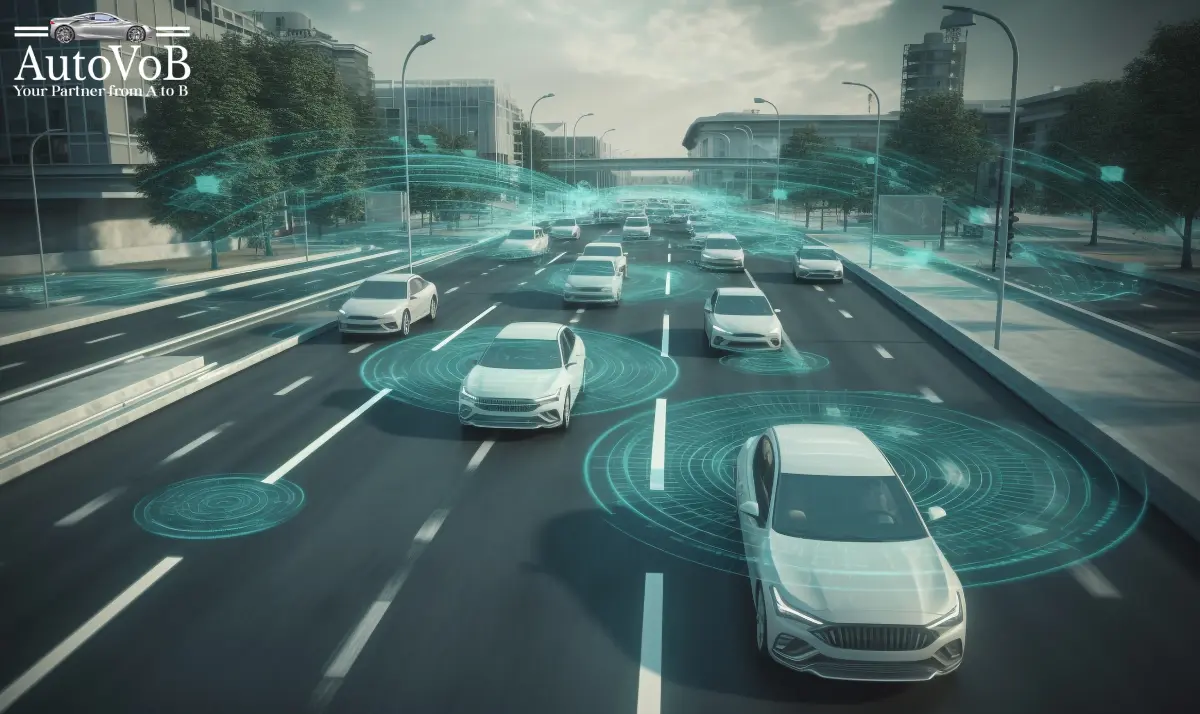
An autonomous car, or self driving car, is a vehicle that can handle some or all driving tasks using sensors, onboard computers, and AI-based software instead of constant human control. Cameras, radar, lidar, GPS, and high-definition maps feed data into algorithms that detect lanes, vehicles, pedestrians, and traffic signs in real time. What this really means is the car is continuously answering three questions: Where am I, what’s around me, and what should I do next?
The global standard for talking about autonomous driving cars is the SAE J3016 classification, which defines six levels of automation from 0 to 5. Levels 0 to 2 are driver assistance, where the human remains fully responsible, even if the car can steer or brake on its own. Levels 3 to 5 move into actual autonomy, where the system can take over more of the driving task under defined conditions.
The 6 levels of autonomous driving
Let’s break it down in plain language using the SAE levels.
- Level 0: No automation, the human does all the driving, though the car may have alerts like lane departure warning.
- Level 1: Driver assistance, such as adaptive cruise control or lane keeping, but never both at full control at the same time.
- Level 2: Partial automation, where the car can control steering and speed together on certain roads, but the driver must stay attentive and ready to intervene at any moment.
- Level 3: Conditional automation, where the car can handle all driving in specific conditions, like a mapped highway, and asks the driver to take over when it reaches its limits.
- Level 4: High automation, where the vehicle can drive itself in a defined area or scenario (for example, a specific city zone) without any human input when that mode is active.
- Level 5: Full automation, where the vehicle can operate anywhere a human could drive, in all conditions, with no steering wheel needed.
Most cars marketed as a self driving car today are actually Level 2, and a handful of premium models and pilot services are starting to touch Levels 3 and 4 in limited regions.
Key facts about autonomous cars
Here’s the thing: behind the marketing, there are some solid facts about autonomous cars you should know.
- Autonomous test fleets already drive millions of miles per year on public roads. In California alone, autonomous vehicles logged over 9 million miles in 2023, with around 3.3 million more than the previous year.
- These miles are not fully trouble-free. Companies reported 6,570 disengagements in 2023, moments where the human safety driver or the system had to hand control back, which regulators track to understand real-world limitations.
- US safety data from automated driving system reports shows that human drivers initiated about 84 to 89 percent of disengagements in 2022–2023, often out of caution rather than an outright system failure.
- Level 4 robo-taxi services are already commercial in controlled zones in cities like Phoenix, San Francisco, and parts of China, showing that high automation is not theoretical anymore.
So when you hear about autonomous driving cars, you’re not just hearing hype; you’re looking at a technology already operating at scale, but still fenced in by geography, regulation, and conditions.
How self driving tech actually works
To make a self driving car behave like a competent driver, several layers of tech have to line up.
- Sensing the world
- Cameras detect lane markings, traffic lights, pedestrians, and signs.
- Radar and lidar measure distance and speed of objects, even in low visibility.
- GPS and HD maps give a precise sense of location and road layout.
- Understanding and predicting
- Perception algorithms classify objects and understand the scene, like distinguishing a cyclist from a parked car.
- Prediction models estimate what other road users are likely to do in the next few seconds.
- Planning and control
- Planning software picks a safe path and speed based on rules, map data, and predicted behavior.
- Control systems translate that plan into steering, braking, and throttle commands.
What this really means is that a self driving car is constantly running a loop: sense, understand, decide, act, then repeat many times per second.
Safety, limitations, and real-world challenges
Autonomous cars are built around the promise of fewer crashes, fewer human errors, and smoother traffic. But the road to that outcome is not simple.
- Edge cases: Construction zones, unusual road layouts, aggressive human drivers, and unpredictable pedestrians still challenge perception and planning systems.
- Disengagements: As mentioned, disengagements are still common in testing, and not all are accurately comparable between companies because each defines and reports them slightly differently.
- Weather and maps: Heavy rain, dust, fog, or outdated maps can degrade performance, especially for systems that rely heavily on cameras and lidar.
Regulators and safety agencies are now focusing much more on detailed reporting, root causes of disengagements, and how automated systems interact with human drivers, not just on total miles driven. For anyone considering a self driving car, the honest view is: impressive capability, but you still need to respect its limits.
Are self driving cars legal in the UAE?
Now let’s talk about the question a lot of people ask: Are self-driving cars legal in the UAE?
The UAE has taken a proactive regulatory approach, especially in Dubai. The emirate issued Law No. 9 of 2023 to govern autonomous vehicles and, in 2025, the Roads and Transport Authority adopted detailed executive and operational regulations for licensing and operating autonomous vehicles. These rules define categories of autonomous vehicles, technical and safety standards, licensing requirements, and infrastructure conditions before such vehicles can operate on Dubai’s roads.
So are autonomous driving cars allowed? Yes, but in a controlled way. Dubai currently allows autonomous vehicles under specific permits, often in pilot or limited-service scenarios like robo-taxi trials, with strict oversight by the RTA. Operators must prove successful trials in another jurisdiction or under RTA-supervised testing, meet Gulf and UAE standards, and show that the vehicle can operate safely in local climate and traffic conditions. The broader UAE legal framework supports this through federal traffic rules and technical specifications that apply to automated systems.
For residents and visitors using self drive cars Dubai style, this means you will increasingly see autonomous shuttles, robo-taxis, and possibly self-driving buses as official services rather than private DIY modifications. The system is built so that only approved autonomous cars that pass inspections and meet communication and safety requirements can operate in public areas.
Also Read: Electric Cars in UAE: What You Need to Know
What this means for drivers in Dubai and beyond
If you’re used to renting self drive cars Dubai has to offer, you’re going to see a gradual shift in what “driving yourself” even means. Over the next few years, more rental and mobility services will blend advanced driver assistance and higher levels of automation into their fleets, but under clear RTA rules. For many people, the first real autonomous experience will be booking a robo-taxi or shuttle on a defined route rather than owning a fully driverless self driving car outright.
Globally, the direction is the same: start with geofenced, highly managed autonomous driving cars in cities, expand zones over time, and slowly relax the requirement for human supervision as the tech and safety data mature. The UAE is positioning itself as one of the early adopters by aligning regulation, infrastructure, and pilot projects instead of waiting for the technology to arrive first.
For anyone curious, skeptical, or excited about autonomous cars, the smart move is to understand the levels, know what your car can and cannot do, and keep an eye on how your local laws evolve. The shift will feel gradual until, suddenly, it doesn’t.
For more such tech-related automotive blogs, keep following AutoVoB blogs.