ADAS Explained: How Driver Assistance Systems Keep You Safe
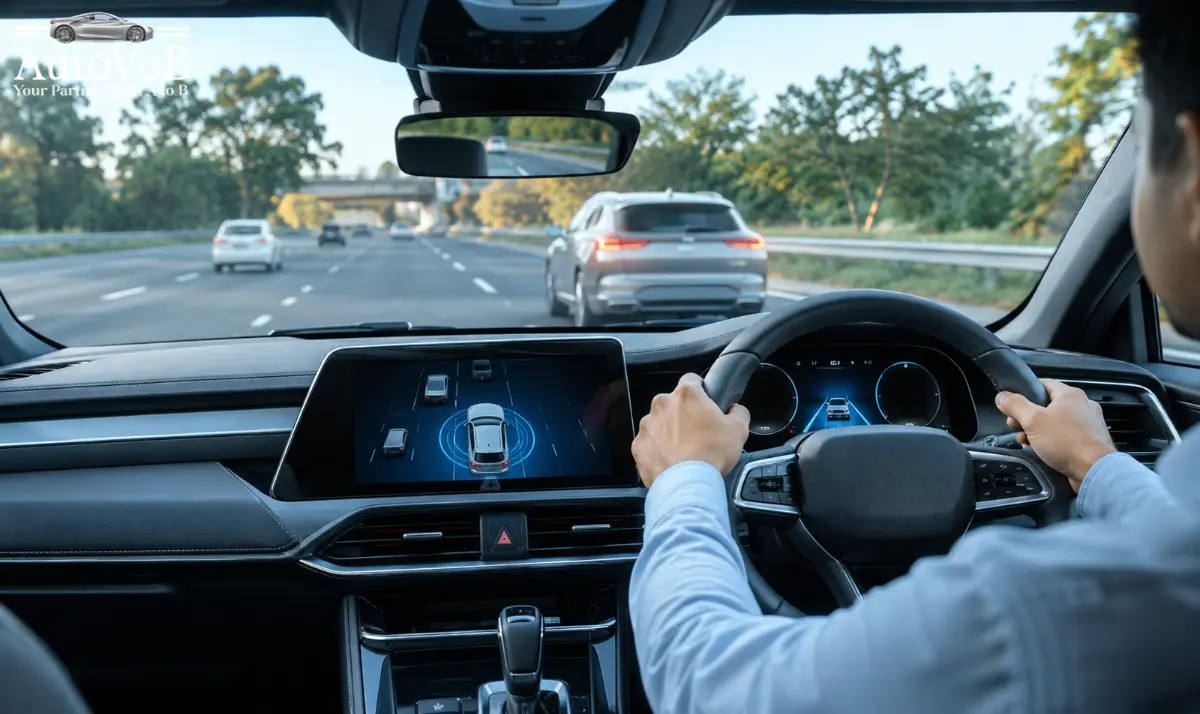
A car can now warn you about a vehicle in your blind spot, brake when traffic suddenly stops and gently steer you back when you drift out of your lane. These features aren't science fiction. They're part of modern Advanced Driver Assistance Systems (ADAS), and they're changing how people drive.
But there's a catch. ADAS can help prevent accidents, but it can't make a driver careless without consequences. Understanding what these systems do, when they work and where they fall short is just as important as having them in your car.
Here's a practical look at ADAS explained, including the technology behind it and the safety features worth understanding before buying your next vehicle.
What Is ADAS and How Does It Work?
ADAS stands for Advanced Driver Assistance Systems. It's a collection of electronic safety technologies designed to help drivers identify potential hazards, avoid collisions and maintain better control of their vehicles.
These systems use a combination of cameras, radar, ultrasonic sensors and, in some vehicles, LiDAR. The collected information goes to the vehicle's control units, which analyse what's happening around the car.
Depending on the feature, the system may:
-
Alert the driver with a sound, warning light or steering wheel vibration.
-
Apply the brakes when a collision appears imminent.
-
Adjust acceleration to maintain a safe distance from the vehicle ahead.
-
Provide steering assistance to help the vehicle remain within its lane.
For example, imagine driving on a highway when the vehicle ahead suddenly slows down. Forward Collision Warning may alert you, while Automatic Emergency Braking can apply the brakes if you don't react quickly enough and the system determines that a collision is imminent.
The exact response depends on the vehicle, software and driving conditions. Some systems only warn you, while others can intervene directly.
That's the basic principle behind ADAS. It gives the driver another layer of protection against mistakes that can happen during everyday driving.
Common ADAS Features Every Driver Should Know
Not every car equipped with ADAS has the same features. A premium SUV might offer a comprehensive assistance package, while an affordable hatchback may only have automatic emergency braking and lane departure warnings.
Here are the systems you're most likely to encounter.
1. Automatic Emergency Braking (AEB)
Automatic Emergency Braking detects a potential collision and applies the brakes when the driver doesn't respond sufficiently.
Depending on the system, it can identify vehicles, pedestrians and cyclists. Some advanced versions also work when a vehicle is approaching from the side at an intersection.
Consider a common situation. You're approaching a traffic signal, and the vehicle ahead suddenly stops. If you fail to brake in time, AEB may intervene to reduce the impact or prevent the collision altogether.
However, AEB isn't guaranteed to stop the car in every situation. Detection range, vehicle speed, road conditions and the type of obstacle all affect its performance.
2. Forward Collision Warning (FCW)
Forward Collision Warning monitors the road ahead and alerts you when the vehicle is approaching another vehicle or obstacle too quickly.
The warning may appear as a dashboard message, flashing visual alert or audible beep.
Unlike AEB, FCW generally doesn't apply the brakes itself. It expects the driver to take action.
It's particularly useful in heavy traffic, where vehicles can slow down unexpectedly and following distances change quickly.
3. Lane Keep Assist (LKA)
Lane Keep Assist helps prevent the vehicle from unintentionally drifting out of its lane.
A forward-facing camera typically monitors road markings. If the vehicle starts moving towards a lane boundary without an appropriate indication, the system may provide a steering correction or apply braking to selected wheels, depending on its design.
Some vehicles also offer Lane Departure Warning, which simply alerts the driver when the car begins crossing a lane marking.
Don't confuse lane keeping with lane centering. Lane centering continuously provides steering assistance to keep the vehicle near the middle of its lane, while basic lane keeping systems generally intervene when the car approaches a lane boundary.
4. Adaptive Cruise Control (ACC)
Traditional cruise control maintains a speed selected by the driver. Adaptive Cruise Control goes further by adjusting that speed to maintain a selected following distance from the vehicle ahead.
If traffic slows down, ACC reduces your speed. When the road clears, it can accelerate towards the set speed again.
Some versions include Stop and Go functionality, allowing the car to slow to a complete stop and resume moving in suitable traffic conditions.
This feature is especially useful during long highway journeys. It can reduce the constant need to adjust the accelerator and brake pedals.
However, ACC doesn't necessarily recognise every hazard. A stationary vehicle, sharp bend or sudden obstacle may require immediate driver intervention.
5. Blind Spot Monitoring (BSM)
Blind Spot Monitoring helps detect vehicles travelling in areas that are difficult to see through the side mirrors.
When another vehicle enters the monitored area, a warning usually appears on the corresponding side mirror or dashboard. Some systems provide an additional alert if you activate the turn indicator while another vehicle is alongside you.
It's particularly helpful on multi-lane highways, where motorcycles and faster-moving vehicles can approach from behind.
Still, check your mirrors and physically check the blind spot before changing lanes. The system may not detect every vehicle or object.
6. Rear Cross Traffic Alert (RCTA)
Backing out of a parking space can be surprisingly difficult when parked vehicles block your view.
Rear Cross Traffic Alert monitors traffic approaching from either side while you're reversing. If it detects an approaching vehicle, cyclist or other recognised obstacle, it warns the driver.
Some advanced systems can also apply the brakes if a collision becomes imminent.
This feature is useful in crowded parking lots, shopping centres and residential driveways.
7. Driver Attention and Drowsiness Monitoring
Driver monitoring systems look for signs that the person behind the wheel may be distracted, inattentive or becoming drowsy.
Depending on the vehicle, cameras may monitor eye movement, head position and gaze direction. Other systems analyse steering behaviour and driving patterns.
If the system detects possible fatigue or distraction, it may issue an alert recommending a break.
These warnings shouldn't be ignored. A car can detect certain signs of inattention, but it cannot reliably determine how tired you feel or replace proper rest.
How ADAS Sensors and Cameras Detect Road Hazards
ADAS depends on information collected from different sensors. Each has its strengths, and manufacturers often combine several technologies to improve detection.
The three commonly used technologies are:
Cameras: Usually mounted near the windscreen or around the vehicle. They identify lane markings, traffic signs, pedestrians, vehicles and other visible objects. Their performance can be affected by poor visibility, dirty lenses and difficult lighting conditions.
Radar: Uses radio waves to detect objects and estimate their distance and relative speed. Radar is particularly useful for adaptive cruise control and collision warning systems.
Ultrasonic sensors: Commonly fitted around bumpers to detect nearby objects at short distances. They're frequently used for parking assistance and low-speed manoeuvres.
LiDAR: Uses laser pulses to measure distances and create detailed information about surrounding objects. It's used in some advanced vehicle sensing systems, although it isn't fitted to every ADAS-equipped car.
These technologies work together through vehicle computers and software. For instance, a camera may recognise a vehicle's position, while radar measures how quickly your car is approaching it.
The system then uses this information to decide whether to issue a warning or intervene.
Sensor combinations and capabilities vary by manufacturer and vehicle model.
ADAS Level 1, Level 2 and Level 3 Explained
One common misunderstanding is that every vehicle with ADAS has some level of self-driving capability. That's incorrect.
The SAE driving automation framework classifies driving automation into six levels, starting at Level 0 and ending at Level 5. Most familiar driver assistance features fall into the lower levels.
Level 0: No driving automation
The driver controls steering, acceleration and braking. The vehicle may still provide warnings or temporary emergency interventions, such as forward collision alerts and automatic emergency braking.
Level 1: Driver assistance
The vehicle can assist with either steering or acceleration and braking, but not both continuously as part of the same assistance function.
Adaptive cruise control and lane keeping assistance are common examples.
The driver must remain attentive and responsible for the vehicle.
Level 2: Partial driving automation
The vehicle can provide steering assistance and acceleration or braking assistance simultaneously.
For example, a highway assistance system may combine adaptive cruise control with lane centering.
However, the driver must continuously monitor the road and remain ready to take control. The system doesn't become responsible for the journey.
Level 3: Conditional driving automation
Under specific conditions, the system can perform the entire driving task while monitoring the driving environment. The driver must remain available to take over when requested.
Its availability depends on the vehicle, approved operating conditions and applicable regulations.
Levels 4 and 5: Higher driving automation
Level 4 systems can handle all driving tasks within their defined operating conditions or areas without requiring a human driver to supervise continuously.
Level 5 represents full driving automation under all conditions in which a human could drive.
These levels aren't simply different names for ADAS packages. They describe how much of the driving task the system performs and what responsibility remains with the human driver.
For most people buying a regular passenger car, Level 1 and Level 2 features are the most relevant.
Can ADAS Actually Prevent Accidents?
Yes, certain ADAS features can help prevent specific types of accidents, particularly when a driver reacts late or fails to notice an approaching hazard.
Automatic Emergency Braking, for example, can intervene when a driver doesn't brake in time. Lane departure prevention can help correct unintended drifting, while blind spot monitoring can alert drivers to vehicles they might otherwise miss.
However, there's a difference between reducing risk and eliminating it.
The Insurance Institute for Highway Safety (IIHS) has highlighted that crash avoidance systems can have limitations when road markings are unclear, visibility is poor or sensors struggle to detect an obstacle.
Partial driving automation also introduces another concern. Drivers can become too comfortable with the assistance and pay less attention to the road.
That's why a well-designed system needs effective driver monitoring, clear warnings and safeguards that encourage the driver to remain involved.
Limitations of ADAS You Should Know Before Driving
ADAS is useful, but it isn't infallible. There are several situations where drivers should be particularly careful.
-
Poor weather: Heavy rain, fog, snow and water spray can affect camera visibility and sensor performance.
-
Dirty sensors: Mud, dust, road grime or ice covering a camera or radar sensor can interfere with detection.
-
Faded road markings: Lane keeping systems may struggle when road markings are missing, worn out or difficult to distinguish.
-
Unexpected obstacles: Some systems may not recognise unusual objects, debris or certain stationary hazards in time.
-
Road conditions: Sharp bends, construction zones and complicated junctions can fall outside a system's intended operating conditions.
-
Driver overconfidence: Relying too heavily on assistance features can delay your reaction when the system fails to recognise a hazard.
There is another detail worth remembering when buying a used car. ADAS cameras and radar sensors may need inspection, calibration or replacement after a windscreen change, bumper repair or accident.
A vehicle might look perfectly fine after a minor repair, but incorrectly aligned sensors can affect how its safety systems operate. Always ask whether the relevant ADAS calibration was performed and documented.
Also Read: AWD vs 4WD: Best for UAE Roads, Sand & Off-Road?
What to Check When Buying a Car with ADAS
If you're comparing two used or new cars, don't judge their safety equipment by the number of features listed in the brochure. The quality and performance of those features matter more.
Here are a few things worth checking:
-
Check the actual feature list: Confirm whether the car has AEB, lane keep assist, adaptive cruise control and blind spot monitoring. Some manufacturers reserve these features for higher variants.
-
Test the warning systems: Check whether dashboard alerts, cameras and parking sensors work properly.
-
Inspect the windscreen and bumpers: Look for signs of replacement or previous accident repairs that could affect sensor positioning.
-
Ask about calibration: If the car has undergone windscreen replacement or front-end repairs, ask for evidence of ADAS calibration.
-
Check the owner's manual: Understand the system's operating speeds, limitations and activation requirements.
For used vehicles, a proper inspection should include an electronic diagnostic scan. A warning light that isn't visible on the dashboard doesn't necessarily mean every ADAS component is working correctly.
Also, remember that ADAS equipment and safety regulations differ between countries. The information in this article reflects current technical guidance, but vehicle requirements and government regulations can change. Always check the latest rules applicable in your country before making a purchase.
A car with ADAS is worth considering, particularly if you regularly drive on highways or through busy urban traffic. Just make sure you're buying a vehicle with properly functioning systems, rather than paying extra for a long list of features you'll never understand or use correctly.
FAQs
1. What does ADAS mean in a car?
ADAS stands for Advanced Driver Assistance Systems. It refers to electronic technologies that help drivers detect hazards, avoid collisions and maintain better control. Common examples include automatic emergency braking, lane keep assist, blind spot monitoring and adaptive cruise control.
2. Is ADAS the same as autonomous driving?
No. ADAS assists the driver through warnings, braking or steering support, while autonomous driving involves greater control of the driving task. Most consumer ADAS features require continuous driver supervision. Even Level 2 systems cannot replace an attentive human driver.
3. Does ADAS work in heavy rain or fog?
ADAS can experience reduced performance in heavy rain, fog, snow and poor visibility. Cameras may struggle to recognise lane markings, while sensors can have difficulty detecting certain obstacles. Always remain alert and never assume the system will identify every road hazard.
4. What is the difference between lane keep assist and adaptive cruise control?
Lane Keep Assist provides steering corrections to help prevent unintended lane departures. Adaptive Cruise Control adjusts vehicle speed to maintain a selected distance from traffic ahead. Some vehicles combine both features to provide Level 2 driving assistance.
5. Does ADAS require maintenance or calibration?
Yes. ADAS cameras and radar sensors may require calibration after windscreen replacement, bumper repairs or accidents. Incorrect sensor alignment can affect system performance. Regular inspections, clean sensors and manufacturer-recommended calibration help keep these safety features working properly.