AWD vs 4WD: Best for UAE Roads, Sand & Off-Road?
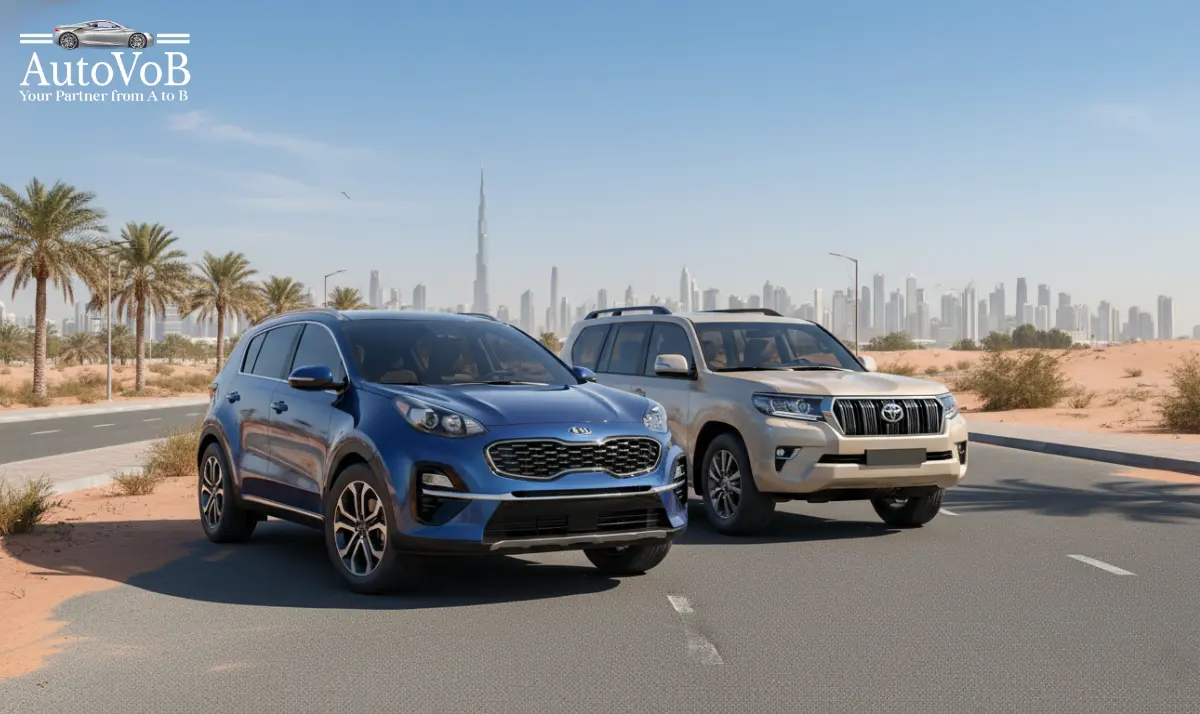
UAE driving is a mixed bag. You get smooth highways, city roads that demand quick lane discipline, long desert stretches, shifting sand, gravel tracks, steep dunes, and occasional rain that turns roads slick for a short window. So when the question AWD vs 4WD comes up, it is not a debate for spec sheets. It is about real traction, heat tolerance, sand behavior, reliability, control, and long-term practicality in one of the harshest automotive environments in the world.
Before picking a side, you need to understand how these systems actually work, where they shine, where they struggle, and what makes sense for someone who drives in 45°C summers, fine sand, salty coastal air, long-distance touring, and unpaved terrain.
Understanding AWD: How it Works and What it’s Good At
All-Wheel Drive or AWD is designed primarily for roads. It can send power to all four wheels automatically, without the driver needing to do anything. The system uses sensors that read wheel slip, throttle input, steering angle, and road conditions. When traction drops on one wheel, the system shifts torque to the wheels that still have grip. This torque distribution is handled through a center differential or multi-plate clutch system depending on the vehicle architecture.
AWD comes in two major types, full-time and part-time. Full-time AWD sends power to all wheels constantly. Part-time AWD behaves like a two-wheel drive system most of the time and activates all-wheel traction when slip is detected.
The biggest advantage of AWD is that it works instantly. No driver input, no delay, no mode selection. This is especially useful in fast-moving situations on highways or urban roads where grip changes are subtle but sudden. If a car starts to hydroplane on a wet patch or loses traction during a sharp lane switch, the system corrects torque before the driver even reacts.
AWD also improves acceleration stability, especially for heavier crossovers and sedans with AWD trims. Launch control systems pair well with AWD because the torque distribution prevents front or rear wheel spin. The result is cleaner starts and better grip out of corners.
Another important detail is that AWD is lighter than 4WD. The system adds minimal mechanical bulk compared to a traditional transfer case. This means slightly better fuel economy, less strain on the drivetrain, and lower maintenance costs. It also keeps the vehicle more agile.
Now let’s talk sand. AWD can handle light desert trails, flat sand, packed desert paths, gravel roads, and occasional soft patches. But here’s the catch, AWD is reactive, not proactive. It waits for slip to happen before sending torque. In deep sand, by the time slip is detected, the wheel may already be buried or spinning too fast. And once wheels dig in, torque transfer alone cannot pull them out.
AWD systems are not built for prolonged low-speed torque stress or constant traction modulation in sand. Heat builds up in the clutch packs quickly during heavy slip conditions. When temperatures spike, the system may temporarily reduce torque to protect itself, which is the worst time to lose traction.
What this really means is that AWD is a great system for people who drive 95% on asphalt and want added grip insurance for occasional unpaved travel or mild off-road conditions. It is brilliant for stability, acceleration, and automatic traction correction. But it is not built for hardcore sand and dunes.
Understanding 4WD: How it Works and What it’s Good At
Four-Wheel Drive or 4WD is a mechanical traction system made for off-road use. Unlike AWD, 4WD allows the driver to lock the torque split manually. Most 4WD vehicles operate in 2H or two-wheel drive mode by default. When conditions demand traction, the driver shifts to 4H or 4L using a transfer case.
4H or high-range 4WD splits torque between front and rear axles. 4L or low-range 4WD multiplies torque using gear reduction. This mode is essential for climbing steep dunes, driving in deep sand, navigating rocky terrain, or towing heavy loads at low speed.
4WD systems can also lock the center differential completely. Some vehicles include rear and front differential locks as well. Locking ensures that torque is distributed equally and continuously. No waiting for slip. No delay. No power cut to protect a clutch pack.
This makes 4WD the most reliable system for sand and desert terrain. In the UAE, where fine sand behaves like fluid under tires, 4WD systems help maintain forward momentum. Even if one wheel is in loose sand, the system keeps pushing torque to the other wheels with mechanical certainty.
4WD also handles heat better. Because it is a mechanical system with gear-driven torque transfer, it tolerates long-duration traction stress. No clutch pack overheating, no automatic torque reduction, no electronics deciding to take a break in the middle of a dune climb.
Another advantage is control. In 4WD vehicles, the driver decides when torque is needed. This is important in sand driving where proactive torque split is better than a system that reacts to slip.
Now let’s talk downsides. 4WD is heavier. The transfer case adds mechanical complexity. More parts, more weight, slightly lower fuel economy, higher service costs, and more drivetrain wear if misused on roads. 4WD systems are not meant to stay locked on asphalt because locked torque prevents wheels from rotating at different speeds during turns. This causes driveline windup and mechanical strain.
4WD is also slower to activate compared to AWD. You need to shift modes manually. This is fine off-road. But if you suddenly hit a wet road patch at highway speeds, you have to hope the 2H mode still holds grip. Most 4WD vehicles now include electronic traction aids and stability control to mitigate this, but the 4WD system itself does not intervene automatically like AWD.
What this really means is that 4WD is built for tough terrain. It dominates sand, gravel, dunes, rocks, mud, towing, and steep climbs. But it is not primarily a road traction system.
AWD vs 4WD: The UAE Conditions That Matter Most
To decide AWD vs 4WD, you need to match these systems against real UAE conditions.
Desert and Sand Performance
If you drive in the desert regularly, nothing beats 4WD. The system delivers continuous torque proactively and handles sand without overheating. It also gives you 4L for dune climbs and recovery situations. AWD struggles in deep sand because it reacts late and may reduce torque under heat.
Highway and City Road Behavior
For roads, AWD wins. The UAE has some of the fastest highways in the world. Stability during sudden traction changes matters more than locked torque. AWD activates instantly and automatically. 4WD stays in 2H mode by default and does not shift torque automatically.
Heat and Drivetrain Stress
4WD handles heat and traction stress better. AWD systems overheat faster in sand due to clutch-based torque transfer.
Towing and Load Carrying
If you tow heavy loads like boats, trailers, bikes, or off-road gear across long distances or sand, 4WD is the better tool. AWD systems are not designed for low-speed heavy torque towing stress.
Rain and Wet Road Traction
AWD is ideal here. It corrects traction instantly on wet patches. 4WD does not activate automatically for wet roads.
Fuel Economy and Maintenance Costs
AWD systems are lighter and cheaper to maintain than 4WD transfer case systems.
Which System is Better for Most UAE Drivers?
Now let’s separate drivers into realistic buckets.
Bucket 1: 90% Road, 10% Gravel or Light Trails
AWD makes sense here. You get automatic traction correction without added mechanical weight. AWD vs 4WD matters here because you do not need locked torque for light trails. You need fast, automatic grip correction for highways and city driving.
Bucket 2: 60% Road, 40% Desert and Sand
4WD is the smarter pick. This is where AWD vs 4WD becomes a desert performance debate. 4WD gives you 4H, 4L, locked torque, and better sand reliability. It handles heat better and keeps you moving without waiting for slip detection.
Bucket 3: Weekend Dune Bashing, Overlanding, Sand Touring, Towing Across Desert
4WD. No contest. AWD cannot replace low-range torque or locked differential control for these conditions.
Also Read: Sedan vs SUV. Which One Fits Your Life Better?
The Verdict
Most UAE drivers who live in cities like Dubai, Abu Dhabi, Sharjah, or Ajman and take occasional highway trips do not need 4WD unless they hit deep sand regularly. AWD works beautifully on roads and light unpaved tracks. It gives you better agility, lower fuel cost, and instant traction correction for sudden grip changes.
But for anyone who drives in the desert often, especially on dunes and deep sand, 4WD is the real traction system you can depend on. It is built for the environment. It handles sand and heat better. It delivers torque proactively. It includes low-range torque for steep climbs. It tolerates long-duration traction stress without overheating. And it gives you driver-controlled locking which matters a lot in sand driving.
Here’s the thing, the debate AWD vs 4WD will keep coming up. But for UAE drivers, the decision is simpler than it sounds. If sand and dunes are part of your weekly life, go 4WD. If roads are your world and the desert is a rare guest, AWD is more than enough and often the better daily choice.