What Are Connected Cars? Features, 5G, IoT & Future
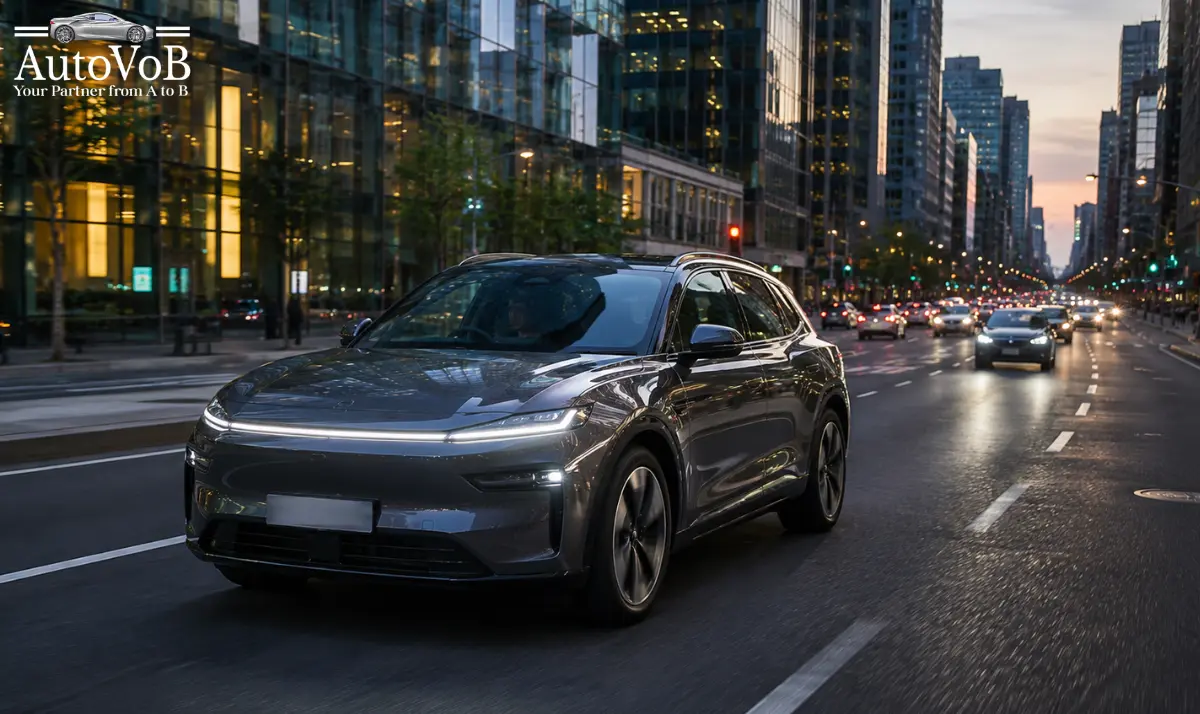
Cars have always been mechanical things, engines, pistons, fuel. But somewhere between the navigation screen and the over-the-air software update, the car became something else entirely. It became a networked device. One that talks to other vehicles, reads traffic signals, streams music from the cloud, and can be diagnosed remotely before you even notice something is wrong.
That shift is what connected cars are all about. And it's bigger than most people realize.
What Is a Connected Car?
A connected car is any vehicle equipped with hardware and software that allows it to communicate bidirectionally with external systems, the internet, other vehicles, road infrastructure, or mobile devices. This connectivity enables services like real-time navigation, remote diagnostics, over-the-air software updates, in-car entertainment, emergency response, and vehicle-to-vehicle or vehicle-to-infrastructure coordination.
The connection itself happens through built-in cellular modules, 4G LTE or increasingly 5G, or through aftermarket dongles that add connectivity to older vehicles. Either way, the result is a car that is always online, always sharing data, and progressively getting smarter over time.
In 2023, there were 56 million annual sales of connected cars globally. That number has only climbed since. The global connected vehicle technology market was valued at USD 45.3 billion in 2025 and is expected to reach USD 129.2 billion by 2035 at a compound annual growth rate of 11.4%. These aren't speculative projections. The infrastructure, investment, and consumer adoption are already in motion.
Core Features That Define a Connected Car
Not all connected cars offer the same experience. But a few capabilities show up consistently across brands and segments.
Remote diagnostics and OTA updates sit at the foundation. Passenger cars are increasingly designed with centralized computing systems enabling over-the-air updates, cloud connectivity, and continuous feature upgrades throughout the vehicle lifecycle. Tesla made this famous, but it's now spreading across the industry, from Tata to Toyota.
Real-time navigation pulls live traffic data, reroutes dynamically, and integrates with mapping services. Unlike the old GPS units that needed manual map updates, connected nav systems are always current.
Vehicle-to-Vehicle (V2V) communication lets cars share speed, position, and braking data with each other. Technologies such as forward collision warning, blind spot monitoring, do-not-pass warning, and left-turn assist that use real-time data shared between connected vehicles are highly effective in preventing accidents attributed to line-of-sight and human error.
Emergency response is another practical win. IoT-enabled eCall systems can automatically alert emergency services after a collision, transmitting impact data before a human even makes the call.
Android Auto and Connected Cars
Android Auto is already running in over 250 million compatible vehicles, and nearly every new model launches with support for the app from the factory. That's a significant footprint. For most drivers, Android Auto is how they actually experience a connected car, it's the visible layer of everything running underneath.
At its core, Android Auto mirrors your phone's interface onto the car's infotainment screen. It mirrors the phone's screen on the vehicle's central touchscreen so that drivers can activate apps with a simple tap, using the car's audio system for sound and built-in microphones for voice control. Navigation, music, messaging, calls, all accessible without picking up your phone.
The update pace is fast. The next generation of Android Auto features a refreshed design with personal touches, widgets visible at a glance, and edge-to-edge Google Maps that fits any car screen shape. More notably, for the first time, Android Auto supports video streaming and web browsing directly from the car's infotainment system, these features are designed for use while the vehicle is parked, during charging stops or waiting periods.
Android Auto also integrates Gemini AI from 2025, enabling more natural, context-aware hands-free operation. That means asking your car to find a nearby restaurant, pull up directions from a recent email, or answer a question about your vehicle, all conversationally, without menus or touch inputs.
For fleet operators, Android Auto in connected cars offers practical benefits too. Route optimization, compliance monitoring, and driver coaching can all be managed through the platform, with OTA updates keeping the system current without dealer visits.
5G and Connected Cars
If connected cars are the body, 5G is the nervous system that makes the whole thing work properly. The difference between 4G and 5G isn't just speed, it's latency. And in automotive applications, latency matters enormously.
5G enables vehicles to communicate with each other (V2V), infrastructure (V2I), networks (V2N), and pedestrians (V2P), enhancing safety, improving traffic flow, and enabling a more intelligent transportation ecosystem. A car braking hard three vehicles ahead can send that signal to your car before your eyes even register the brake lights. That fraction of a second is worth a lot on a highway.
AT&T 5G connectivity in select 2026 Toyota vehicles supports enhanced integrated audio streaming, a reliable Wi-Fi hotspot, real-time navigation, remote services, and over-the-air updates. That's a real-world example of what 5G unlocks in production cars, not just theoretical capability, but features you can use today.
By technology type, 4G/LTE still led with 43.47% of the connected vehicle market share in 2025, while 5G/C-V2X is projected to grow at an 11.69% CAGR through 2031. The transition is underway, but it won't happen overnight. Long vehicle design cycles and the cost of 5G modules mean 4G remains the current standard while 5G builds its presence.
The 5GAA Visionary 2030 Roadmap expects 5G-V2X to be mass-deployed in commercial vehicle models starting from the 2026–2029 timeframe. We're at the beginning of that window right now.
IoT and Connected Cars
The Internet of Things gave us smart thermostats and fitness trackers. In the automotive space, the same principles become genuinely consequential. The real value in automotive IoT is the real-time exchange of information, a constant data stream flowing between vehicles, infrastructure, and the cloud, which has transformed how businesses manage fleets and how drivers experience mobility.
For individual drivers, IoT in connected cars means predictive maintenance alerts before something actually breaks, real-time fuel efficiency tracking, and remote lock or unlock capabilities from a smartphone. For insurers, it means impact detection and automatic eCall notifications that can speed up claims processing dramatically.
Ride-hailing and car-sharing platforms depend on IoT more than most people realize. Fleet availability on these platforms is calculated using connected vehicle data, operators can view the location of all vehicles, monitor their fuel or charge levels, and check maintenance status in real time.
One of the biggest automotive IoT trends has been a move toward greater standardization of communication protocols, with manufacturers adopting high-speed automotive Ethernet to handle the massive data loads from advanced driver assistance systems and infotainment platforms. That standardization matters because a fragmented ecosystem slows everything down, for developers, suppliers, and ultimately drivers.
Cybersecurity: The Problem Nobody Wants to Talk About
More connectivity means more attack surface. A car that talks to the cloud, other vehicles, charging infrastructure, and your phone is also a car with more entry points for someone who wants to cause problems.
Companies are responding by building secure car access systems through digital key implementation, managing fleets with embedded ID verification and geofencing, and enhancing EV charger resilience with embedded secure elements.
Cybersecurity mandates, notably UNECE WP.29, are raising the bar for embedded defenses, pushing manufacturers toward integrated stacks that blend connectivity, compute, and threat detection. Suppliers who can meet these compliance requirements now have a significant competitive advantage.
Data privacy is a parallel concern. Consumers are demanding transparency and better control over their personal information, wanting manufacturers to implement clear privacy policies, stronger encryption, and options to opt out of certain data tracking features. That pressure is real and growing, especially as cars collect increasingly granular information about driving behavior, location history, and personal preferences.
The Future of Connected Cars
The trajectory is clear, even if the exact timeline isn't. Among the connected car trends that will transform the sector are neural networks, 5G, and sensor fusion, alongside IoT implementation in public infrastructure that will provide better situational awareness and improve road safety.
Software-defined vehicles are the next frontier. Many car manufacturers are moving away from hardware-dependent designs toward centralized, software-defined platforms that allow for constant improvements via remote upgrades, managing vehicle functions and improving the overall lifecycle through software rather than physical changes.
Satellite connectivity is joining the picture too. In May 2025, LG showcased its satellite-based next-generation connected car solution at the 5GAA Conference, demonstrating satellite-based voice communication from a moving vehicle. That matters for coverage in rural and remote areas where cellular networks don't reach.
Consumer attitudes remain complex, high satisfaction among those who subscribe to connected services, but real concerns about data privacy and the value proposition of certain features. Adoption is strong, but automakers and tech companies will need to be clearer about what they're taking, what they're giving, and who controls what.
The car is becoming something closer to a smartphone on wheels, updated constantly, personalized to the driver, and integrated into a larger digital ecosystem. The difference is that the stakes are much higher. This is infrastructure. It involves safety, privacy, and access in ways that an app on your phone doesn't. That's why the pace matters, and so does getting it right.
Also Read: Software Defined Vehicles Explained: OTA Updates and AI in 2026
FAQs
1. What exactly is a connected car?
A connected car has built-in hardware and software that lets it communicate with the internet, other vehicles, and road infrastructure. It enables services like navigation, remote diagnostics, over-the-air (OTA) updates, and emergency response through cellular connectivity.
2. How does Android Auto work in connected cars?
Android Auto mirrors your phone's interface on the car's infotainment screen, giving you access to navigation, music, messaging, and calls. It uses the car's speakers and microphone, allowing you to stay connected without taking your hands off the wheel.
3. What does 5G change for connected cars?
5G offers ultra-low latency and higher speeds, enabling real-time Vehicle-to-Everything (V2X) communication, high-definition streaming, and faster OTA updates. It is the connectivity standard that makes advanced driver assistance systems and autonomous features more practical at scale.
4. What role does IoT play in connected vehicles?
IoT enables constant data exchange between a vehicle, cloud systems, and road infrastructure. It powers predictive maintenance, fleet tracking, remote diagnostics, and smart mobility services that rely on real-time vehicle status and analytics.
5. Are connected cars safe from cyber threats?
Security is a growing priority for connected vehicles. Regulations like UNECE WP.29 mandate embedded cybersecurity measures, while automakers are adopting encryption, digital key systems, and threat detection technologies. However, cybersecurity remains an ongoing challenge as vehicles become increasingly connected and software-driven.
Stay connected with AutoVoB blogs for more informative updates.
Your global destination to buy and sell all types of vehicles, AutoVoB.