OBD2 Scanners: How to Read Your Car's Health Yourself
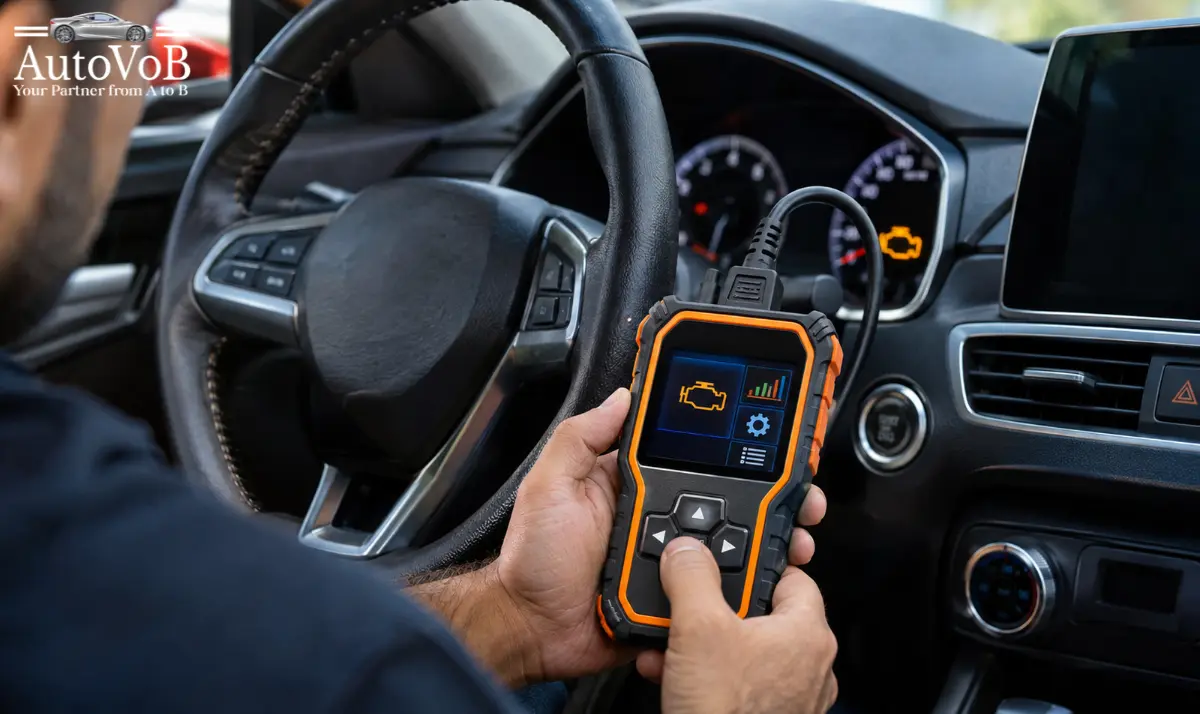
A check engine light tells you something is wrong and nothing more. An obd2 scanner that costs less than a decent dinner out tells you the rest, and after years around service lanes, I think every owner of a car built this century should have one.
The tool won't fix anything. What it changes is the conversation. You stop telling the service advisor that a light came on and start telling them the car stored a P0420 at highway speed. Those two customers get treated differently, and the second one rarely pays for a repair they didn't need.
What an OBD2 scanner actually talks to
On-board diagnostics, version two, is the self-monitoring system that emissions regulators pushed onto carmakers. In the United States it became mandatory on cars and light trucks from the 1996 model year. Europe's version, EOBD, came through Directive 98/69/EC and covered petrol cars from January 2001 and diesels from January 2004. Vehicles built in Australia and New Zealand had to comply from 2006, and India's BS6 Phase 2 rules, in force since April 1, 2023, tightened OBD requirements on new cars and made OBD-II mandatory on two-wheelers.
The practical result is a standard 16-pin port, usually under the dashboard within reach of the driver's seat. Plug a scanner in, switch the ignition on, and it reads stored and pending fault codes, live sensor data and the status of the car's emissions self-tests.
One caveat before going further. The dates and inspection rules in this post reflect current regulations, and governments can change them at any time. Check with your country's transport or environment authority before relying on any of them.
How to read a trouble code without fooling yourself
Every diagnostic trouble code has five characters. The first letter names the system: P for powertrain, B for body, C for chassis and U for network communication between modules. The second character tells you who wrote the definition. A 0 means a generic code that reads the same on every make. A 1 means the carmaker defined it, so the same P1 code can describe two different faults on two different brands.
That second digit matters when you shop. Cheap readers often stick to generic powertrain codes, which is how someone gets a clean result from a basic tool while an ABS or airbag fault sits untouched in another module.
The bigger trap is treating a code as a diagnosis. A code points to a circuit or system that failed a test. P0171, system too lean, can have several causes, and the sensor named in a code is often reporting the problem rather than causing it. Throwing parts at a code is the most expensive way there is to diagnose a car.
Before you clear anything, save the codes and the freeze frame data, the snapshot of engine conditions at the moment the fault set. Clearing codes usually wipes that snapshot, and it's often the best clue you'll get.
Steady light versus flashing light
A steady check engine light means book an inspection soon. A flashing one means pull over when it's safe. Flashing usually signals a misfire severe enough to dump unburned fuel into the exhaust, where it overheats the catalytic converter. That's the part you least want to replace: CarMD puts the average catalytic converter job at $1,511, and the company says unresolved misfires and failing oxygen sensors are common ways to destroy one.
What ignoring the light costs now
CarMD's 2026 Vehicle Health Index, built from OBD data on more than 39 million US vehicles, found the average check engine repair hit a record 554in2025,up33%ontheyearbefore.Laborcostsrose51%andparts23%.Thefivemostcommonfixeswerethecatalyticconverter(1,511), oxygen sensor (287),ignitioncoilandsparkplugs(480), mass airflow sensor (346)andignitioncoilalone(256).
Those are American numbers, but the lesson travels. The cheap items on that list turn into the expensive one when they're ignored. CarMD also says a failing oxygen sensor can cut fuel economy by as much as 40% while the car still drives normally. A scanner that catches that early pays for itself quickly.
Choosing the best OBD2 scanner for how you'll use it
People hunting for the best obd2 scanner usually want one name. The honest answer depends on what you'll do after you read the code. The prices below come from 2026 buyer's guides and vary by country and retailer.
Basic handheld readers
A tool like the Foxwell NT301, at roughly $50 to $65, reads generic and manufacturer codes, shows live data and runs emissions readiness checks. There's no app, no subscription and nothing to charge. It's what I'd keep in the glovebox of an older car.
Bluetooth dongles
The BlueDriver Pro, at $99 to $140, pairs with a phone app and matches your code against verified repairs for your exact model, with no subscription. It can't command components, and on the original hardware live data refreshes only every four to five seconds.
Bluetooth brings a risk worth knowing about. In 2017, researchers at Argus Cyber Security stopped the engine of a moving car through flaws in Bosch's Drivelog Connect dongle while within Bluetooth range. Bosch fixed the authentication flaw, but the lesson stands: buy from brands that ship firmware updates, and don't leave a no-name dongle plugged in permanently.
Bidirectional scan tools
These send commands as well as reading them, so you can fire an ABS pump or cycle an injector from the tool. The Innova 5610, at $280 to $350, includes lifetime updates and even reads older pre-1996 domestic cars. Tablet tools like the Autel MaxiCOM MK808Z, at $400 to $500, go deeper but charge roughly $149 a year for updates after the first year, so work out the three-year cost before comparing sticker prices. If you drive a 2020 or newer GM, Volvo, BMW or Stellantis product, confirm the tool supports CAN FD and DoIP. Without them, a scanner can connect and still return nothing useful.
My view is that most owners belong in the first two tiers. A bidirectional tool earns its price only if you do your own repairs.
Don't clear codes right before an inspection
This catches people every year. Clearing codes resets the car's readiness monitors, the self-tests for the catalyst, evaporative system, oxygen sensors and others, to not ready. They switch back only after the car completes specific driving conditions. In New York, a 2001 or newer vehicle fails the OBD inspection if more than one monitor reads not ready, and 1996 to 2000 models fail with more than two. Other states and countries set their own limits.
So check readiness on your scanner before the test. If monitors show not ready, drive normally for a few days and check again. Erasing the light the night before is a reliable way to fail.
Also Read: Essential Tools Needed to Quickly Inspect a Car at Home
Where the scanner's job ends
A scanner tells you where to look. It doesn't replace a pressure test, a smoke test or a technician who knows how your engine tends to fail. Use it to rule out the easy stuff, like a loose fuel cap, and to walk into a shop with the codes, the freeze frame and some idea of what a fair quote looks like. If you aren't ready to buy one, CarMD notes that many parts retailers offer free scans.
The car records what went wrong the moment the light comes on. Reading that record takes about two minutes and a tool that costs less than many shops charge just to plug one in. Do it before you panic, and definitely before you hand over the keys with nothing to say except that a light came on.
FAQs
1. What does an OBD2 scanner actually tell you?
It reads the fault codes your car's computer stores when a system fails a self-test, plus live sensor data and the status of emissions monitors. A code points to the system or circuit at fault, not the exact failed part, so treat it as the start of a diagnosis.
2. Will an OBD2 scanner work on my car?
Most likely. OBD-II has been mandatory on US cars and light trucks since the 1996 model year, on European petrol cars since 2001 and diesels since 2004. Look for a 16-pin port under the dashboard near the driver's seat. Newer cars may need CAN FD support.
3. Is it safe to drive with a flashing check engine light?
No. A flashing light usually means a severe misfire that sends unburned fuel into the exhaust and can overheat the catalytic converter. CarMD puts the average converter replacement at $1,511 in the US, so pull over when it's safe and get the car checked.
4. Should I clear codes before an emissions inspection?
No. Clearing codes resets the readiness monitors to not ready, and the car must complete certain driving conditions before they reset. In New York, a 2001 or newer car fails if more than one monitor is not ready. Rules vary by region and can change.
5. How much should I spend on the best OBD2 scanner?
For most owners, $50 to $140 covers it. A basic handheld reads codes, live data and readiness, and a good Bluetooth dongle adds repair guidance. Bidirectional tools cost $280 and up and only make sense if you do your own repairs. Prices vary by market.
Stay tuned to AutoVoB Blogs for more such detailed automotive guides.