Used Excavator for Sale in Saudi Arabia: What to Know
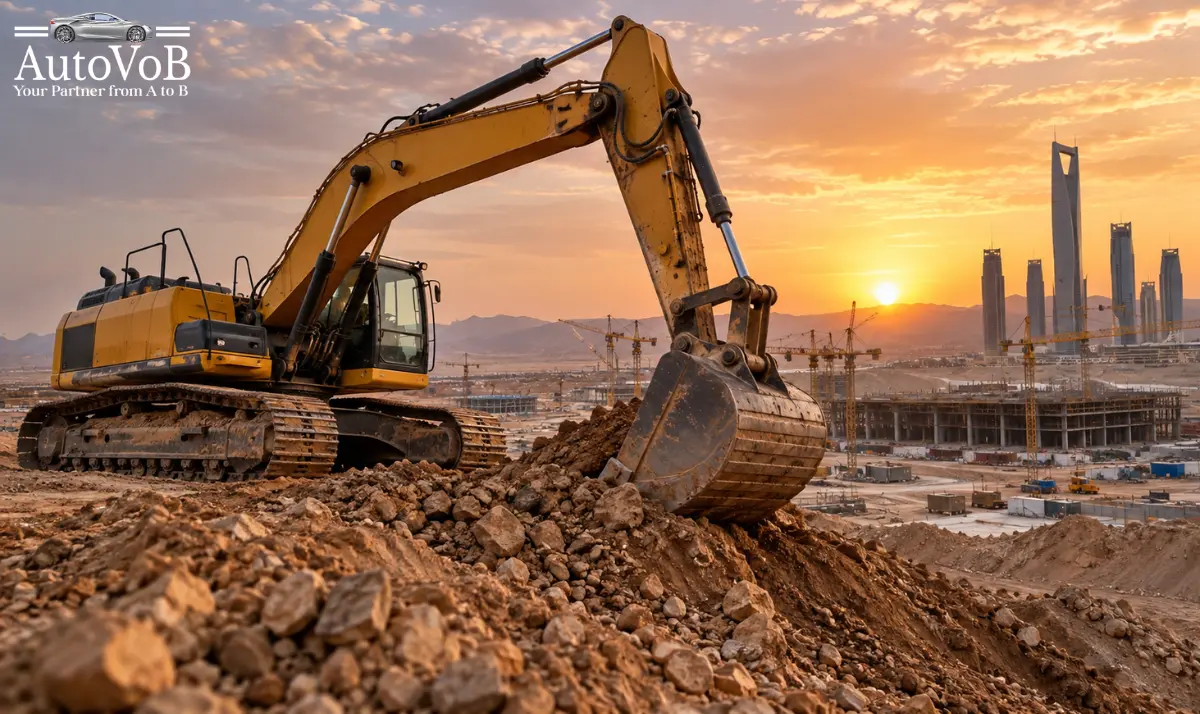
A used excavator for sale in Saudi Arabia is no longer just a bargain-hunting purchase. With mega-projects, housing, roads, tourism developments and industrial work running at the same time, contractors are buying machines for one reason: they need productive equipment on site without tying up new-equipment money.
The wider market backs that up. Saudi Arabia's economy grew 4.5% in 2025, with construction accounting for 8% of GDP. In June 2026 alone, the Saudi Contractors Authority recorded more than SAR 29.5 billion in awarded projects, and construction projects represented SAR 20.6 billion, or 56% of the total value.
Why used excavator demand is rising in Saudi Arabia
The giga-project story is easy to reduce to NEOM, but the demand is broader than one development. PIF's portfolio includes NEOM, Qiddiya, Red Sea Global, ROSHN and Diriyah, while new work continues around Riyadh, Jeddah, the Eastern Province and major industrial and logistics corridors.
That matters for excavators because much of the early and middle construction cycle is dirty, repetitive work: clearing, trenching, grading support, foundation excavation, utility work and bulk earthmoving. You don't need a showroom-fresh machine for every one of those jobs. You need a machine that starts every morning, digs properly and doesn't spend half the month waiting for parts.
Current industry research points in the same direction. A 2026 Saudi construction-equipment market study estimates the market at about 22,290 units in 2025, with earthmoving the largest equipment category. The same research says excavators accounted for nearly 60% of earthmoving equipment, while crawler excavators and 20-ton machines were among the leading configurations.
That is why searches for a used excavator Saudi Arabia are increasingly practical for contractors, rental operators and smaller firms that don't want a large finance commitment attached to every machine.
What to look for in a used excavator for sale in Saudi Arabia
Price gets the phone ringing, but condition closes the deal.
In Saudi Arabia, I'd put hydraulic health ahead of cosmetics. A machine with faded paint and a clean hydraulic system is a better buy than a freshly repainted excavator with weak swing performance, cylinder leaks and a tired main pump. Paint is cheap. Pumps, travel motors and final drives aren't.
The undercarriage deserves special attention on crawler excavators. Check track chains, rollers, sprockets, idlers and shoe condition. Excessive wear can turn an attractive asking price into an expensive first-month repair bill. On a wheeled excavator, inspect steering, brakes, tyres, outriggers and road-going systems just as carefully.
Hours matter, but hour-meter numbers shouldn't be treated as gospel. Compare the displayed hours with service invoices, wear on pedals and controls, hydraulic condition and the machine's general working history. A documented 12,000-hour excavator can be easier to price and maintain than an undocumented machine showing half that.
The sweet spot: productive, common and repairable
For many Saudi applications, the 20-ton crawler excavator is a sensible middle ground. It's large enough for serious earthmoving and foundation work, but still more flexible to transport and deploy than the very heavy classes. Current market research identifies the 20-ton class as particularly popular in Saudi Arabia.
That doesn't mean bigger is always better. Large infrastructure packages may justify 30-, 40- or 50-ton machines, while landscaping, utility trenching and urban work can favour mini or compact excavators. The right question isn't which machine looks strongest. It's which machine will stay busy.
Common brands and models can have another advantage: parts, mechanics and used components are easier to source. This matters more in a high-utilization rental fleet than a small contractor's occasional-use machine. A machine that is technically cheaper but difficult to support can cost more per operating hour.
Where the giga-project cycle changes the equation
Large projects create demand in waves. A contractor may need ten excavators during bulk excavation, then cut the fleet when the work moves to structures, roads or finishing. That creates a healthy case for used equipment because second-hand machines can be added for a defined workload without creating the same capital commitment as a new fleet.
It also creates opportunities on the supply side. Equipment can move from one project or contractor to another instead of sitting idle. That's one reason the used market deserves more attention as Saudi construction becomes more project-driven.
PIF says its giga-projects are designed to create economic ecosystems that extend beyond real estate and infrastructure. Qiddiya City covers more than 360 square kilometres and is planned for 500,000 residents, while Diriyah is targeting 18,000 residential units, more than 40 hotels and 50 million annual visitors by 2030. The scale of these developments means earthmoving demand isn't tied to a single building site.
Buying locally or importing into Saudi Arabia
A local machine is usually the simpler purchase. You can inspect it in person, test it under load, review service records and understand how it has been operated in the Kingdom's heat and dust.
An imported excavator can still make financial sense, especially when a specific age, configuration or attachment is hard to find locally. But the landed cost is what matters, not the overseas purchase price.
Saudi Arabia applies a 15% VAT rate to standard taxable supplies, and imports are subject to import VAT. Customs treatment depends on the tariff classification and applicable rules, so buyers should check the current integrated customs tariff before finalizing a transaction. ZATCA also requires standard import documentation such as a commercial invoice, bill of lading and certificate of origin where applicable.
For heavy equipment, SASO's regulatory framework matters too. The Heavy Equipment Regulatory Center is responsible for regulating the sector within its remit, while SASO's machinery rules cover mobile machinery and heavy-duty equipment, including equipment used for digging and earthmoving. Treat compliance as part of the buying process, not paperwork to sort out after the machine lands.
What to inspect before paying for a used excavator
A serious inspection should cover the machine from tracks to attachment.
Start the engine cold if possible. Watch for excessive smoke, abnormal noise, hard starting or unstable idle. Test every hydraulic function together, not just one lever at a time. A tired pump can behave acceptably under a light single function and show its weakness when multiple functions are combined.
Inspect the boom, arm and bucket linkage for cracks, bad repairs and excessive play. Look at hoses and fittings for fresh oil, not just obvious leaks. Check the radiator and cooling package for packed dust and damaged fins. Saudi heat makes cooling-system condition a working issue, not a cosmetic one.
Then verify the paper trail. Match the machine's serial and identification details with ownership and import documents. Ask when major components were rebuilt or replaced. If the seller can't explain the machine's maintenance history, price the excavator as a risk, not as a bargain.
Also Read: Commercial Vehicles in Saudi Arabia: Market & Buying
Is a used excavator still the better buy in 2026?
For many buyers, yes, but only when utilization and maintenance support the decision.
A used machine makes sense when the project needs immediate capacity, the model has reliable parts support, and the buyer can verify condition. A nearly new machine with a documented history can be particularly attractive because much of its early depreciation has already happened.
But cheap equipment isn't automatically economical. If a contractor buys a worn excavator because the sticker price is low, then loses production to hydraulic repairs, undercarriage replacement and downtime, the saving disappears quickly.
The Saudi market has enough active construction work to support demand, but that doesn't mean every used excavator will hold its value. Condition, brand support, hours, attachments and the kind of work the machine has done will separate the winners from the headaches.
For anyone searching excavator for sale KSA, the sensible approach is simple: buy the hours you can verify, the condition you can inspect and the support network you can actually use.
The market is expanding because Saudi Arabia is still building at scale. That makes used excavators relevant, but it also makes good buying discipline more valuable than ever.
Information in this article is based on current data available in 2026. Saudi regulations, customs requirements, taxes and equipment compliance rules can change at any time, so buyers should verify the latest requirements with the relevant Saudi authorities before completing a purchase.
FAQs
1. Why is demand for used excavators growing in Saudi Arabia?
Demand is supported by continued construction and infrastructure spending across Saudi Arabia. In 2025, construction was 8% of GDP, while June 2026 project awards exceeded SAR 29.5 billion. Giga-projects add another layer of sustained site activity.
2. Is buying a used excavator cheaper than buying new?
For many contractors, a used excavator offers a lower entry cost than a new machine and can make sense when the machine has strong service records, healthy hydraulics, and common parts support. The saving only works if hidden repairs don't erase it.
3. What should I inspect before buying a used excavator?
Start with hydraulic performance, engine condition, swing function, undercarriage wear, boom and arm cracks, leaks, hour-meter history, and previous repairs. Then verify serial numbers, ownership documents, import paperwork, and the machine's service history before paying.
4. Are there Saudi regulations for imported used excavators?
Saudi rules for heavy equipment and machinery can involve conformity, customs, and safety requirements. Imported equipment may also face VAT and customs procedures. Requirements can change, so buyers should verify the latest rules with SASO and ZATCA before purchase.
5. Which excavator size is popular in Saudi Arabia?
Around 20-ton crawler excavators are a practical sweet spot for many Saudi jobs because they balance digging capacity, transportability, and operating flexibility. But the right size depends on the project, ground conditions, attachments, and expected utilization.