UAE Petrol Prices Increase in 2026: EV vs Hybrid Choice
Petrol prices in the UAE have climbed again in 2026, and that changes the buying conversation for a lot of drivers. If you are choosing between petrol, hybrid, and electric, the best answer now depends less on trend and more on your daily driving, charging access, and how long you plan to keep the car.
Why fuel costs matter now
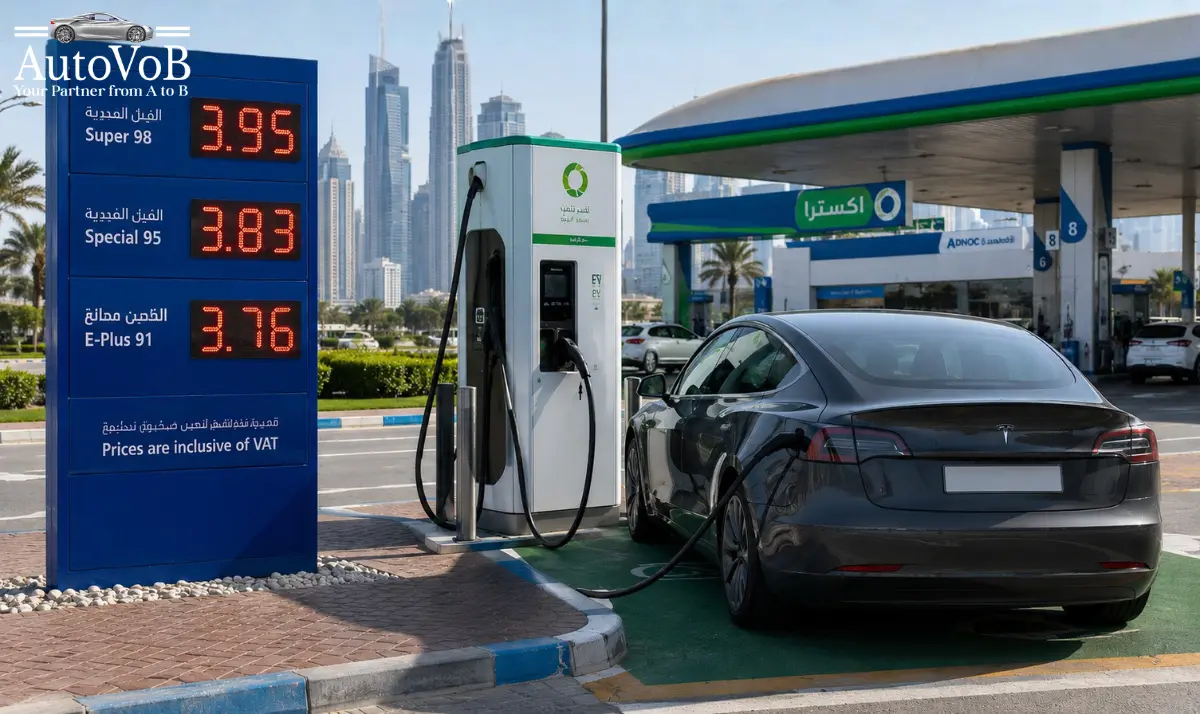
June 2026 prices pushed Super 98 to Dh3.95 a litre, Special 95 to Dh3.83, and E-Plus 91 to Dh3.76, which is a clear jump from May. Khaleej Times says petrol rates have risen for three straight months, tracking a rally in global oil prices that strengthened between February and May.
That matters because fuel is no longer a small, forgettable line in the monthly budget. For commuters who drive every day, even a modest increase in per-litre cost compounds quickly across weeks and months. The real question is not whether fuel is expensive, but whether your next car should reduce that pressure in a meaningful way.
EVs are strongest on running cost
If your main goal is to spend less over time, an EV usually wins on running costs. A UAE ownership breakdown says electric cars have lower charging and maintenance costs than petrol cars, with charging costs over five years roughly half of petrol fuel costs in its example, and maintenance also lower because EVs do not need oil changes.
That advantage becomes more attractive when petrol keeps moving up. An EV is especially sensible if most of your driving is city-based, predictable, and easy to plan around charging. In plain terms, if you drive to work, the mall, school runs, and occasional weekend trips, an EV can make more financial sense than it did a year or two ago.
Hybrids offer the easier transition
A hybrid is the safer middle path for many UAE buyers. It gives you meaningful fuel savings without asking you to reorganize your life around charging. That makes it appealing if you drive long distances, live in an apartment without convenient charging, or simply do not want to think about plugs every week.
This is also why hybrids often fit families better than pure EVs. You still get better efficiency in traffic and on mixed drives, but you keep the range flexibility of a petrol car. For many drivers, that balance is more practical than chasing the lowest possible running cost.
Charging is getting easier
Dubai’s charging network is expanding fast. DEWA says its EV Green Charger network grew to more than 1,860 charging points across Dubai by mid-January 2026, and official DEWA materials explain that users can locate chargers through its website, smart app, and related digital platforms.
That growth removes one of the biggest old objections to EV ownership. You still need to think about where you charge, especially if you live in a building, but the infrastructure is no longer thin enough to dismiss EVs outright. For urban drivers in Dubai and Abu Dhabi, charging is becoming a real-world option instead of a compromise.
Who should choose what
Here is the simplest way to think about it. Choose an EV if your driving is mostly urban, you can charge at home or work, and you want the lowest running costs over time. Choose a hybrid if you want better fuel economy but do not want charging to shape your routine. Choose petrol only if upfront cost matters most, you drive very little, or you need the simplest ownership experience possible.
The market is also moving in favor of green cars. Dubai continues expanding public charging, and official announcements show the emirate is building toward much broader EV access in 2026. That does not make petrol cars obsolete, but it does make EVs and hybrids more sensible than they were when charger access was patchy.
What makes sense in 2026
For most UAE drivers, the answer is hybrid if you want the least amount of lifestyle change, and EV if you are ready to optimize for lower running cost and cleaner driving. The more you drive, the more fuel savings matter. The more predictable your routes are, the better an EV looks.
If I had to keep it brutally simple: city commuter with charging access, buy an EV. Mixed driver or family with road trips, buy a hybrid. Tight upfront budget or very low mileage, stay with petrol for now. That is the cleanest decision frame in 2026.
Also Read: Top 10 Best EV Cars in the UAE for 2026
Conclusion
Rising petrol prices in the UAE are not just a news item. They are a signal to rethink how much of your car budget is tied to fuel and how much you can control by changing powertrain. In 2026, EVs make the most sense for drivers who can charge easily and want the lowest long-term running cost, while hybrids remain the best all-round choice for people who want savings without changing habits.
FAQs
1. Why Is Petrol Price Increasing in UAE?
Petrol prices in the UAE rise when global oil prices climb, and 2026 has seen that pressure build again. Khaleej Times linked the June hike to a broader rally in global oil rates, while the UAE’s monthly pricing system passes those market changes through to drivers.
2. Is an EV Cheaper Than a Petrol Car in the UAE?
Yes, usually over time. A UAE cost breakdown from Dubicars found EV charging and maintenance costs lower than petrol, with charging roughly half the five-year fuel spend in its example.
3. Is a Hybrid Better Than an EV for UAE Families?
For many families, yes. A hybrid is easier if you drive long distances, share one car, or do not want to rely on charging access every day.
4. Are EV Charging Stations Easy to Find in Dubai?
They are getting easier to find. DEWA says Dubai had more than 1,860 EV charging points by mid-January 2026, with locations accessible through its digital platforms.
5. When Should I Choose Petrol Instead?
Petrol still makes sense if your budget is tight, you drive very little, or you want the simplest ownership setup with no charging planning. For low-mileage buyers, the fuel savings from EVs or hybrids may not justify the higher purchase price.
Follow AutoVoB blogs to explore more such informative content.
AutoVoB makes buying and selling vehicles worldwide simple.