Solid State Batteries for EV: The Full Breakdown
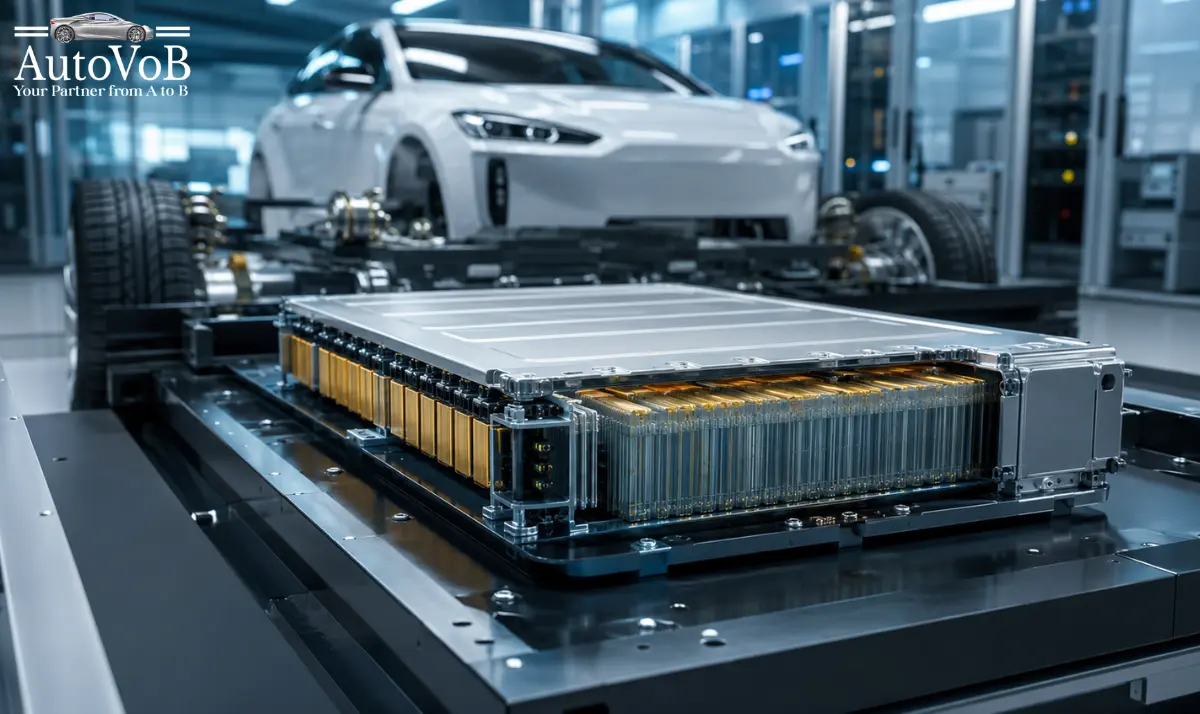
There's a specific frustration that comes with electric vehicles, not the driving, but the waiting. Waiting at a charger for 45 minutes. Wondering if the range will hold in cold weather. Calculating whether you'll make it to the next stop. Battery technology is the reason EVs haven't fully replaced combustion cars yet, and it's also the reason they eventually will.
Solid state batteries are the technology that most of the automotive world is betting on to fix this. Scientists have called it the "holy grail" of battery design. Automakers have poured billions into it. And after years of laboratory promises, the first real-world tests are now happening on actual roads.
Here's what solid state batteries actually are, what they can do for EVs, and where things stand right now.
What Is a Solid State Battery?
A conventional lithium-ion battery, the kind in every EV on the road today, uses a liquid electrolyte to move charged particles between the positive and negative electrodes. This liquid works well but it's flammable, which is why EV fires, while rare, are dramatic when they happen. The liquid also limits how dense the battery can be and how fast it can charge without degrading.
A solid state battery replaces that liquid with a solid material, typically a ceramic, polymer, or sulfide compound. The basic job is the same: move lithium ions between electrodes. But a solid electrolyte does that job without the safety risk and with significantly higher energy storage potential.
It sounds like a simple swap. It isn't. The chemistry, manufacturing processes, and materials involved are entirely different, and making them work reliably at automotive scale has taken the better part of two decades.
Why Solid State Batteries Are a Bigger Deal Than They Sound
The performance advantages stack up quickly when you compare solid state and lithium-ion head to head.
Energy density is the biggest one. Current lithium-ion battery packs deliver somewhere between 160 and 300 watt-hours per kilogram at the pack level. Solid state batteries are projected to reach 400 to 800 Wh/kg, meaning you can carry the same amount of energy in a smaller, lighter pack, or carry far more energy in the same space. That directly translates to range.
Safety improves dramatically when there's no flammable liquid in the system. Thermal runaway, the chain reaction that causes battery fires, is driven largely by that liquid electrolyte. Remove it, and the risk drops sharply. This matters for consumers, but it also simplifies the thermal management system, which reduces overall vehicle complexity and cost over time.
Charging speed is another area where the numbers look very different. The solid electrolyte allows lithium ions to move more efficiently, meaning the battery can accept charge faster without the heat buildup that damages liquid-electrolyte cells. Toyota's prototype solid state EV battery can charge from 10% to 80% in 10 minutes. That's roughly the time it takes to fill a petrol tank.
Lifespan also improves. Industry projections put solid state batteries at 15 to 20 years of useful life compared to 10 to 12 for conventional lithium-ion. For EV owners worried about long-term battery degradation, that's a meaningful shift.
What Automakers Are Actually Doing Right Now
This is where things get interesting, because the industry has moved from theoretical claims to real road tests.
Toyota has been at this longer than anyone. The Japanese automaker has a prototype solid state EV battery that delivers an estimated 620 miles of range and charges from 10% to 80% in under 10 minutes. Toyota is targeting mass production in 2027 or 2028, and in late 2025 confirmed a supply agreement with Sumitomo Metal Mining for cathode materials. Its first-generation solid state battery is expected to offer around 1,000 km of range, roughly 20% more than Toyota's own upcoming Performance lithium-ion battery.
Mercedes-Benz partnered with US startup Factorial Energy on its Solstice all-solid-state battery. In September 2025, a prototype EQS fitted with this battery drove from Stuttgart to Malmö, 749 miles, on a single charge, arriving with 85 miles still remaining. That's not a lab test. That's a car on a highway. Mercedes hopes to bring this to production vehicles by the end of the decade.
BMW is testing all-solid-state prismatic cells developed by Colorado startup Solid Power in a prototype i7 sedan. The cells use a sulfide-based solid electrolyte. BMW is also working with Samsung SDI to build out the manufacturing side, with a pilot production line being set up in Germany.
Volkswagen Group partnered with QuantumScape, a California startup, and has invested over $260 million into the venture. QuantumScape's anode-free lithium metal solid state battery could push today's EVs with 350 miles of range to between 400 and 500 miles. Volkswagen debuted an all-solid-state battery in a prototype Ducati electric race bike at IAA Mobility 2025, with an energy density of 844 Wh/L and a 10%–80% charge time of just over 12 minutes.
Stellantis validated a semi-solid-state cell with Factorial Energy achieving 375 Wh/kg energy density. That cell charges from 15% to 90% in 18 minutes and operates at temperatures from -30°C to 45°C. Stellantis plans prototype testing in Dodge Charger Daytona EVs in 2026.
Nissan is targeting solid state batteries in vehicles by 2028. Honda is aiming for the same timeframe with a target range of 620 miles, though cell size challenges have slowed progress. Hyundai-Kia says widespread availability won't happen before 2030, and Tesla has publicly stated it's doubling down on improving its existing LFP cell technology rather than chasing solid state at this stage.
In China, the situation is slightly different. Semi-solid-state batteries, which use a gel-like electrolyte between liquid and fully solid, are already in commercial production vehicles from brands like NIO and Dongfeng. Full solid state batteries are still in small batch development, but China is scaling aggressively.
The Challenges That Remain
For all the progress, there are real engineering and commercial problems that haven't been solved yet.
Cost is the most straightforward barrier. Lithium-ion batteries currently cost around $115 per kWh. Solid state battery prototypes cost anywhere from $400 to $800 per kWh in 2026. That gap needs to narrow significantly before any automaker can put them in a mainstream vehicle and price it competitively.
Manufacturing complexity is harder to quantify but equally serious. Producing solid electrolytes at scale, maintaining proper contact between layers inside the cell, and achieving consistent quality across millions of units, these are problems that factory processes haven't fully solved yet. Ilika, a UK-based solid state battery developer, recently achieved a 93% yield rate on its pilot production line, which is encouraging. But a pilot line is not a gigafactory.
Interface resistance is a technical challenge specific to the solid-solid contact between the electrolyte and electrodes. At that boundary, resistance builds up in a way that liquid electrolytes don't have to contend with. Managing this without degrading cell performance is an ongoing materials science problem.
Dendrite formation, tiny lithium structures that grow inside the battery during cycling and can eventually cause short circuits, hasn't been entirely eliminated. Solid electrolytes reduce the problem compared to liquid systems, but it remains an area of active research.
Temperature sensitivity affects some solid electrolyte materials, particularly polymer-based ones, which need higher operating temperatures to function well. This creates complications for real-world vehicle use.
Industry analysts at BloombergNEF project that solid state batteries will account for around 10% of global EV and stationary storage demand by 2035, with early adoption concentrated in premium vehicles. That's a considered forecast, not an optimistic one.
The Commercialisation Timeline
The picture emerging from across the industry is reasonably consistent: limited production of solid state EV batteries in high-end vehicles between 2027 and 2029, with broader commercial volumes coming in the early 2030s.
Semi-solid-state technology is already in vehicles today, primarily in China. Fully solid state cells are arriving first in niche, high-margin applications, motorsport, premium EVs, and aerospace, where the cost premium is acceptable. Mass market availability, at prices comparable to today's EVs, is likely a 2032 to 2035 scenario if manufacturing timelines hold.
Some experts have been more cautious. At the 2025 China Automotive Forum, Wang Fang, Chief Scientist at China Automotive Technology Research Centre, identified four unresolved problems, unclear ion conduction channels, complex production processes, inadequate safety controls, and high-volume manufacturing challenges, and suggested that some announced timelines were unrealistic.
Realistic optimism is probably the right frame. The technology clearly works. Multiple real-world tests have proven that. The question now is whether it can be manufactured consistently, at scale, at a cost that consumers can absorb.
Also Read: Is DC Fast Charging Killing Your EV Battery?
What This Means for EV Buyers
If you're buying an EV in 2025 or 2026, you won't be buying one with a solid state battery, at least not outside China and not in a fully solid state form. What you can expect is that the EVs you see in showrooms from 2028 onwards will look very different, with longer ranges, faster charging, and smaller battery packs.
For the car industry broadly, this technology represents a genuine reset. The issues that have slowed EV adoption, range anxiety, charging time, fire risk, are exactly the problems solid state batteries are built to solve. When they scale, and the evidence suggests they will, the arguments for holding onto a combustion engine get harder to make.
The fact that companies like Mercedes have driven nearly 750 miles on a single charge with a prototype battery that's still being refined is worth paying attention to. The lab work is done. The road tests are happening. The factories are next.
FAQs
1. What is a solid state battery in an EV?
A solid state EV battery replaces the flammable liquid electrolyte used in conventional lithium-ion batteries with a solid material. This design improves energy density, enhances safety, and enables faster charging, allowing electric vehicles to achieve longer driving ranges and shorter charging times.
2. How far can a solid state EV battery take you on one charge?
Current solid state battery prototypes are delivering impressive results. Toyota's prototype targets approximately 620 miles of range, while a Mercedes-Benz EQS prototype equipped with Factorial Energy's solid state battery completed a 749-mile real-world journey on a single charge in 2025.
3. When will solid state batteries be available in production EVs?
Several automakers are planning to introduce solid state batteries within the next few years. Toyota and Nissan are targeting initial production between 2027 and 2028, while Mercedes-Benz and BMW aim for commercialization by the end of the decade. Widespread adoption in mainstream vehicles is expected during the early 2030s as manufacturing capacity expands and costs decrease.
4. Are solid state EV batteries safer than lithium-ion batteries?
Yes. Solid state batteries eliminate the flammable liquid electrolyte found in traditional lithium-ion cells, significantly reducing the risk of thermal runaway, the chain reaction that can lead to battery fires. As a result, they offer greater stability and improved safety across a wide range of operating conditions.
5. Why aren't solid state batteries in EVs yet?
The biggest obstacles are cost and large-scale manufacturing. In 2026, solid state battery prototypes cost between $400 and $800 per kWh, compared to roughly $115 per kWh for conventional lithium-ion batteries. Automakers and battery manufacturers are still working to scale production, improve manufacturing efficiency, and reduce costs before the technology becomes widely available in affordable electric vehicles.
Follow AutoVoB blogs to explore more such informative content.
AutoVoB makes buying and selling vehicles worldwide simple.