Car Dent Repair Guide, Types of Car Dents and Fixes
A car dent is more than a cosmetic issue. Even a small dent can reduce your vehicle's resale value, expose metal to moisture if the paint is damaged, and lead to more expensive repairs if ignored. The good news is that many dents can be repaired without replacing panels or repainting the entire area.
Modern car dent repair techniques have come a long way. Methods like Paintless Dent Repair (PDR) can restore many dents while preserving the factory paint. However, not every dent is suitable for the same repair process. The shape, depth, location, and paint condition all determine the right solution.
This guide explains the most common types of car dents, how professionals repair them, and when a DIY fix may be worth trying.
Why It Is Important to Fix a Car Dent Early
Many drivers postpone dent repairs because the vehicle still drives normally. While this may seem harmless, delaying repairs can create bigger problems.
If the paint has cracked, moisture can reach the exposed metal and eventually cause rust. Dents near body lines or panel edges may also become harder to repair over time if the metal settles into its damaged shape.
Repairing dents early usually keeps costs lower and helps maintain the vehicle's appearance and resale value.
Common Types of Car Dents
1. Round Dents
Round dents are among the easiest to repair. They are usually caused by shopping carts, sports balls, falling branches, or minor impacts in parking lots.
These dents have smooth edges and typically do not damage the paint, making them excellent candidates for Paintless Dent Repair.
2. Door Dings
Door dings happen when another vehicle's door strikes yours in a parking lot. Although they are often small, multiple dings can make a vehicle look neglected.
If the paint remains intact and the dent is shallow, professional PDR can often remove it without affecting the original finish.
3. Crease Dents
Crease dents are long, narrow dents that result from glancing impacts, bicycle handlebars, or objects sliding against the vehicle.
These dents are more challenging because the metal has been stretched along a line. Minor creases may still qualify for PDR, while deeper ones usually require traditional body repair.
4. Sharp Dents
Sharp dents occur when pointed objects strike the vehicle. The impact creates a deep impression and frequently chips or cracks the paint.
Because the paint is already damaged, these dents generally require filling, sanding, and repainting after reshaping the metal.
5. Hail Damage
Hailstorms often leave dozens of small dents across the hood, roof, trunk, and upper body panels.
Since hail rarely breaks the paint, professional PDR has become the preferred repair method for most hail damage. Technicians use specialized tools to restore each dent individually.
6. Large Panel Dents
Larger dents usually result from low-speed collisions or impacts with fixed objects.
If the metal has stretched significantly or the panel is severely distorted, repairing the dent may involve body filler, repainting, or even replacing the damaged panel.
What Determines the Right Car Dent Repair Method?
Several factors influence the repair process.
Paint Condition
The original paint plays a major role. If it remains intact without cracks or chips, Paintless Dent Repair may be possible. Damaged paint usually requires conventional repair and repainting.
Dent Depth
Shallow dents are much easier to repair than deep dents. As metal stretches, returning it to its original shape becomes more difficult.
Dent Location
Dents located on flat panels are generally easier to access. Damage near edges, body lines, or structural supports often requires more complex repairs.
Panel Material
Modern vehicles use both steel and aluminum panels. Both materials can be repaired, but aluminum requires specialized equipment and experienced technicians.
Popular Car Dent Repair Methods
Paintless Dent Repair (PDR)
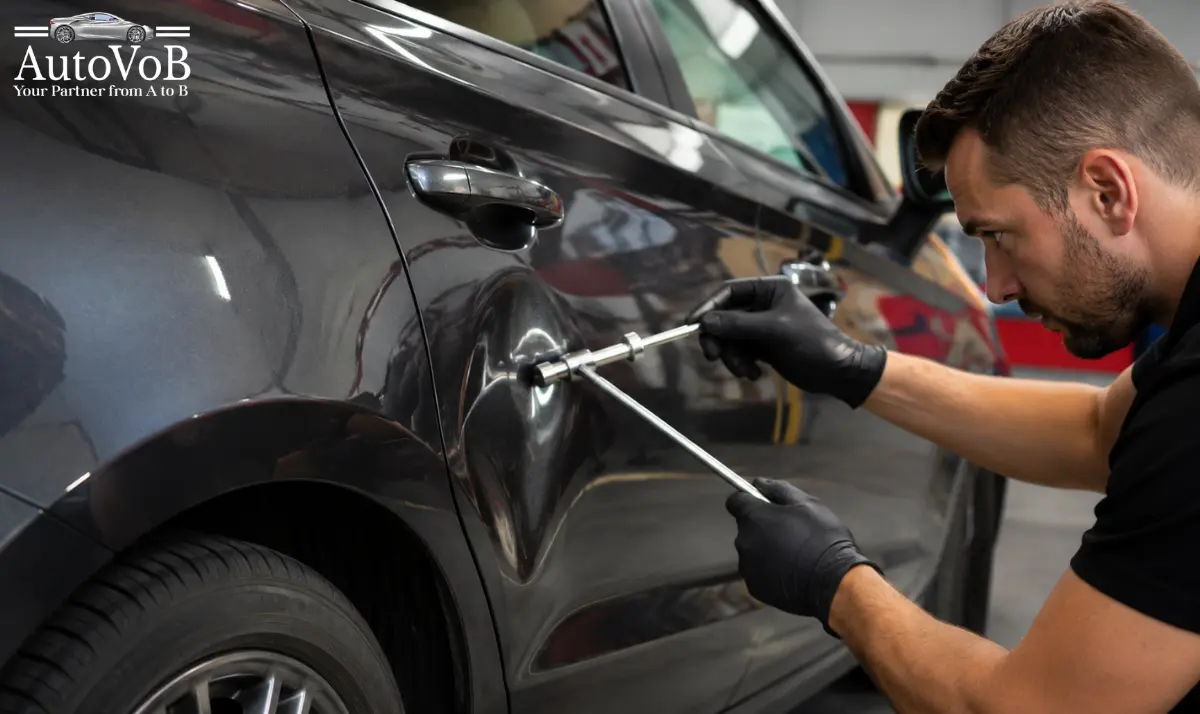
Paintless Dent Repair is one of the most effective methods for removing minor dents while preserving the factory paint.
Technicians carefully massage the metal back into shape using specialized rods, picks, or glue-pulling tools. No sanding, fillers, or repainting are required.
PDR works best when:
- Paint remains undamaged.
- The dent is shallow.
- The metal has not stretched excessively.
- The technician has access behind the damaged panel.
It is commonly used for hail damage, parking lot dings, and small impact dents.
Traditional Dent Repair
When paint is damaged or the dent is too severe, traditional repair becomes necessary.
The damaged area is straightened, body filler is applied if needed, then the surface is sanded, primed, and repainted to match the surrounding panel.
Although this process takes longer, it restores both the panel shape and paint finish.
Panel Replacement
Some dents simply cannot be repaired economically.
If the panel is badly crushed or structural damage exists, replacing the entire panel may provide the safest and most durable solution.
Can You Remove Small Car Dents Yourself?
Some minor dents can be improved at home, but DIY methods should be approached carefully.
Common techniques include:
- Suction cup dent pullers
- Glue puller kits
- Gentle heat followed by controlled cooling
- Hot water for certain plastic bumper dents
These methods may work for very shallow dents with undamaged paint.
However, forcing the metal incorrectly can stretch the panel further or damage the paint, making professional repairs more expensive later.
When Should You Visit a Professional?
Professional repair is recommended if:
- Paint has chipped or cracked.
- The dent has a sharp crease.
- Multiple dents cover the panel.
- The dent sits on an edge or body line.
- The damage resulted from a collision.
- Rust has already started.
Experienced technicians use specialized lighting and precision tools that allow them to reshape panels far more accurately than DIY equipment.
How to Prevent Car Dents
While accidents cannot always be avoided, a few habits reduce the chances of damage.
Park away from crowded entrances whenever possible. Leave enough space between vehicles in parking lots. Avoid parking under weak tree branches during storms. Use covered parking during hail season if available. Drive carefully on roads with loose gravel or construction debris.
Simple precautions often prevent costly repairs.
Also Read: Automotive Glass Guide: Types, Care and Safety
Final Thoughts
Every car dent is different. Some disappear within hours using Paintless Dent Repair, while others require conventional bodywork or panel replacement. The right solution depends on the dent's size, location, paint condition, and the extent of metal damage.
Addressing dents early prevents rust, protects resale value, and usually reduces repair costs. For minor dents with intact paint, PDR remains the fastest and most cost-effective option. For deeper damage, professional car dent repair ensures your vehicle is restored safely and maintains its original appearance.