Are Smaller Car Engines More Fuel Efficient?
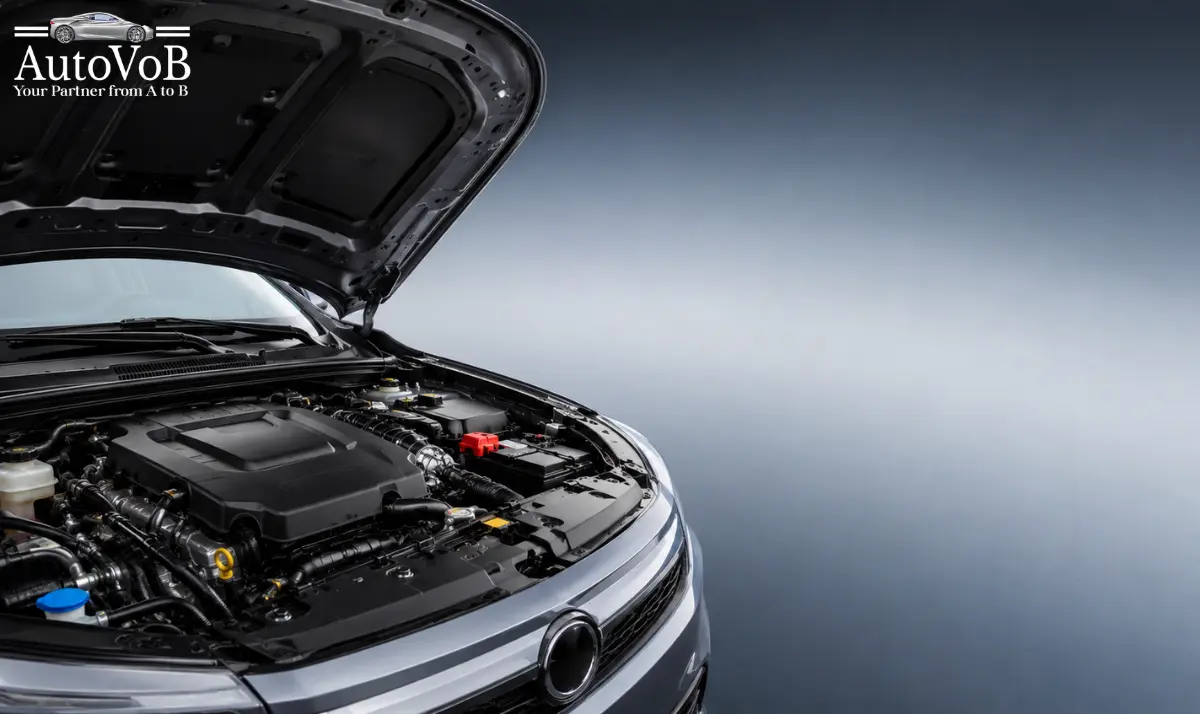
For years, car buyers have assumed that a smaller engine automatically means better fuel economy. It seems logical. A smaller engine uses less fuel because it burns less air and fuel during combustion. In many situations, that assumption is correct. But modern automotive technology has made the relationship between engine size and fuel efficiency more complicated than it once was.
Today, turbochargers, hybrid systems, advanced transmissions, and lightweight vehicle designs all influence how much fuel a car consumes. As a result, simply choosing a vehicle with a smaller engine does not always guarantee lower fuel costs.
So, do smaller car engines really save fuel? The answer is yes, but only under certain conditions. Understanding how engine size affects fuel consumption can help you make a smarter buying decision.
Understanding Engine Size
Engine size, often measured in liters, refers to the total volume of all the cylinders inside an engine. A 1.0-liter engine has a smaller displacement than a 2.0-liter engine.
Generally speaking:
-
Smaller engines consume less fuel when operating under light loads.
-
Larger engines can produce more power and torque.
-
Fuel economy depends on how hard the engine has to work.
A small engine requires less fuel during idle and low-speed driving because fewer cylinders and smaller combustion chambers need to be supplied with fuel.
This is one reason why many compact cars and city vehicles are equipped with engines ranging from 1.0 to 1.6 liters.
Why Smaller Engines Often Use Less Fuel
The main reason smaller engines can save fuel is that they have lower pumping and friction losses.
Every time an engine runs, energy is lost through internal friction between moving components. Larger engines typically have bigger pistons, longer crankshafts, and more internal parts that create resistance.
A smaller engine has fewer mechanical losses and consumes less fuel when the vehicle is moving at moderate speeds.
For example, a compact sedan with a 1.2-liter engine will usually consume less fuel during city commuting than a similar vehicle powered by a 2.0-liter engine.
In stop-and-go traffic, the difference can become even more noticeable because the smaller engine uses less fuel while idling and accelerating gently.
The Impact of Turbocharging
Modern car manufacturers have embraced a strategy called engine downsizing.
Instead of using large naturally aspirated engines, many vehicles now use smaller turbocharged engines. A turbocharger forces additional air into the engine, allowing it to produce power similar to a larger engine while maintaining lower fuel consumption during normal driving.
For instance, a turbocharged 1.5-liter engine can often deliver performance comparable to an older 2.0-liter engine.
This approach works particularly well when drivers maintain smooth acceleration and moderate speeds.
However, there is a catch.
When the turbocharger is working hard, fuel consumption rises significantly. Aggressive acceleration, steep hills, heavy cargo loads, and high-speed driving can cause a small turbocharged engine to burn fuel at rates similar to or even higher than larger engines.
This is why real-world fuel economy sometimes differs from official test figures.
Driving Habits Matter More Than Many People Think
Engine size is only one part of the fuel economy equation.
A small engine driven aggressively may consume more fuel than a larger engine driven smoothly. Rapid acceleration, excessive braking, and sustained high-speed driving all increase fuel consumption.
Consider two drivers using identical vehicles:
-
Driver A accelerates gradually and maintains steady speeds.
-
Driver B accelerates hard at every traffic light and frequently exceeds highway speed limits.
The second driver will almost certainly use more fuel regardless of engine size.
In many real-world studies, driving style has been shown to affect fuel economy by as much as 20 to 30 percent.
That means driver behavior often has a greater impact than engine displacement alone.
Highway Driving Can Change the Equation
Smaller engines excel in urban environments where speeds are relatively low and engine loads remain moderate.
Highway driving presents different challenges.
At higher speeds, aerodynamic drag increases dramatically. The engine must work harder to maintain momentum, especially in larger vehicles such as SUVs and crossovers.
A very small engine may need to operate at higher RPMs for extended periods to maintain highway speeds. When this happens, fuel consumption can rise.
Meanwhile, a slightly larger engine may achieve similar or even better efficiency because it can cruise comfortably without working as hard.
This is one reason why long-distance drivers should not focus solely on engine size when comparing vehicles.
Vehicle Weight Plays a Major Role
A small engine paired with a heavy vehicle may not deliver impressive fuel economy.
Weight affects how much energy is required to accelerate and maintain speed. The heavier the vehicle, the harder the engine must work.
For example:
-
A lightweight hatchback with a 1.0-liter engine can be extremely efficient.
-
A large SUV with a 1.0-liter engine would struggle and consume more fuel because the engine would constantly operate under high load.
Manufacturers carefully match engine size to vehicle weight for this reason.
When evaluating fuel economy, it is important to consider the entire vehicle rather than focusing only on engine displacement.
Hybrid Technology Changes the Rules
The rise of hybrid vehicles has transformed traditional assumptions about fuel efficiency.
Many modern hybrids use relatively small gasoline engines combined with electric motors. The electric motor assists during acceleration and low-speed driving, reducing fuel consumption significantly.
In these vehicles, engine size becomes less important than the efficiency of the entire powertrain.
A hybrid with a 1.8-liter engine may achieve better fuel economy than a conventional vehicle equipped with a smaller 1.2-liter engine.
This demonstrates how modern engineering can outweigh simple engine size comparisons.
Fuel Economy Testing vs Real-World Results
Manufacturers publish fuel economy figures based on standardized testing procedures.
These tests provide a useful comparison between vehicles, but they cannot perfectly replicate every driving situation.
Real-world fuel consumption depends on factors such as:
-
Traffic conditions
-
Weather
-
Road gradients
-
Vehicle load
-
Tire pressure
-
Driving style
-
Air conditioning usage
As a result, some drivers find that a small engine does not deliver the fuel savings they expected.
Looking at independent owner reviews and long-term fuel economy reports can provide a more realistic picture of actual performance.
When a Smaller Engine Makes the Most Sense
A smaller engine is often the best choice if:
-
You primarily drive in urban areas.
-
Daily commutes are relatively short.
-
You value lower fuel costs.
-
You rarely tow trailers or carry heavy loads.
-
Performance is not your highest priority.
For city-focused driving, smaller engines typically provide an excellent balance of efficiency and affordability.
When a Larger Engine May Be Better
A larger engine can sometimes be the smarter option if:
-
You frequently travel long distances.
-
You drive in mountainous regions.
-
You regularly carry passengers and cargo.
-
You tow trailers or caravans.
-
You prioritize performance and effortless acceleration.
In these situations, a larger engine may operate more efficiently because it does not need to work as hard to meet demand.
Also Read: How Does a Car Engine Work Explained Simply
Final Verdict
Smaller car engines generally save fuel, especially in city driving and light-load conditions. Their lower internal losses and reduced fuel requirements make them naturally efficient. However, modern driving conditions, vehicle weight, turbocharging, and driver behavior all influence actual fuel consumption.
The most fuel-efficient vehicle is not always the one with the smallest engine. A well-matched powertrain, sensible driving habits, and the right vehicle for your needs often matter more than engine size alone.
When shopping for a car, look beyond the engine displacement figure. Consider how and where you drive, compare real-world fuel economy data, and evaluate the complete vehicle package. That approach will give you a much clearer picture of the fuel savings you can realistically expect.
FAQs
1. Do smaller engines always use less fuel than larger engines?
Not always. Smaller engines generally consume less fuel during city driving, but factors such as vehicle weight, turbocharging, highway speeds, and driving habits can reduce or eliminate the efficiency advantage in real-world conditions.
2. Are turbocharged small engines more fuel-efficient?
Turbocharged small engines can improve fuel efficiency during normal driving by delivering power only when needed. However, aggressive acceleration and heavy loads can increase fuel consumption and reduce their efficiency benefits.
3. Why can a larger engine sometimes be more efficient on highways?
A larger engine may cruise at lower RPMs and experience less strain at highway speeds. In some cases, this allows it to use fuel more efficiently than a smaller engine working near its performance limits.
4. Does vehicle weight affect fuel economy more than engine size?
Vehicle weight has a major impact on fuel consumption. A heavy vehicle requires more energy to move, which can force a small engine to work harder and use more fuel than expected under real-world driving conditions.
5. Should I buy a small-engine car to save money on fuel?
If most of your driving is in urban areas and you rarely carry heavy loads, a small-engine vehicle can reduce fuel costs. However, consider driving patterns, vehicle weight, and overall efficiency before making a decision.
Keep visiting AutoVoB blogs for more engaging automotive insights.
List or find any vehicle globally on AutoVoB.