Virtual Gear Shifting In Cars, What It Is And Why It Matters
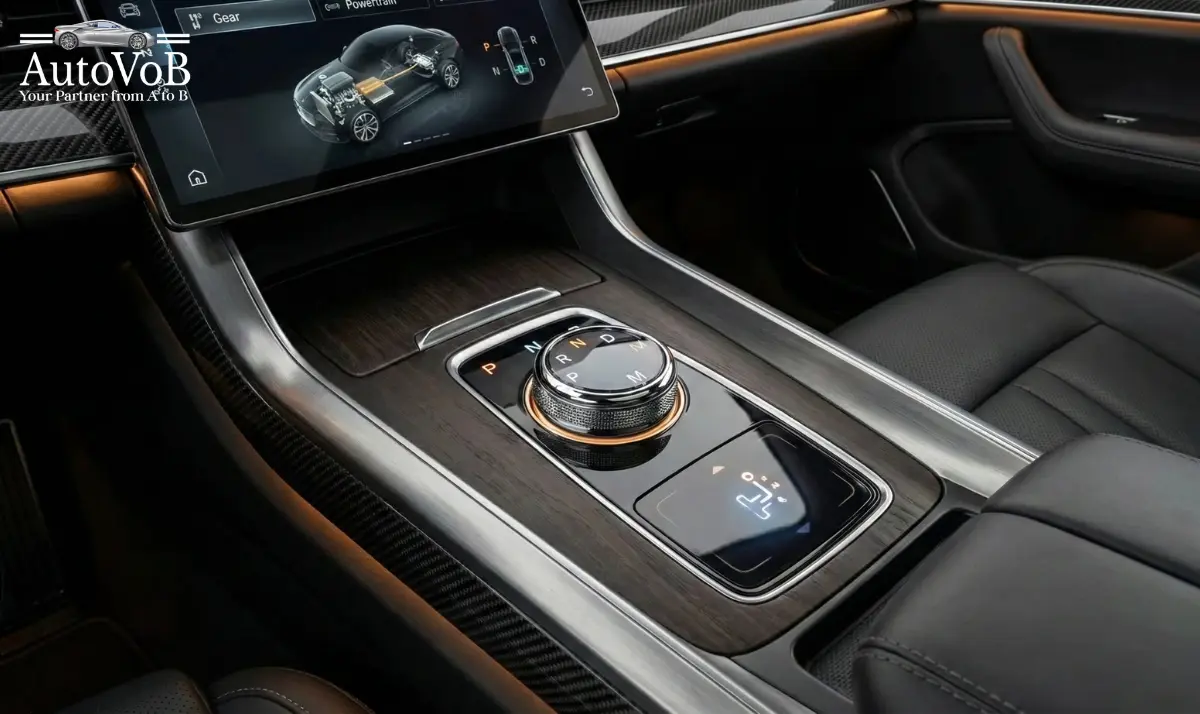
Automatic gearboxes used to be simple. You either had fixed gears, or you had a CVT that just held revs and got on with it. Now you have something in between, and that is where virtual gear shifting comes in.
Car makers are starting to simulate gear changes in transmissions that technically have no real gears to swap between. That sounds a bit strange at first. Why pretend a gearbox is changing ratios when it does not have to at all
Here is the thing. Drivers are used to feeling a car build revs, shift, then pull again. In a normal automatic or manual, that rise and fall in engine speed creates a rhythm. CVTs and many EVs break that rhythm by delivering smooth, uninterrupted acceleration. Efficient, yes. Satisfying, not always.
Virtual gear shifting is the software layer that brings that rhythm back. It sits on top of CVTs, e-CVTs, and EV drives, and makes them feel more like traditional multi gear transmissions.
Let us break it down.
What virtual gear shifting actually is
Virtual gear shifting is a control strategy, not a physical gearbox. The car does not suddenly grow extra cogs. Instead, the software defines a set of “virtual” ratios and moves the powertrain between them in a way that feels like real shifts.
You see it in three main places
- CVTs with simulated steps
Traditional belt CVTs are stepless. They can hold the engine at its most efficient speed and just vary the ratio continuously. In reality many brands now program “step points” so the revs climb, then drop, then climb again, just like a normal auto. These fixed points are purely virtual, but they give the driver familiar feedback and reduce the so called rubber band feel that some people hate. - Hybrid e-CVTs
Hybrids that use a planetary gearset with motor generators, like many e-CVT layouts, can also shape the way torque is delivered. Software decides how much work the engine does versus the electric motor at each moment. Engineers can map this to feel more “geary”, even when there is no conventional 1st, 2nd, 3rd gear inside. - EVs with virtual gearboxes
Some performance EVs now go all in on virtual gear shifting. Hyundai’s Ioniq 5 N and Ioniq 6 N, for example, have N e-Shift, a mode that emulates an 8 speed dual clutch transmission. It adjusts torque, motor speed, and even sound so you feel distinct upshifts and downshifts through the paddles, even though it is still a single speed electric drive underneath.
So the core idea is simple. Take a transmission that does not need gears, then overlay virtual gears to give the driver structure and feedback.
Why car makers are doing this
On paper, stepless acceleration is perfect. In reality, a lot of drivers do not like it. What this really means is that virtual gear shifting is less about engineering necessity and more about psychology and control.
Here is why brands are investing real money in it
- Driver engagement
Without shifts, EVs and CVTs can feel like fast elevators. Quick, but flat emotionally. Virtual gear shifting gives the driver moments to time inputs, anticipate shifts, and feel progress. Reviews of the Ioniq 5 N keep coming back to this point, that the fake shifts make the car easier and more fun to drive on track. - Predictability and rhythm
With a pure CVT the revs can sit high and droning while speed slowly catches up. Simulated steps let the engine drop revs periodically, which many drivers interpret as “the car is doing something, I can relax a bit now”. That rhythm helps especially when overtaking or climbing hills. - Helping people transition to EVs
Many buyers are coming from petrol or diesel cars. The lack of sound, shifts, and vibration can feel alien. Virtual gear shifting plus sound synthesis gives a familiar bridge into the EV world. Hyundai even talks about using N e-Shift and N Active Sound+ specifically to win over drivers who miss old school cars. - Training and performance driving
On circuit, having “gears” in an EV matters more than you might think. With virtual ratios you can commit to corners in 3rd or 4th, aim for specific RPM bands, and time your shifts before or after a bend, all habits that performance drivers already know. That is why both Hyundai and Honda are building virtual gear systems that even simulate kickdown and fuel cut behavior when you back off.
So, virtual gear shifting is not a gimmick by accident. It is a deliberate answer to some very human complaints about modern drivetrains.
How the tech actually creates a “shift”
Let us get a bit more concrete. How do you simulate a gear change with no real gear to move into
A virtual shift usually combines several tricks at once
- Torque modulation
During an upshift the software briefly cuts or trims torque, then ramps it back in. That tiny pause is what you feel as a shift. Performance EV modes like N e-Shift mimic fuel cut and ignition events from traditional engines to make this feel authentic. - Controlled RPM changes
In a CVT, the controller can deliberately let RPM rise to a target, then command a different ratio so revs drop in a step. The engine is not forced to do this by mechanical ratios, it is guided into it. The step can be shaped to feel like a conventional 500 to 1000 rpm drop between gears. - Sound design
With EVs, speakers add another layer. Synthesized sound ramps, pops, and overrun burbles all move in sync with virtual gear changes. Hyundai’s N Active Sound+ uses multiple speakers and different sound “themes” to reinforce what your right foot and body are feeling. - Haptic feedback
Some systems even play with vibrations, either through the powertrain mounts or by manipulating motor torque to create a light jolt on shift events. This is still emerging, but patent filings and early reviews suggest this is the next step.
When all of that lines up, your brain accepts the illusion. You pull a paddle, there is a pause, the “engine” note changes, the car surges again, and your body says “gearshift”.
The upsides for everyday drivers
You do not have to be a track junkie to benefit from virtual gear shifting. There are a few day to day advantages.
- More natural throttle response
With clear virtual ratios, the car can respond in a way that feels more tied to pedal input. For example, a kickdown event in a simulated auto can give you a strong, predictable surge instead of the vague slip some CVTs are known for. - Easier adaptation when you swap cars
If you jump between an ICE car and an EV with virtual gear shifting, your habits carry across. You still judge overtakes by “I am in 3rd, one more downshift and go”, even if those are just labels on a software map. - Potentially better efficiency in guided modes
Interestingly, some electronic CVT strategies can use virtual gears not just for fun but also to keep engines or motors closer to their ideal efficiency islands, while still giving drivers clear steps. Research on e-CVTs shows that intelligent ratio control can choose efficient operating points while managing drivability.
So even if you never touch a racetrack, you still gain a clearer, more predictable car.
The trade offs and honest downsides
Of course, it is not all positive. Virtual gear shifting has some compromises.
- It can be a pure placebo if badly tuned
If the timing is off or the torque cut feels fake, the system becomes annoying very quickly. Some drivers simply turn simulated shifts off in their CVT cars because it adds nothing for them. - You can lose the smoothness advantage
One of the main reasons CVTs and EV drives exist is their smooth, continuous delivery. Once you start chopping that up into steps, you give away part of that benefit. That is a conscious trade, feel versus smoothness. - Another layer of complexity
From an engineering point of view, there is extra software to validate and more modes for owners to get lost in. Early reviews of some high spec EVs already complain that the drive mode menus are too busy, virtual shifting included.
So the key question becomes, do you actually like the sensation of shifting, or would you prefer your car to be as calm and invisible as possible
Also Read: Smart Car Features That Actually Support Driver Wellbeing
Should you care about virtual gear shifting when buying a car
If you are looking at an EV, hybrid, or CVT equipped car, virtual gear shifting is worth paying attention to. Here is how to think about it on a test drive
- Try both modes
If the car lets you disable simulated shifts, drive the same road with it on and off. Notice which mode makes you more relaxed and confident in traffic. - Pay attention to timing
When you floor it to overtake, does the virtual gearbox hesitate too long, or does it respond sharply The whole point is to give predictable, human friendly steps. - Decide how much you value involvement
If you miss manuals and enjoy timing shifts, virtual gear shifting can make an EV or CVT feel much closer to what you loved before. If you just want quiet, effortless progress, you might turn it off on day one and never look back.
What this really means is that virtual gear shifting is not just a nerdy technical feature. It is part of how the car talks to you. The drivetrain already has all the capability it needs. Virtual gears are the language used to express that capability in a way your brain understands.
As more brands copy what Hyundai, Honda, and others are doing with EVs and smart CVTs, you will see virtual gear shifting show up in spec sheets more often. When it does, do not treat it as a cute party trick. Treat it as a core part of how the car will feel to live with every day.