Used Cars in Riffa and Muharraq: Local Buyer's Guide
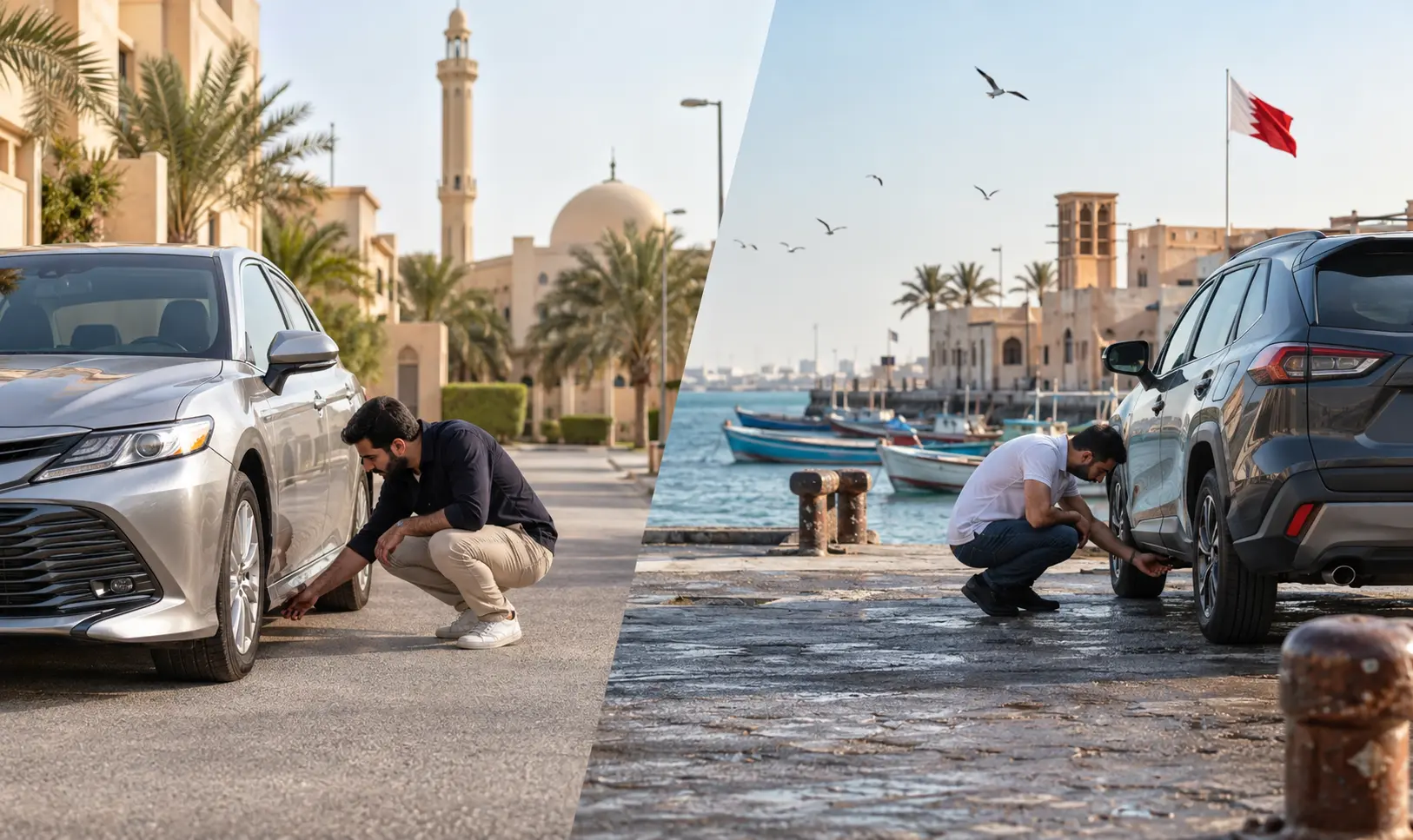
Two identical cars, same model year, same odometer reading, one parked in Riffa and one parked a street back from the water in Muharraq. Look underneath both and you will usually find a different story. That difference is worth real money, and it is the first thing I look for when someone forwards me a listing. Anyone shopping for used cars Riffa side or used cars Muharraq side is looking at two different wear patterns.
Bahrain is small enough that people treat the whole island as one market. It isn't. Where a car spent its nights changes what breaks, what rusts, and what you should pay.
Why the same car ages differently in Riffa and in Muharraq
Muharraq is an island of about 57 square kilometres with roughly 50 kilometres of coastline, and almost nothing on it sits more than a few metres above sea level. Salt air gets everywhere. Cars that live in Hidd, Arad, Busaiteen or the older lanes near the souq spend years in humid, salty air, and the parts that suffer are the ones you cannot see from the driver's seat: brake lines, subframe bolts, exhaust hangers, the seams in the boot floor, the air conditioning condenser sitting at the front of the car.
Riffa sits inland in the Southern Governorate, spread across East, West and North Riffa. Cars there tend to be cleaner underneath and harder on consumables. Longer runs on Sheikh Salman Highway, more time at highway speed, more heat soak in an uncovered driveway. Expect higher mileage for the age, tired suspension bushes, sun damage to dashboards and roof linings, and tyres that have been cooked rather than worn.
Neither profile is worse. They fail in different places, so you inspect them differently.
What to check before you agree on a price
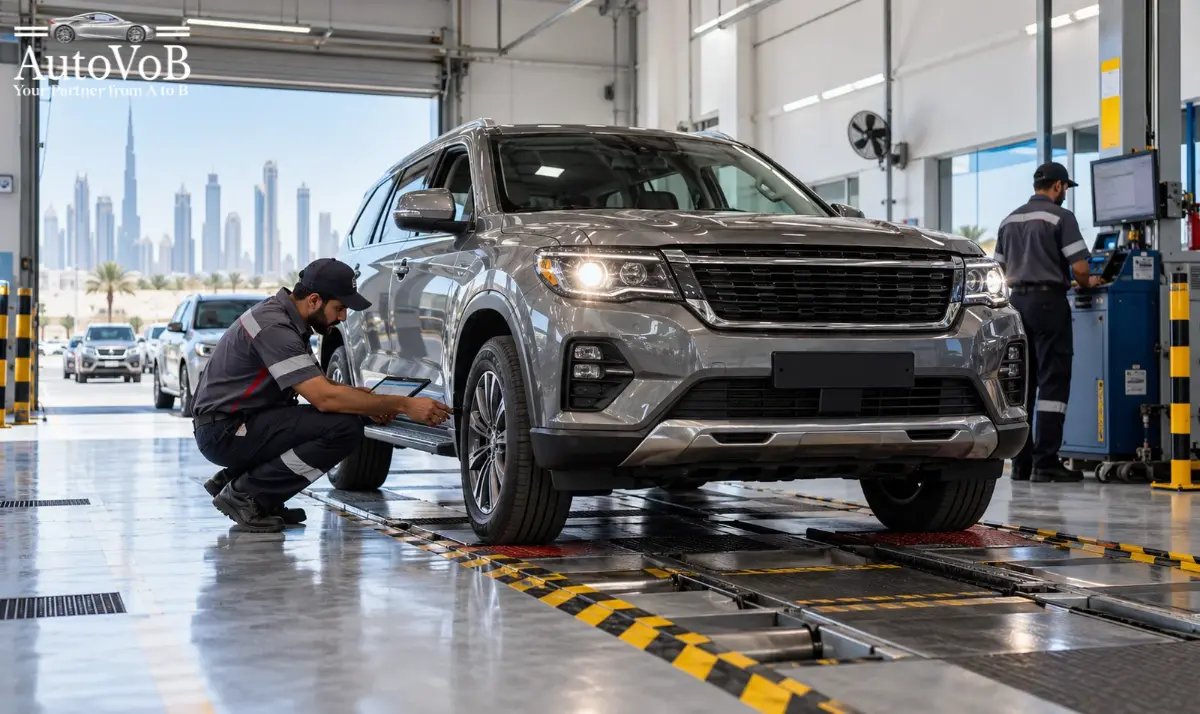
On a Muharraq car, get it on a ramp. Any workshop in Hidd or Arad will put it up for a few dinars. Look at the fuel and brake lines where they run along the floor, the seatbelt anchor points, the boot well under the spare, and the bottom of the doors. Surface dust on a subframe is normal in Bahrain. Flaking metal that leaves orange on your fingertip is not, and it is a walk-away.
On a Riffa car, spend that time on heat damage instead. Idle the engine with the air conditioning on maximum for fifteen minutes and watch the temperature gauge and the vent temperature. Check the coolant colour, the radiator fins, the condition of every rubber hose, and whether the compressor cycles smoothly. A car that cools at 60 kilometres per hour but gives up in stationary traffic on Isa Town Road will cost you more than the price difference you negotiated.
Two habits apply everywhere. Take any car you are serious about to an independent garage before you pay, not to one the seller recommends. And check the vehicle's outstanding fines yourself through the traffic services on bahrain.bh or the eTraffic app, because unpaid violations and unsettled accident claims stop the transfer at the counter.
The paperwork, and what it actually costs
This part is cheaper and faster than most first-time buyers expect. The General Directorate of Traffic lists the fee for transferring vehicle ownership at 16 Bahraini dinars, with a processing time of one working day. The process runs under the Traffic Law issued by Law No. 23 of 2014 and the executive regulations issued by Minister of Interior Decision No. 154 of 2015.
Both the seller and the buyer need to be present and sign Form No. 1 in front of the traffic officer. If a signature does not match what the directorate holds on record, the request can be rejected. You will need your ID card, the ownership certificate, a valid vehicle registration certificate, and an insurance certificate already transferred into the buyer's name. Every outstanding violation and accident between the two parties has to be settled first. Book an appointment before you go rather than turning up and taking a number.
Third party cover is the legal minimum on Bahrain's roads, and the insurance has to be in the new owner's name before the transfer, not after. Sort the policy first and the counter visit takes minutes.
Annual testing, registration, and the age question
Registration runs for one year at a time. For private vehicles, models four years old or newer are excluded from the technical examination, so the renewal is a straightforward online payment. Once a car falls outside that window, it needs to pass the test and have the renewal form stamped by the Technical Inspection Department before you can renew. Published guides put the test at around 5 dinars at a traffic directorate centre and about 11 dinars at an approved private centre, with the fee payable again on a re-test.
That single rule shapes prices across the island. A car that is about to cross into test territory is worth less than one that isn't, and sellers know it. If you are buying at that boundary, get the test done before money changes hands and let the result tell you what the car is worth.
There is also the import age limit, which has moved. Parliament approved extending the cap for imported used cars from five years to ten, and several shipping guides still quote five for passenger cars. If you are buying an imported car or planning to bring one in yourself, confirm the current position with Bahrain Customs and the traffic directorate before you commit any money.
Paying for it without regretting it
Bahrain's fleet keeps growing. The Interior Minister put the number of registered vehicles at roughly 676,137, growing about 3.26 percent a year, which is around 20,000 more cars annually and a likely one million within a decade. More cars mean more choice, and it also means more sellers competing for your dinar than you probably assume.
On financing, the Central Bank of Bahrain caps total monthly repayments on all consumer finance commitments at 50 percent of monthly gross income. For people earning above 3,000 dinars a month, that limit can be relaxed after the lender reviews the file. Fifty percent is a ceiling, not a target. Banks routinely lend to people who then discover that insurance, fuel, servicing and the annual renewal all land in the same month.
On tax, the standard VAT rate in Bahrain is 10 percent. A private seller is not charging you VAT. A registered dealer's advertised price should already include it, and dealers approved for the profit margin scheme charge VAT on their margin rather than the full sale value. Ask for a proper tax invoice either way.
Also Read: How to Sell Your Car in Bahrain: Complete Guide
Buying private or buying from a showroom
Private sellers are cheaper and slower. You handle the fines check, the insurance, the appointment and the inspection yourself, and you carry the risk if something surfaces a month later. Showrooms in Sitra, Salmabad and along the Riffa and Muharraq strips charge more and hand you a car that is already fines-free, tested and ready to transfer. Some offer a limited warranty. Read what it actually covers before you value it at anything.
My rule after years of watching both go wrong: buy private if you have a mechanic you trust and time to spend, and buy from a showroom if you need the car this week. Paying 300 dinars more for a used car for sale in Bahrain that has been prepared properly is not a defeat.
Whichever route you take, walk away from any seller who will not let you take the car to your own garage. That refusal tells you more than any service book.
Fees, test rules and import limits described here reflect the position at the time of writing. Bahraini authorities can revise them at any point, so check the current requirements on bahrain.bh or with the General Directorate of Traffic before you sign anything.
FAQs
1. How much does it cost to transfer car ownership in Bahrain?
The General Directorate of Traffic lists the ownership transfer fee at 16 Bahraini dinars, with a processing time of one working day. Both parties must sign in person, all fines and accident claims must be settled, and the insurance must already be in the buyer's name.
2. Does a used car need an inspection before I renew the registration?
Private vehicles four model years old or newer are excluded from the technical examination, so renewal is a simple online payment. Older cars must pass the test and have the renewal form stamped by the Technical Inspection Department before registration can be renewed.
3. What should I check on a used car bought in Muharraq?
Put it on a ramp and look underneath. Salt air on the island attacks brake and fuel lines, subframe bolts, exhaust hangers, boot floor seams and the air conditioning condenser. Surface dust is normal here. Flaking metal that marks your fingertip is a walk-away.
4. How much can I borrow to buy a used car in Bahrain?
The Central Bank of Bahrain caps total monthly repayments on all consumer finance commitments at 50 percent of gross monthly income, and that limit may be relaxed for people earning above 3,000 dinars a month. Treat 50 percent as a ceiling, never as a target.
5. Can I buy a car that still has unpaid traffic fines against it?
No. Outstanding violations and unsettled accident claims between the seller and buyer must be cleared before the traffic directorate will process the transfer. Check the car's record yourself through bahrain.bh or the eTraffic app before you hand over any money.
Don't miss out on more informative reads from AutoVoB blogs.
AutoVoB, one global platform for all your vehicle buying and selling needs.