Road Bike vs Mountain Bike vs Hybrid: Which Should You Buy
Most people in the Gulf buy the wrong bike, and the reason is boring: they choose on how it looks in the showroom instead of where they'll actually ride it. The road bike vs mountain bike debate ends fast once you're honest about your week. Dubai's cycling network grew from 560 km at the end of 2024 to 636 km at the end of 2025, and the RTA is building toward 1,000 km by 2030. Almost all of it is smooth tarmac. That one fact should shape your shortlist before you look at a single price tag.
The three bikes, stripped of marketing
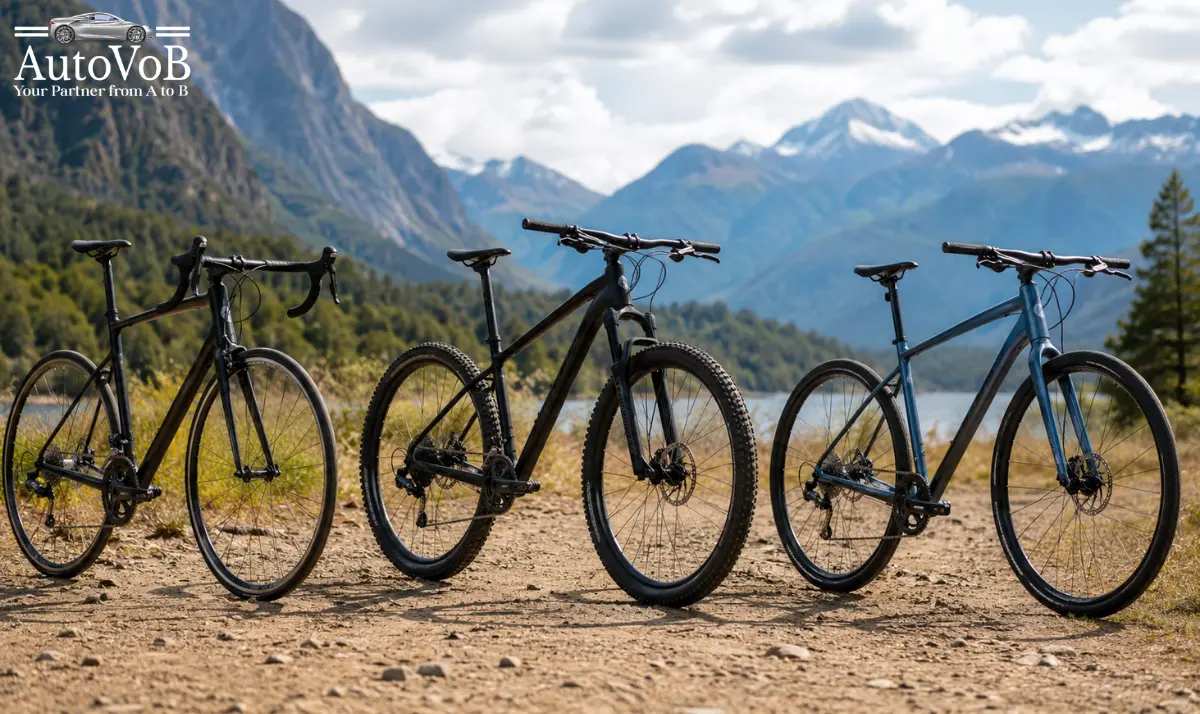
A road bike has drop handlebars, tyres in the 25 to 32mm range, no suspension, and geometry that tips your weight forward. It holds speed on tarmac and punishes you everywhere else.
A mountain bike has a suspension fork, sometimes rear suspension too, tyres over two inches wide with real tread, flat bars, and gearing low enough to crawl up loose rock.
A hybrid cycle sits between the two. Flat bar, a more upright position, tyres around 38mm, and often a short-travel fork. Decathlon's Riverside 500, one of the bikes you'll see most often on Dubai's tracks, runs 700x38 tyres and a 60mm coil fork with a lockout knob.
Tyre width, riding position, and gearing are the differences that matter. Frame material and paint are not.
Where you'll actually ride decides everything
Look at what's open to you right now. Al Qudra has around 86 km of desert tracks including a 50 km main loop, free, open around the clock, with no posted speed limit because the RTA classes it as an external training track. Nad Al Sheba Cycle Park near Meydan has floodlit 4, 6 and 8 km loops, also 24/7, capped at 30 km/h. The Jumeirah coastal track runs 16 km along the beach and is capped at 20 km/h because pedestrians share it.
In Riyadh, the Sports Boulevard had 83 km open and was roughly 40 percent complete when its first phase was inaugurated. The finished project runs 135 km with more than 220 km of cycling paths.
Now count the off-road options. The main one is the Hatta Mountain Bike Trail Centre, with more than 50 km of graded singletrack marked green through black, free and open all year. It's a 90-minute drive from central Dubai.
That list is overwhelmingly tarmac, and it's the single strongest argument in the road bike vs mountain bike question for most Gulf riders.
Buy a road bike if you're chasing pace
The road bike makes sense when your riding is a sunrise loop with a group and a speed target. On Al Qudra's 50 km loop, the gap between 28mm slicks and 2.2 inch knobblies is not subtle. You'll feel it in your legs by kilometre 20 and in your average speed for the whole ride.
Buy one if you ride 40 km or more at a stretch, you ride almost entirely on tarmac, and you're prepared to spend on shoes, pedals and bib shorts. Skip it if you want a bike that also carries groceries or handles a kerb without drama.
One caution from years of watching people get this wrong: road bikes are far more sensitive to fit than the other two. Get measured, or the bike will sit unused within six months.
Buy a mountain bike only if you'll drive to the dirt
A mountain bike is the right choice for Hatta and nowhere else in a typical Dubai week. If you'll make that drive once or twice a month, buy one and enjoy it. If you won't, you're hauling suspension and heavy tread around a flat tarmac loop and paying for grip you never use.
There's a second, quieter case for one. Mountain bikes tolerate neglect. Wide tyres, disc brakes and a strong frame survive rough compacted ground, kerbs and teenagers better than anything else on this list. Plenty of families in the region buy them for that reason alone, and they're not wrong.
Where a hybrid cycle earns its place
For most buyers in the GCC, the hybrid cycle is the honest answer. It suits the ride to a metro station, the 6 km Nad Al Sheba loop, an evening along the Jumeirah track at the 20 km/h limit, and a family outing where everyone rides at different paces.
The upright position matters more here than people expect. On a shared promenade you need to see what's around you and dismount at crossings, which is difficult when your head is down between drop bars. The wider tyres matter too. Sand blows across tarmac constantly in this part of the world, and 25mm road tyres hate it.
The trade-off is real and worth stating plainly. A hybrid will be dropped by a fast group ride and it's out of its depth on a red trail at Hatta. Most riders do neither of those things.
What this actually costs
Decathlon UAE is the reference point most buyers start from. At the time of writing, the Riverside 500 hybrid sits at AED 2,050 to 2,250 depending on colour. The Rockrider ST 120 27.5 inch hardtail is AED 1,925. On the road side, the Van Rysel RC500 is AED 4,250. Move up the mountain range and you're at AED 4,850 for the Explore 540 and AED 5,079 for the Race 700 cross-country bike. Prices move with stock and promotions, so treat these as a snapshot.
Budget another AED 300 to 600 for the things you legally need or will need within a month: helmet, front and rear lights, reflective vest, a floor pump and a spare tube.
The rules that decide where you can legally ride
Cycling in Dubai runs on Executive Council Resolution No. 13 of 2022. A protective helmet and reflective vest are compulsory, with an AED 200 fine if you skip them. Riding outside RTA-designated cycle lanes is AED 200. Pedal bikes and e-bikes are banned from any road posted above 60 km/h, which rules out every highway, at AED 300. Riding on a walking or jogging lane is another AED 200.
Your bike also has to comply. The law requires a white front light, a red rear lamp and reflector, a bell, working brakes and suitable tyres. A non-compliant bike is a AED 300 fine, and repeat violations within a year can mean the bike is impounded for 30 days.
If you ride in a group, know that a supervising entity needs prior RTA approval and that unsupervised group training carries a fine per person. Abu Dhabi and Saudi Arabia run their own frameworks, so check the local authority rather than assuming Dubai's rules travel with you.
All of this reflects the rules as currently published. Governments in the region update traffic and mobility regulations regularly, and any of these figures can change without much notice, so confirm with the relevant authority before you buy or before a big group ride.
Also Read: Your Guide to Finding the Right Cycle for Sale in Bahrain
A simple way to decide
Write down where you rode in the last month, not where you'd like to ride. If it's all tarmac and under 20 km at a time, buy the hybrid and spend the difference on a decent helmet and lights. If it's long tarmac loops with people faster than you, buy the road bike and get a proper fit. If Hatta is on your calendar and not just in your imagination, buy the mountain bike.
The best bike in the Gulf is the one that's still getting ridden in month six, when the novelty has worn off and the weather has turned. That's usually the one that matched the rider's actual week rather than the version of it they were selling themselves in the shop.
FAQs
1. Is a road bike or mountain bike better for riding in Dubai?
A road bike suits Dubai better for most riders, because the emirate's network was 636 km of mostly smooth tarmac at the end of 2025. Choose a mountain bike only if you will regularly drive to Hatta, where the graded singletrack actually needs suspension and wide tread.
2. What is a hybrid cycle best used for in the GCC?
A hybrid cycle suits short commutes, shared promenades like the 16 km Jumeirah track, and family rides at mixed paces. The upright position, wider 38mm tyres and flat bar handle kerbs, blown sand and low speed limits far better than a road bike does on the same route.
3. Is a helmet legally required for cycling in Dubai?
Yes. Under Executive Council Resolution No. 13 of 2022, every cyclist must wear a protective helmet and a reflective vest, and riding without them carries an AED 200 fine. Your bike also needs a front white light, a red rear lamp and reflector, a bell and working brakes.
4. How much does a decent bike cost in the UAE?
At Decathlon UAE, a Riverside 500 hybrid runs about AED 2,050 to 2,250 and a Rockrider ST 120 hardtail about AED 1,925, while the Van Rysel RC500 road bike is AED 4,250. Add roughly AED 300 to 600 for a helmet, lights, vest, pump and spare tube. Prices shift with stock.
5. Where can you ride a mountain bike near Dubai?
The Hatta Mountain Bike Trail Centre is the main option, roughly 90 minutes from central Dubai, with over 50 km of graded singletrack marked green through black. Entry is free and the trails stay open all year, with parking and basic facilities provided on site.
Follow AutoVoB blogs to explore more such informative content.
AutoVoB makes buying and selling vehicles worldwide simple.