Hybrid vs Compact SUVs in Bahrain: City & Desert Efficiency
Bahrain’s roads ask a lot from any car. You’ve got dense Manama traffic on weekdays, school runs with constant stop‑start driving, and then long weekend runs to coastal spots or desert routes where speeds are higher and the road is more open. What this really means is your choice between hybrid cars and a compact SUV setup will shape how much you spend on fuel and how relaxing your daily drive feels.
In Bahrain, gasoline stays relatively affordable compared with many global markets, but prices are no longer negligible, so efficiency is starting to matter far more than it did a decade ago. Hybrid cars and compact suv models are now offered by mainstream brands like Toyota, Hyundai, and BYD, giving buyers real options instead of compromises.
How Hybrids Deliver Fuel Savings in City Traffic
Let’s break it down. Hybrids pair a petrol engine with one or more electric motors and a small battery, which they recharge while driving and braking, so you don’t need to plug them in. In heavy urban congestion, where average speeds are low and stop‑go patterns dominate, that electric side does a lot of the work at low speeds. Studies on Gulf city traffic show that congestion alone can increase fuel use by close to 30 percent for conventional cars because of constant acceleration and braking.
A good hybrid cuts that penalty. In practice, many hybrid crossovers and compact suv models in Bahrain can achieve real‑world urban fuel use around 3–5 liters per 100 km in mixed conditions, significantly lower than a similar non‑hybrid SUV. Here’s the thing: that gap widens when your driving is mostly school runs, office commutes, and short hops, because hybrids are at their best below highway speeds.
For buyers tracking fuel costs month to month, that matters. With local fuel prices stable but not dirt cheap, every extra liter burned across 20,000–25,000 km a year adds up. If your driving is 80 percent city and short trips, hybrid cars often give the fastest payback compared with a conventional compact suv.
Compact SUVs: Space, Comfort, and Real‑World Use
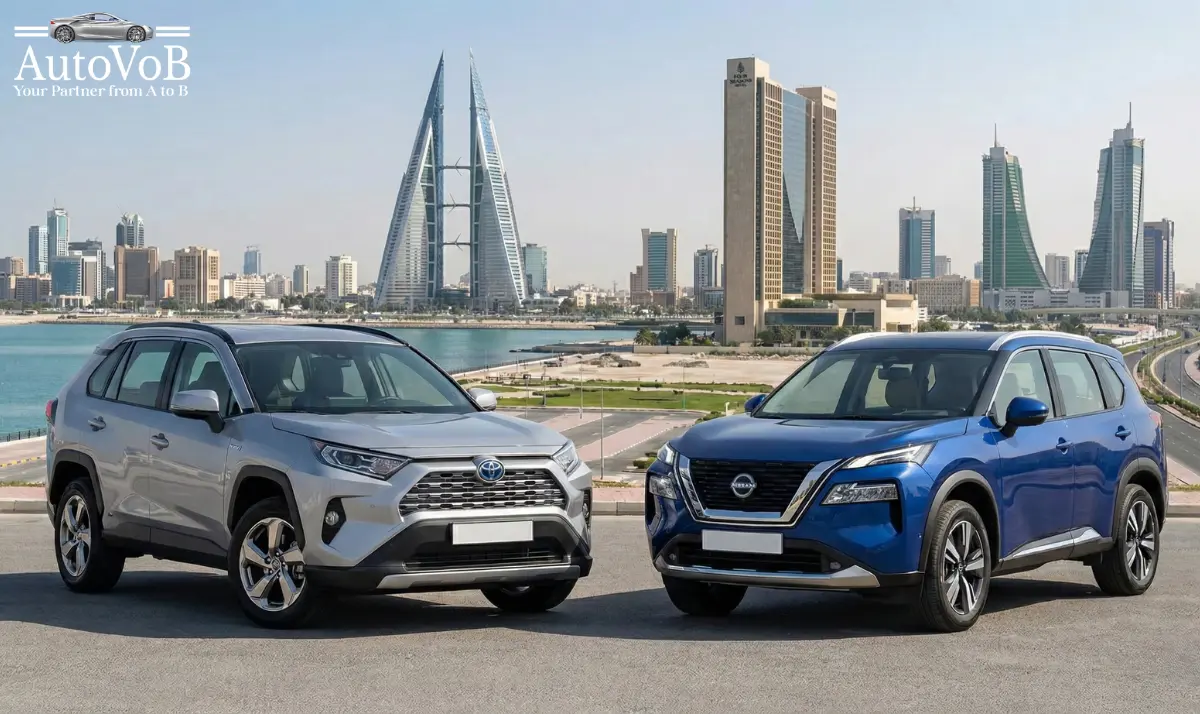
Now, compact SUVs are everywhere in Bahrain for a reason. Even used SUVs in Bahrain are also increasing in number. They sit higher than sedans, handle speed bumps and rougher patches more comfortably, and give better visibility in traffic and on desert access tracks. Brands like Hyundai and Toyota push compact suv and hybrid compact suv models because they fit Gulf families well: enough space for kids and luggage without the bulk and thirst of a full‑size 4×4.
A non‑hybrid compact suv, though, typically uses more fuel than a similar hybrid, especially in town. Think of a 2.0‑liter petrol compact SUV sitting around in traffic with the air‑con working hard in summer: the engine idles and burns fuel continuously. In the hybrid equivalent, the petrol engine switches off more often and the electric motor shoulders some of that low‑speed load.
What this really means is you shouldn’t think of “hybrid vs compact SUV” as two separate camps. The decision is often between a hybrid compact suv and a conventional compact suv. In that matchup, the hybrid version usually wins on fuel, especially in Bahrain’s stop‑start city pattern and long, slow rush hours in Manama.
Urban Fuel Efficiency: Where Hybrids Shine
On Bahrain’s urban roads, a few factors dominate fuel efficiency:
- Frequent braking and acceleration in congested zones, especially at peak times around Manama and key corridors.
- Short trips where engines never fully warm up.
- Constant air‑conditioning demand in hot weather.
Research on Gulf region congestion shows fuel use can spike significantly when traffic becomes stop‑go, mainly for conventional petrol cars. Hybrids are designed to claw back some of that energy via regenerative braking and low‑speed electric drive.
Real‑world examples from popular models in Bahrain and nearby GCC markets show hybrid crossovers often posting fuel use figures around 3–5 liters/100 km in mixed use, while similar petrol‑only compact suv options might sit closer to 7–9 liters/100 km. Even if official ratings are optimistic, the direction is clear: hybrids save more in city traffic than on open highway.
If your life is centered around city malls, schools, and office districts, hybrid cars belong at the top of your shortlist of best hybrid cars, especially when you factor in rising interest in fuel‑efficient models and growing hybrid availability in the Bahrain new and used market.
Desert and Highway Driving: Do Hybrids Still Help?
Once you leave dense traffic and head for open stretches, the story changes slightly. On steady‑speed highway or desert road cruising, the advantage of hybrids narrows because there’s less braking and low‑speed crawling to exploit electric drive. A well‑tuned petrol compact suv can be reasonably efficient at a constant speed, especially if it’s not over‑powered or excessively heavy.
However, modern hybrid SUVs in Bahrain are not city‑only toys. Many hybrid crossovers are engineered for mixed use: they keep the petrol engine in its efficient operating zone and use the electric motor to smooth out small accelerations and inclines, which still trims fuel use at highway speeds. For light desert tracks and weekend getaways, a hybrid compact suv with adequate ground clearance and decent tires can handle itself as well as its petrol twin, provided you’re not doing serious dune bashing.
If your desert use is mostly reaching camps, beaches, or unpaved farm access rather than deep sand play, a hybrid compact suv offers a solid balance: better efficiency during the week, enough capability for relaxed weekend trips. For hardcore off‑roading, though, buyers still tend to choose traditional body‑on‑frame SUVs or pickups, hybrid or not.
Best Hybrid Cars and SUVs for Bahrain Conditions
When people in Bahrain search for best hybrid cars, they’re usually thinking of a few practical criteria: fuel efficiency, reliability in high heat, air‑conditioning performance, and after‑sales support. Regional guides to the best hybrid SUV in Bahrain 2025 highlight models like the Toyota RAV4 Hybrid and Hyundai Tucson Hybrid because they deliver a reassuring mix of fuel economy, durability, and family‑friendly space.
You also see growing interest in Chinese and new‑energy brands, with BYD offering hybrid and electric SUVs targeted at Gulf buyers who want lower running costs and modern tech without premium‑brand prices. New and used hybrid cars listings in Bahrain show a steady rise in options across segments, from sedans to compact suv and larger crossovers, giving buyers more flexibility on budget and size.
Here’s the thing: the “best” hybrid for Bahrain isn’t just about the lowest fuel number on a brochure. It’s the one that still feels relaxed in August heat, has service support you trust, and fits your actual driving pattern. For many families, that ends up being a hybrid compact suv from a mainstream brand with a proven GCC track record.
Also Read: Bahrain’s Electric Vehicle market in 2026
How to Decide What Fits Your Life
To choose between a conventional compact SUV and a hybrid compact suv, start with three questions:
- How much of your driving is inside Manama and other urban corridors during busy hours? If most of your kilometers are city‑based, hybrids make strong financial sense over a few years of ownership, because congestion amplifies their advantage.
- How often are you doing long highway or desert trips? If you mainly do weekend trips on paved roads with occasional mild off‑road, hybrids still hold up well and keep fuel costs modest.
- How long do you plan to keep the car? The longer you keep it and the more you drive annually, the more the fuel savings offset the higher upfront price of many hybrids, especially with Bahrain’s stable but not negligible petrol prices.
If your daily routine is short, low‑speed hops with heavy AC use, hybrid cars should be your default starting point. If you’re a mix of school‑run parent and occasional desert‑trip driver, a hybrid compact suv gives you a practical balance of space, comfort, and efficiency. And if you’re mostly on open roads at steady speeds with genuinely heavy off‑road demands, a well‑specced non‑hybrid compact suv or larger SUV may still serve you better, provided you accept higher fuel use as part of the deal.
The key is to match the drivetrain to the reality of Bahrain’s roads you actually drive, not the rare trips you imagine. When you do that honestly, hybrids come out ahead more often than many drivers expect, especially in the urban and mixed‑use patterns that dominate life across the island.