How to Sell Car in Kuwait Fast: A Complete 2026 Guide
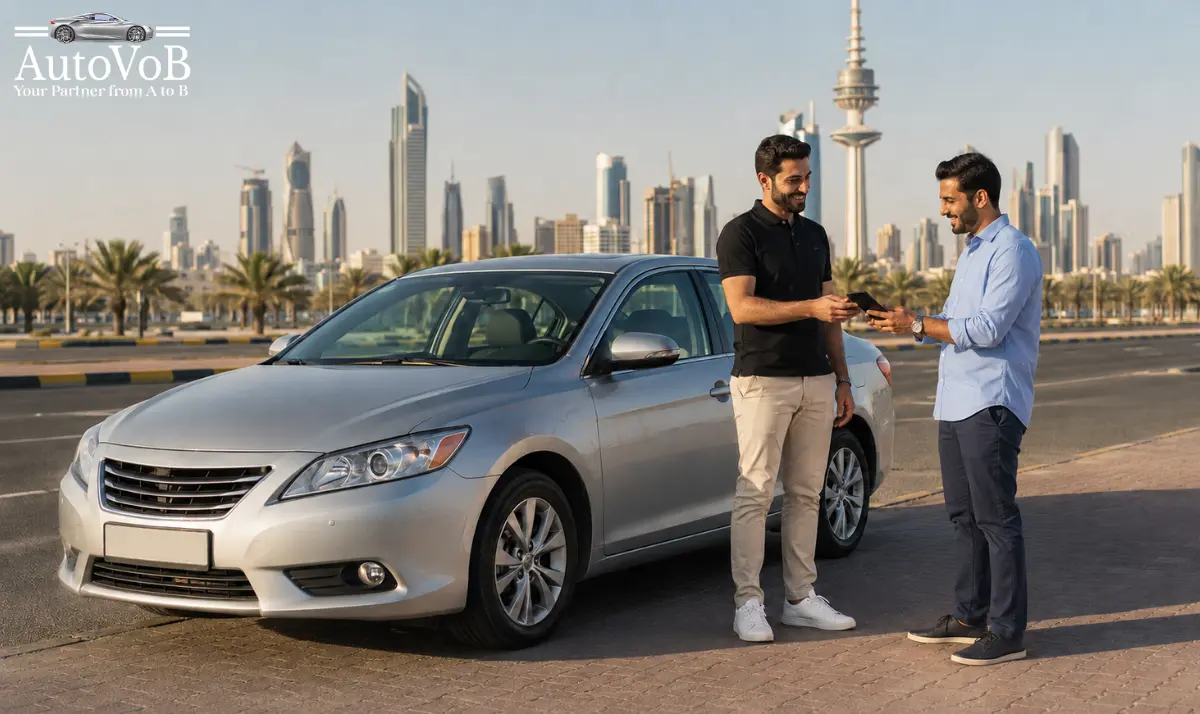
A tidy 2019 Camry with clean papers can change hands in Kuwait in under a week. The same car with unpaid fines, an expired daftar and a seller who won't move on price will sit for two months while you keep paying insurance on it.
The car is rarely the problem. What follows is how to sell car in Kuwait quickly in 2026: what to fix before you list, what to ask, and how the ownership transfer works now that most of it happens on your phone.
The market you're actually selling into
Kuwait's used car market was worth roughly USD 1.65 billion in 2025 and is forecast at about USD 1.91 billion in 2026, according to Mordor Intelligence. Sedans took close to 38 percent of it. So if you're selling a Camry or an Accord, you're holding one of the easiest cars to move in the country. Both hold more than 65 percent of their value after three years, and private buyers know it.
A legal change is shaping demand too. Under Decree-Law No. 5 of 2025, in force since 22 April 2025, expatriates can register only one vehicle in their name. Households that used to run two or three cars have had to choose, which pushed extra stock onto the market and concentrated buyers on one good vehicle instead of two cheap ones. That rewards a car with a clean history and punishes anything with a story attached to it.
The pool of legal buyers is also smaller than most sellers assume. An expat applying for a private licence generally needs two years of residency, a university degree and a salary of at least KD 600 stated on the work permit, with exemptions for a long list of professions. Plenty of people who want your car cannot register one in their name.
Before you sell car in Kuwait, fix the paperwork
Fines sit on the vehicle record, and unpaid ones block registration renewal. Check yours by civil ID or plate number through the Ministry of Interior portal or the Sahel app, then clear them. A buyer who runs that check and finds KD 200 of violations will either walk or use the number to grind you down, and they'll be right to.
If the car is financed, ask the bank for a clearance letter before you advertise. The traffic department won't transfer a vehicle that still carries a loan against it. Chasing that letter after you've shaken hands is how good deals die.
Insurance must be valid at the point of transfer, and registration renewal depends on passing the annual technical inspection. If your daftar expires next month, renew it now. Buyers read a fresh inspection as evidence the car is sound, which it partly is.
One rule catches sellers out. Since a 2021 traffic department decision, ownership can't be transferred without financial evidence of payment: a certified cheque, a payment receipt, a bank transfer, or a sale contract through a dealership. Transfers between parents, children, siblings and spouses are exempt. In October 2024 the Ministry of Commerce and Industry went further and banned cash payments in vehicle sales altogether, covering showrooms, wholesale and retail trade in new and used cars, auctions and scrap sales, effective 14 October. Anyone who insists on a bag of cash is asking you to do something the state has explicitly closed off.
Price it against live listings, not against what you paid
Most people who sell car in Kuwait price from what they paid rather than what the market is doing. Pull up eight cars that match yours on model, year, trim and rough mileage. Ignore the two outliers at the top. What's left is the range buyers are comparing you against, and asking prices are not sale prices, so assume the real numbers land a little below what you see.
My advice is to sit just under the cluster rather than at the top of it. A car priced KD 150 below the nearest equivalent gets calls in the first week; the same car priced KD 300 above gets messages in month two, from people who only want to negotiate. Build in a little haggling room and hold it. Sellers who advertise a suspiciously round number invite suspiciously large counter-offers.
Mileage matters less here than condition. Kuwait's driving is short-hop and hot, so a well serviced 140,000 km highway car often presents better than a neglected 70,000 km city one. If you have the service file, that file is worth real money.
Photos and the listing do most of the filtering
Twelve to fifteen photographs, taken in daylight, after a wash. All four corners, both interiors, the dashboard with the odometer lit, the engine bay, the tyres, and every dent you'd rather not mention. Hiding damage doesn't prevent the conversation, it just moves it to the kerb, where you'll have less leverage.
Write the listing the way you'd want one written for you. Year, trim, exact mileage, service history, accident history stated plainly, whether the car is agency maintained, and what the buyer will need to spend soon. Tyres due in three months? Say so. That single line does more for your credibility than three paragraphs of adjectives, and it filters out the buyers who were never going to pay your price anyway.
How to sell a car in Kuwait: the transfer itself
Kuwait moved this online in 2024, and it works. The seller opens the Sahel app, goes to Services, then Ministry of Interior, then Traffic Services, then Vehicle Ownership Transfer, and submits a new request with the vehicle details and the buyer's civil number.
The buyer gets a notification, reviews the request, approves it, and pays the insurance document transfer fee. That triggers a notification back to the seller, who confirms receipt of the money and pays the ownership transfer fee. The buyer then downloads the new electronic vehicle licence, which lands in the Kuwait Mobile ID wallet. Done properly, the whole exchange takes minutes rather than a morning.
The counter route still exists and is sometimes necessary, particularly for financed cars, company-owned vehicles, or inherited ones. Both parties attend the General Traffic Department in the seller's governorate with civil IDs, valid insurance, and the payment evidence. A general power of attorney covers a party who can't attend. If the seller is a company, the representative needs signature authorisation. The government fee itself is minor; insurance is the larger line item, with basic third party cover generally starting around KD 20 depending on the vehicle.
Don't hand over anything until the transfer clears
The sequence protects you. Money in your account or a certified cheque in your hand, transfer approved in Sahel, then keys. Not before.
Meeting at a bank branch solves most of this. The buyer transfers, you both watch it land, and you complete the transfer on the spot. If someone wants to pay in instalments, or wants the car now and the balance next week, decline. You remain the registered owner until the transfer completes, which means their fines, their accident, and their liability are still legally attached to your name.
Showroom, dealer, or private buyer
A showroom in Shuwaikh or Rai will quote you in twenty minutes and pay the same day. You will get noticeably less than a private sale, because that gap is their margin. That trade is worth taking if you're leaving the country in ten days or your residency is expiring. It isn't worth taking because you don't feel like answering messages.
Private sales pay more and cost time. Somewhere in between, some dealers will list your car on consignment and take a cut on completion. Decide which one you're doing before you list, because half-committing to both is how a car sits unsold for six weeks.
Two more things worth saying. Sell in the weeks before summer rather than during it, when a good chunk of the expat market is out of the country. And fix the cheap stuff, because a KD 40 detail and a working AC vent change what a buyer believes about everything they can't see.
All of the above reflects the rules in force at the time of writing. Kuwait's traffic law, transfer procedures, fees and licensing conditions are set by government and can change without much warning, so confirm current requirements with the Ministry of Interior or the General Traffic Department before you commit to anything.
Also Read: Buying Used Cars in Kuwait: A Complete Guide for Buyers
FAQs
1. How to sell a car in Kuwait?
Clear all traffic fines and any bank loan, keep insurance and registration valid, then agree a price and transfer ownership through the Sahel app or at the General Traffic Department. Payment must be traceable, and the buyer receives a new electronic vehicle licence once the transfer completes.
2. Can I accept cash when I sell my car in Kuwait?
No. The Ministry of Commerce and Industry banned cash payments in vehicle sales from 14 October 2024, and a 2021 traffic decision requires financial proof of payment before ownership transfers. Use a bank transfer or certified cheque. Transfers between close relatives are exempt from the proof rule.
3. How long does the ownership transfer take on Sahel?
Minutes, if both sides are prepared. The seller submits the request with the buyer's civil number, the buyer approves and pays the insurance transfer fee, the seller confirms payment and pays the transfer fee. Financed or company-owned cars usually still need a traffic department visit.
4. Do unpaid traffic fines stop me from selling?
They stall you. Fines attach to the vehicle record and block registration renewal, and any serious buyer will check them by plate number before agreeing a price. Clear everything before you advertise, or expect the outstanding amount to be deducted from your asking price.
5. Which cars sell fastest in Kuwait?
Sedans dominate, with roughly 38 percent of the used market, and the Toyota Camry and Honda Accord retain over 65 percent of their value after three years. Well maintained Toyota, Nissan and Lexus models move quickest. Condition and a complete service history matter more than mileage alone.
Keep visiting AutoVoB blogs for more engaging automotive insights.
List or find any vehicle globally on AutoVoB.