How Much a Car Tyre Pressure Be? Ideal PSI & How to Check
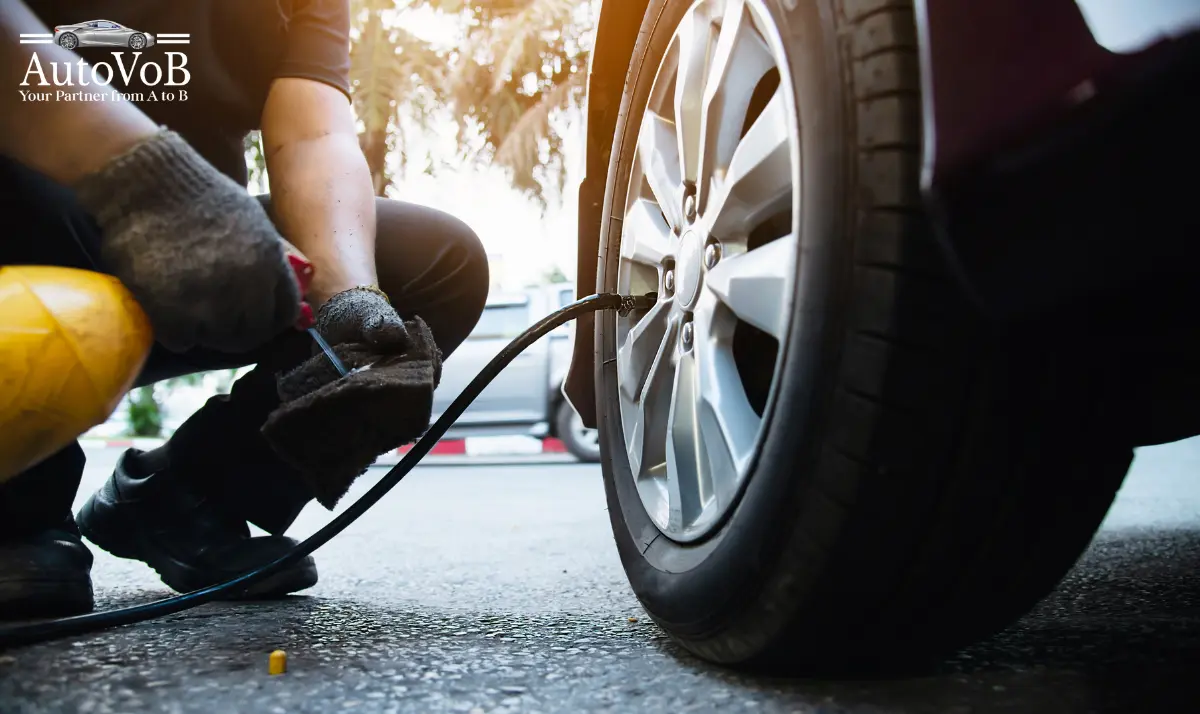
How much a car tyre pressure be is one of those deceptively simple questions that carries real weight. The right answer depends on the car, the tyre, the load, the speed, even the weather. Yet most drivers treat tyre pressure like a set-and-forget detail. That’s a mistake. Tyre pressure is not a minor setting, it’s a core variable that influences safety, fuel economy, braking, comfort, tyre wear, steering precision, and high-speed stability. Get it right, you gain control, efficiency, and confidence. Get it wrong, you pay for it in compromised handling, shorter tyre life, wasted fuel, and in the worst cases, blowouts or loss of control.
Let’s break it down in a way that actually sticks.
Understanding Tyre Pressure Basics
Tyre pressure is measured in PSI (pounds per square inch), BAR, or kPa. In most markets, PSI is the reference drivers understand best. Passenger cars generally operate between 30 to 36 PSI for normal load. SUVs and crossovers tend to run slightly higher, 32 to 38 PSI. Some sedans designed for comfort sit at the lower end, performance cars and heavy-load vehicles often specify higher pressures. The manufacturer’s recommended pressure is almost always printed on a sticker inside the driver’s door frame, in the fuel flap, or in the owner’s manual.
What this really means is you already have a precise starting point tailored for your vehicle. Use it.
A common misconception is that the PSI printed on the tyre sidewall is the ideal pressure. It’s not. That number is the maximum safe pressure, not the recommended operating pressure. Inflating to max PSI might feel like you’re giving the tyre a safety margin, but you’re actually overinflating, reducing the contact patch, stiffening the ride, and increasing center tread wear. The manufacturer recommendation balances load capacity, grip, comfort, and longevity. The sidewall PSI only tells you the ceiling, not the target.
So, How Much a Car Tyre Pressure Be for Your Vehicle?
Here’s the rule of thumb, start with the manufacturer recommendation and adjust slightly based on conditions:
- Normal city and highway driving, 30 to 36 PSI for most cars.
- Long highway trips at higher speeds, add 1 to 2 PSI above the recommendation (within safe limits).
- Car loaded with passengers or luggage, add 2 to 4 PSI depending on load, but stay below max PSI.
- Very hot weather, start 1 PSI lower than recommendation, because pressure rises as tyres heat up.
- Cold weather, start 1 to 2 PSI higher, as pressure drops in lower temperatures.
- Uneven roads or off-tarmac use, 1 to 2 PSI lower for a bit more compliance and grip.
- Performance driving, follow the manufacturer’s sports setting, if provided.
These are small shifts, but small shifts are the point. Tyre pressure tuning is about marginal gains that stack up to meaningful differences.
Why Proper Tyre Pressure Matters
Here’s the thing, tyre pressure directly dictates how the tyre interacts with the road. That interaction is everything.
- Safety and Control
Correct pressure ensures the tyre maintains an optimal contact patch. That’s the footprint that grips the road. Underinflated tyres flex excessively, build heat, degrade sidewalls, and make steering feel vague. Overinflated tyres reduce grip, especially under braking and cornering, and are more prone to damage from potholes or sharp impacts.
- Fuel Efficiency
Low pressure increases rolling resistance. The engine works harder to move the car. Even a 4 to 5 PSI drop below ideal can result in noticeable fuel economy loss over distance. Correct pressure minimizes resistance and keeps fuel consumption predictable.
- Braking Performance
Braking force is transmitted through the tyre’s contact patch. Too little air, the patch deforms, braking distances increase. Too much air, the patch shrinks, grip drops. Either way, braking suffers.
- Tyre Longevity
Underinflation causes outer tread wear and shoulder damage. Overinflation causes center tread wear. Both shorten tyre life, often dramatically.
- Comfort and Suspension Load
Correct pressure lets the suspension do its job. Overinflation makes the tyre act like a rigid component, transmitting every bump. Underinflation makes the tyre a shock absorber it was not meant to be, increasing sidewall stress and compromising stability.
- High-Speed Stability
At highway speeds, tyres heat up and pressure rises. If you start underinflated, you risk excessive flex and heat, the recipe for blowouts. If you start overinflated, the tyre becomes overly stiff, jittery, and less composed during emergency maneuvers.
- Steering Precision
Tyre pressure influences how quickly and accurately steering inputs translate to direction change. Proper pressure gives you a clean, linear response.
- Wet-Road Grip
In rain, grip depends on a stable contact patch and effective water evacuation through tread grooves. Correct pressure keeps the tread working as designed.
How to Check and Maintain Tyre Pressure
Checking tyre pressure is straightforward, but consistency is key.
When to Check
- Check once every 7 to 10 days for regular use.
- Always check before long highway trips.
- Check when ambient temperatures shift sharply.
- Check if the car feels unsettled, heavy to steer, or bouncy.
Step-by-Step Process with a Gauge
- Park on level ground and let tyres cool for 10 to 20 minutes.
- Remove the valve cap from the tyre.
- Press the gauge onto the valve stem firmly to get a reading.
- Note the PSI and compare it to manufacturer recommendation.
- Add or release air as needed.
- Recheck after adjusting to confirm accuracy.
- Replace the valve cap securely.
Maintaining Pressure
- Top up air slowly. Tyre pressure rises quickly with small bursts of air.
- If releasing air, do it in short taps. Pressure drops fast.
- Don’t eyeball it. Even experienced drivers can’t estimate PSI reliably by feel.
How to Check Tyre Air Pressure With and Without a Gauge
You’ll often find yourself in one of two scenarios: you have a gauge, or you don’t. Both are manageable.
Checking with a Gauge
A gauge gives you precision. Digital or analog, doesn’t matter as long as it’s calibrated. A digital gauge is easier to read, an analog one is reliable and doesn’t need batteries.
Checking without a Gauge
You’re relying on indirect indicators. Not perfect, but useful for interim checks.
Visual and Tactile Clues
- Tyre looks flatter at the bottom, likely underinflated.
- Car feels heavier to steer, often low pressure.
- Ride feels unusually bumpy or floaty, pressure is off.
- Press your thumb hard into the tyre, if it depresses easily, it’s probably low.
- Knock the tyre lightly, a very dull thud can indicate low pressure, a sharper sound can indicate high pressure.
Vehicle Behavior Test
- Drive slowly for 50 to 100 meters.
- If the car feels draggy or reluctant to roll freely, pressure may be low.
- If the car feels nervous, jittery, or overly stiff over small bumps, pressure may be high.
These methods only tell you direction, not magnitude. They help you detect a problem, not quantify it.
Common Pressure Problems and How to Avoid Them
- Underinflation
Causes:
- Slow leaks
- Temperature drops
- Poor maintenance habits
Risks:
- Blowouts from heat
- Poor braking
- Reduced fuel economy
- Shoulder wear
Prevention:
- Check regularly
- Fix leaks early
- Replace faulty valves
- Maintain recommended PSI
- Overinflation
Causes:
- Filling to sidewall max PSI
- Misreading tyre specs
- Overcompensating for load
Risks:
- Reduced grip
- Harsh ride
- Center tread wear
- Higher pothole damage risk
Prevention:
- Follow manufacturer recommendation, not sidewall PSI
- Adjust modestly for load, within safe limits
Tyre Pressure and Temperature, What’s the Link?
Pressure changes roughly 1 PSI for every 6 to 7°C shift in ambient temperature. Tyres also gain pressure as they heat during driving, often 2 to 5 PSI depending on speed and road surface. This is why cold readings are the standard reference.
If you fill tyres to ideal PSI after a long highway drive, you’re likely overinflating, because you’re reading hot pressure. Always check cold.
TPMS (Tyre Pressure Monitoring System), Friend, Not Oracle
Many modern cars have TPMS sensors that warn when pressure drops. They’re useful safety nets, but they’re not replacements for manual checks. Sensors have tolerances and delays. A gauge check is still the ground truth.
Pressure for Spare Tyres
Keep spare tyres 2 to 3 PSI higher than regular tyre recommendation, because spares sit unused for long periods and lose air slowly. The extra PSI ensures they’re usable when needed.
Pressure for Long-Term Parking
If parking for more than 2 to 3 weeks, inflate tyres 3 to 4 PSI above recommendation (but below max PSI). This reduces flat spotting. Tyres naturally bleed air over time, the higher starting PSI offsets that loss.
Can Wrong Tyre Pressure Ruin Your Driving Forever?
No. Tyre pressure issues are reversible. The damage from chronic misuse, like uneven wear or sidewall fatigue, is not always reversible, but the driving consequences are. Correct the pressure, you restore the dynamics immediately. Replace worn tyres, you restore longevity. Nothing about tyre pressure mistakes permanently destroys driving ability. It only destroys outcomes when ignored.
Also Read: Benefits of Nitrogen in Tyres: What Qatar Drivers Should Know
Quick Maintenance Checklist
- Check tyres cold every 7 to 10 days.
- Follow manufacturer PSI, not sidewall max PSI.
- Add 2 to 4 PSI for heavy loads, stay under max PSI.
- Adjust 1 to 2 PSI for temperature extremes.
- Inspect for nails, cracks, and valve leaks monthly.
- Keep spare slightly higher than regular PSI.
- Don’t rely on feel alone for PSI accuracy.
- Recheck after every air adjustment.
- Make pressure checks part of trip planning.