Dubai Auto Market Development Project Unveiled 2025
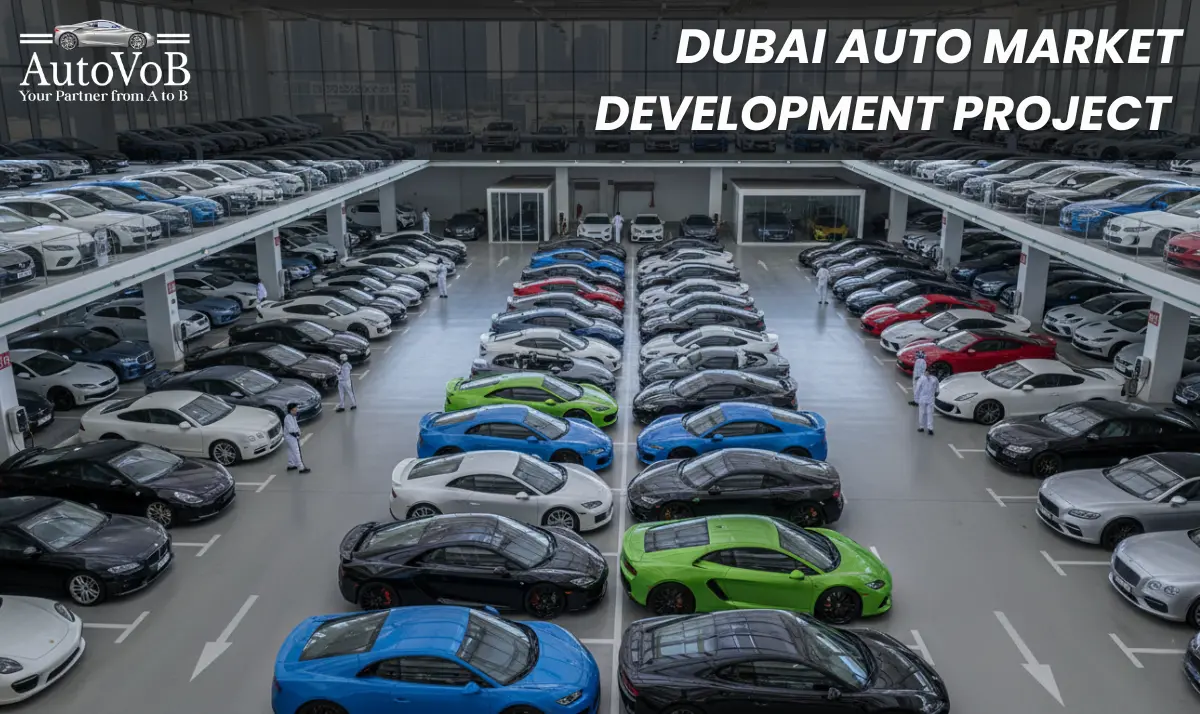
Dubai is building the world’s largest and most advanced auto marketplace, and if you have any interest in regional automotive trade, urban development, or global logistics, the Dubai Auto Market Development Project is something to watch closely. This massive undertaking aims to put Dubai in the absolute top tier of car trading and vehicle logistics worldwide. Here’s a deeper look at what’s actually being built, why it matters, and how it’s set to flip the script for automotive commerce in the region and beyond.
What is the Dubai Auto Market Development Project?
Dubai’s new project, unveiled in November 2025, is set to sprawl across 22 million square feet, making it the largest integrated auto marketplace anywhere in the world. Think about it: over 1,500 showrooms, huge cluster-based workshop zones, dedicated warehouses, secure multi-storey car parks, a modern auction house, and a convention center all within a single, intelligently designed campus. The vision isn’t limited to cars, the facility will cater to new, used, electric, hybrid, and conventional vehicles, and will connect exporters and buyers from Africa, the Middle East, and Southeast Asia to global markets.
Behind the Scenes: Who’s Running the Show?
Dubai Municipality and DP World have joined forces to operate and manage the Auto Market. You might know DP World as a heavyweight in global logistics and the folks behind Jebel Ali Port, arguably the most important logistics hub in the Gulf. By leveraging DP World’s reach (77 ports and 15 automotive transshipment hubs worldwide), the project is positioned to become more than a market, it’s a global supply chain engine.
The site’s master plan is not just about buying and selling cars. It’s being built as a holistic ecosystem for the entire auto industry: think state-of-the-art showrooms, auction facilities, hospitality and accommodation, on-site customs and inspection points, spaces for big expos and automotive events, and even dedicated zones for EV, hybrid, and spare parts businesses.
The Vision: Tied to Dubai’s Economic Future
Here’s the thing: this is about far more than just convenience or real estate. The Dubai Auto Market is directly tied to the Dubai Economic Agenda D33, the emirate’s plan to double its economy by 2033 and become one of the world’s top three urban economies. Auto trade is already a giant in Dubai, valued at AED6.8 billion (roughly $1.85 billion), and the goal is to double that figure. DP World’s global network is expected to handle over 800,000 vehicles annually through this new complex, a figure that reflects both car sales growth and ambitions for global automotive dominance.
Infrastructure That Means Business
What sets this project apart is the focus on seamless integration. This isn’t just a cluster of buildings. The design brings together display zones, specialized event areas, logistics clusters, repair and reconditioning facilities, and very robust IT and logistics systems. With direct links to Dubai’s fast-moving logistics corridors, including the Jebel Ali Free Zone (already home to 940+ automotive and spare parts companies), participants will have access to the infrastructure they need for next-generation automotive commerce.
Internally, buyers and sellers will benefit from integrated customs checks, simple clearance, and digital-first processes, no more running between offices. The masterplan also includes accommodation and entertainment for workers and visitors, large-scale conference and event spaces, and plenty of F&B and retail options to keep the place buzzing all year round.
Regional and Global Impact: More Than a Local Play
What this really means is Dubai is laying the foundation to become the Middle East and Africa’s core re-export hub for vehicles. Exporters can reach buyers across continents, and the project integrates the needs of international manufacturers, regional traders, car rental operators, and used car dealers. Electric and hybrid vehicles are getting dedicated attention, reflecting the region’s ongoing shift toward EV adoption and green transport goals.
The ripple effect could be profound. By streamlining access to markets, fostering innovation, and building the logistics backbone for automotive trade, Dubai is well-placed to attract new manufacturers, tech startups, and service providers interested in building regional and global supply chains. The market’s scale and facilities are likely to set global benchmarks for other cities aiming to modernize their auto trade infrastructure.
Catering to Today’s Reality (and Tomorrow’s)
Let’s not overlook the timing. UAE’s car sales and re-export activity are projected to surge through 2030, doubling in many segments as the population grows and regional demand shifts. This market is being built not only for today’s buyers and sellers, but also for the anticipated growth in electric, hybrid, and increasingly autonomous vehicle segments. By catering to all these use cases under a single, world-class roof, Dubai is helping future-proof its trade strategy, while staying flexible for industry shifts.
The hub also promises to address pain points that have dogged both large importers and small dealers in emerging markets: fragmented logistics, outdated customs procedures, lack of critical business infrastructure, and limited B2B networking opportunities. With a one-stop destination for all this, the barriers to entry shrink and business opportunities multiply.
How Local Dealers, Exporters, and Job Seekers Will Benefit
Local car dealers, workshop owners, and logistics operators stand to benefit in several ways. There will be access to a much larger buyer pool from Africa, Southeast Asia, and beyond, better facilities for storing and displaying vehicles, increased networking and deal-making opportunities, and new solutions for financing, insurance, and trade logistics running on modern infrastructure.
For job seekers, the complexity and scale of the project mean thousands of new roles in showrooms, logistics, hospitality, IT, customs, and more. For investors, the cluster effect, where different players in the value chain operate side by side, often drives innovation and productivity, which are essential for building a globally competitive industry.
Dubai’s Message to the World
The way this project is set up, Dubai’s government is sending a clear signal: this city is not just keeping up; it’s raising the bar for global automotive trade. DP World’s involvement hints that international best practices will be baked in, and strategic agreements with government bodies reinforce that this isn’t just a business play, but part of national and regional strategy.
Larger ambitions mesh neatly with regional trends. The Middle East is seeing a surge in domestic car manufacturing, smart mobility services, and an appetite for electric vehicles. By making Dubai the nerve center for these trends, with infrastructure to match, the city is seizing first-mover advantage and giving automakers and traders a reason to put down roots here.
The Road Ahead
Construction is already underway, with core facilities set to open in phases through the next several years. Early signs hint at strong demand from both established players and new entrants, with government leaders and global automotive executives lining up support. Industry watchers are pointing to the project as a defining moment in regional trade development, and a blueprint for how cities can future-proof their economies by investing in strategic infrastructure.
Also Read: Growth of the Automotive Market in GCC Countries in 2025
Conclusion
Dubai Auto Market Development Project isn’t just a big real estate venture; it’s a reimagining of the way cars are bought, sold, shipped, and managed globally. Smartly, the city is leveraging its geographic location, logistics know-how, and pro-business policies to attract the biggest names in the industry. If Dubai executes on its promises, this project could turn the emirate into a permanent fixture of the global auto trade map, powering jobs, innovation, and economic growth long past the 2033 economic vision.