Growth of the Automotive Market in GCC Countries in 2025
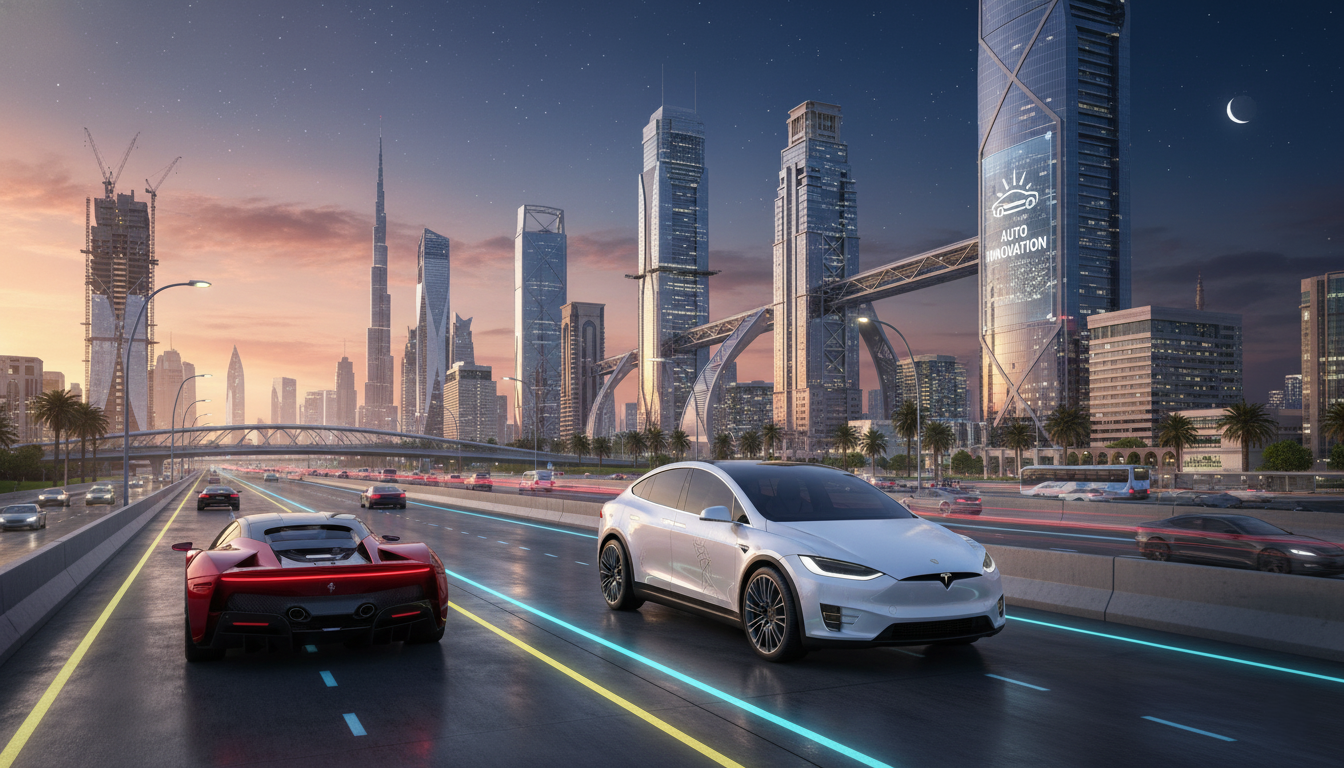
The automotive market across the Gulf Cooperation Council (GCC) countries is entering a phase of meaningful expansion in 2025. What this really means is that each market, whether in Saudi Arabia, the United Arab Emirates (UAE), Qatar, Kuwait, Oman or Bahrain, is not simply growing; it is transitioning. As an automobile expert, I will walk you through each country in turn, unpacking the numbers, the drivers and what those mean for the future.
Saudi Arabia
Saudi Arabia remains the largest automotive market in the GCC and in 2025 it continues to show strong momentum. According to a recent study of the UAE & KSA markets, new-vehicle sales in Saudi Arabia grew by about 11.6 % in the first half of 2025 compared to the same period last year. Another source shows that in February 2025 sedans accounted for over 50 % of total vehicle sales, while SUVs captured more than 30 %.
What this means:
- Traditional internal-combustion engine (ICE) vehicles still dominate, one report noted ICE vehicles accounted for over 90 % of sales in February 2025.
- Entry-level sedans remain the bulk of the market: vehicles under SAR 120,000 made up two-thirds of sales in that month.
- Although the electric vehicle (EV) segment is small, growth is meaningful: one insight pointed to Saudi’s EV sales rising by ~33.5 % in H1 2025, though from a very low base.
Key drivers: - Broadening consumer base, increasing female drivers and higher incomes are pushing volumes.
- Government focus under “Vision 2030” is also driving automobile consumption and localisation of manufacturing.
What to watch: - EV infrastructure remains under-developed; until charging networks become more widespread, ICE vehicles will stay dominant.
- Dependence on imports remains high; for major change you’ll need local manufacturing scale-up.
In sum: Saudi Arabia remains the “volume leader” in the GCC, but the most interesting shifts may come in how the market is being reshaped rather than just how large it is.
United Arab Emirates (UAE)
The UAE is smaller in volume compared to Saudi Arabia, but it stands out for its rapid adoption of new mobility trends and high purchasing power. According to one source, vehicle sales in UAE up to September 2025 were up by about 5.5 % year-on-year. Meanwhile the H1 2025 data shows new-car registrations in the UAE rose roughly 10.9 % year on year.
What this means:
- EV adoption is stronger here: another source reports the UAE as leading the GCC in electric vehicle volume with around 24,000 BEVs and PHEVs sold in 2024.
- Premium and luxury vehicle demand is high: ownership culture and tourism contribute to this.
Key drivers: - High per-capita income, strong expatriate population and high brand awareness push consumption of SUVs, premium models and newer technologies.
- The UAE also has mature distribution, financing and aftermarket services.
What to watch: - With many buyers already having vehicles, the used-car market and mobility services (subscription, leasing) will increasingly matter.
- Competition is rising: Chinese and other value-brands are making in-roads.
In effect: The UAE may not offer the biggest volume jump, but it offers a high-value market and an early indicator of where the GCC automotive space is headed.
Qatar
Qatar is a smaller market in absolute size compared with Saudi Arabia or the UAE, but it offers interesting dynamics. According to a report covering EV growth in the region, the GCC’s EV penetration doubled from ~2 % to ~4 % in 2024, and Qatar is among the countries where that movement is observed.
What this means:
- In markets like Qatar, fleet demand (corporate, rental, government) plays a significant role, not just private car sales.
- With high income per capita, the premium segment and luxury brands have more room.
Key drivers: - Government incentives for green mobility, increasing concern for air quality and image.
- Infrastructure spending, high-end consumer preferences.
What to watch: - Because the population size is smaller, absolute volumes may be modest; the strategic value may lie more in premium and EV niches rather than mass volume.
In short: Qatar may not shift the regional totals dramatically, but it is a market worth studying for trends in premium, EV and fleet segments.
Kuwait
Kuwait shows steady but somewhat more modest growth compared with its neighbours. While data is less granular publicly, a GCC-wide study estimates the automotive market in the GCC will grow at a CAGR of around 6.7 % through 2026, with Kuwait included.
What this means:
- Kuwait has high vehicle ownership per capita, so many sales are replacements rather than first-time buyers.
- Upgrade of older fleets and parts/aftermarket growth matter.
Key drivers: - Demand for reliability, large vehicles (SUVs, pickups) due to terrain and usage patterns.
- High incomes and a mature market mean brands and features gain importance.
What to watch: - Market saturation could dampen growth unless new categories (EVs, mobility services) pick up.
- Import-dependence remains a risk if currency or tariff dynamics shift.
So: Kuwait is a “steady” story, less flashy than some neighbours, but with solid foundational growth.
Oman
Oman is smaller in scale but shows perhaps one of the stronger growth potentials. According to a report, Oman's automotive market size is estimated at USD 3.23 billion in 2025, with a projected CAGR of around 7.32 % from 2025-2030. Another up-to-date figure shows up to September 2025 the vehicle market in Oman grew by about 15.7 %.
What this means:
- Growth is faster than some of the established larger markets, indicating catching-up potential.
- The share of personal vehicle ownership remains strong (around 78 % by one account).
Key drivers: - Urbanisation, rising household incomes, and infrastructure improvements (roads, logistics zones) contribute.
- The push for EV and battery-related investment also provides future upside.
What to watch: - Because the base is smaller, growth is susceptible to external shocks (oil revenue dips, import cost rises).
- EV adoption remains early; thus choice of model, support infrastructure will matter.
In short: Oman is a “high-growth potential” market in the GCC, especially for brands or services that want to enter before the competition thickens.
Bahrain
Bahrain is one of the smaller GCC automotive markets, but it has notable features. According to data up to October 2025, Bahrain’s vehicle market grew about 6.2 % year-on-year.
What this means:
- Growth is moderate, but the market is relatively mature and consumers have high purchasing power per vehicle.
- EV adoption in Bahrain is still very slow (growth about 0.6 % in EVs up to October 2025 in one dataset).
Key drivers: - Premium vehicles, customisation and aftermarket services are important because of the high-end nature of many vehicle owners.
- Because the market size is smaller, niche players (luxury brands, specialty services) may find more room.
What to watch: - Given the small volume base, moves in regulation (tax, import duties), or macroeconomic shifts can have outsized impact.
- The transition to EVs may lag, so strategy may need to focus on ICE/hybrid for the near term.
Bottom line: Bahrain may not be high-volume, but offers important insights into premium, luxury and specialised automotive segments in the GCC.
Cross-cutting themes for 2025
Having walked through each country, there are several shared trends across the GCC automotive markets in 2025. These will shape not just sales volumes, but how the industry evolves.
- Electrification and alternative propulsion
EVs are growing rapidly although from a low base. For example, the GCC is reported to be one of the fastest-growing EV markets globally. What this really means is that every manufacturer entering the region must plan for EV transition, but also recognise that ICE vehicles will continue to dominate for the near term. - Rising demand for SUVs, luxury and new mobility models
Across the region, SUVs are increasingly favoured and luxury segments are expanding. Furthermore, mobility models like subscription, leasing and fleet services are starting to take more attention. For example one market insight pointed to growth in used-car sales and new models of ownership in the region. - Urbanisation, income growth and fleet renewal
Higher disposable income, younger buyers, more women drivers (particularly in Saudi Arabia) and expanding urban areas are all supporting vehicle demand. Also important is fleet renewal, many countries have older vehicle fleets and replacement demand is real. - Manufacturing localisation and supply-chain shifts
While import-dependence remains high, several GCC governments are pushing for local assembly or production (especially Saudi Arabia under Vision 2030). This shift will affect cost structures, availability, lead times and even export potential. - Aftermarket and services growth
As the vehicle base grows and ages, the automotive aftermarket (spare parts, accessories, maintenance) will grow strongly. One report values the GCC automotive aftermarket at USD 11.7 billion in 2024, growing at around 5 % CAGR. - Economic and external risks
Macro-economic conditions matter. For instance, slower growth, oil price volatility, inflation or currency shocks can hit demand. The broader GCC economic growth outlook is moderate; for example the IMF projects about 3.5% regional growth in 2025.
What to keep an eye on
- EV charging infrastructure rollout: In markets like Saudi Arabia or Oman, the pace at which charging networks expand will strongly shape EV take-up.
- Used car market dynamics: As volumes rise and fleets age, the used-car segment will increasingly influence new-car demand, pricing and brand positioning.
- Chinese and new-entrant brands: Especially at the value end and in EVs, Chinese and other non-traditional brands are gaining market share in the GCC.
- Regulation and incentives: Fuel prices, import duties, tax policies and incentives for clean vehicles will influence buyer behaviour significantly.
- Localization and manufacturing: If the region succeeds in moving from import-dominant to local assembly or full production, that could reduce cost, improve availability and ease lead times.
- Mobility services and business models: Subscription models, ride-hailing fleets, corporate mobility will shift the nature of vehicle demand away from pure private ownership in some segments.
Also Read: GCC Specifications in Cars: Why They Matter in the Gulf
Conclusion
In 2025, the automotive market in the GCC is not simply growing, it is evolving. Saudi Arabia continues to lead in scale and volume; the UAE stands out for premium, luxury and EV momentum; Qatar, Kuwait, Oman and Bahrain each bring their own profiles and opportunities. The common thread is increasing mobility demand, rising incomes, shifting consumer preferences and the gradual move to electrification and new ownership models.
For automotive manufacturers, investors or aftermarket players the key takeaway is: treat the GCC not as a single market but as a set of distinct countries, with unique strengths, challenges and timelines. But do treat the region as a cluster of growth opportunities. The structural drivers are real. The risk lies in mis-judging the pace of change (especially in EVs and mobility models) or over-assuming outcomes (for example expecting EV share to leap dramatically overnight).
For more such informative blogs, keep following AutoVoB blogs