Driving in Fog in the UAE: Speed Limits, Lights and Fines
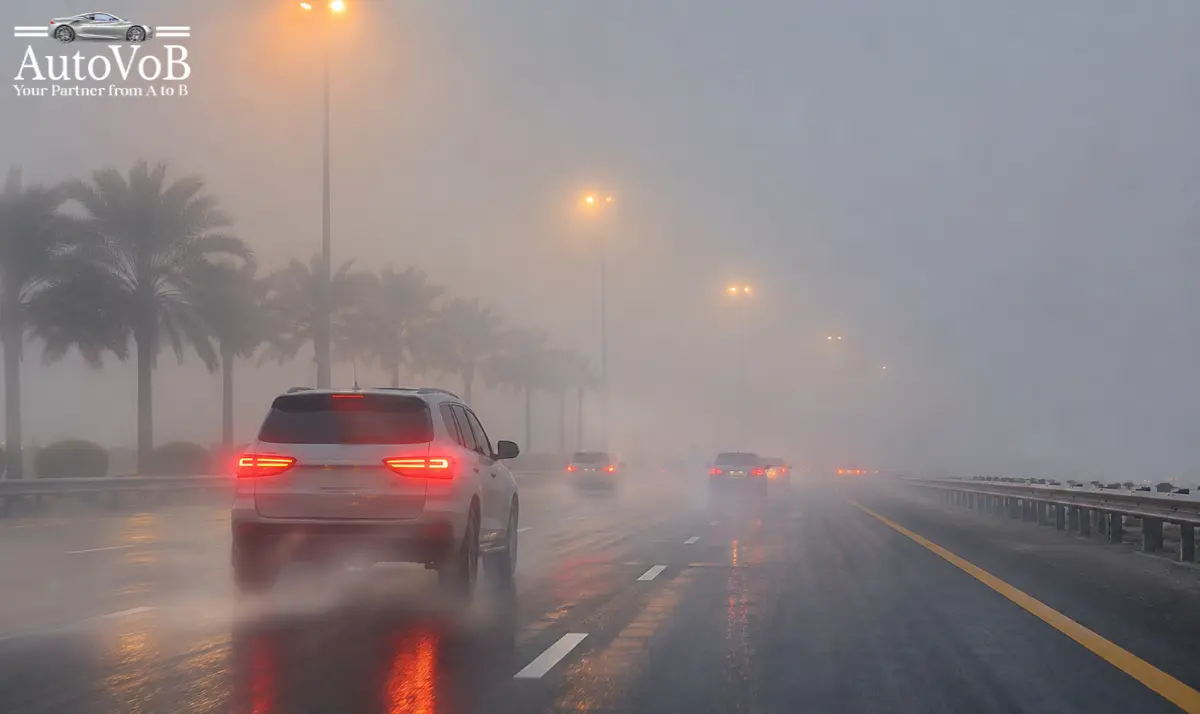
The rules for driving in fog UAE police enforce are simple: slow to the speed on the electronic signs, often 80 km/h in Abu Dhabi, use dipped headlights, keep hazard lights off while moving and leave a much bigger gap. Fog usually lifts by mid-morning, so a later start is often safest.
When fog hits the UAE and why it catches drivers out
Fog here is mostly a morning problem. Humid air rolls in from the Gulf overnight, the desert cools fast after sunset, and by 4am the moisture has turned into a grey wall over the coastal highways and the inland roads around Abu Dhabi, Al Dhafra and Al Ain. The National Center of Meteorology (NCM) usually issues its alerts late at night, and they often run until 9am or later.
The worst months are the cooler ones, from roughly October to March, but fog alerts have also come in September, May and even June. That's why it surprises people. You leave a clear villa compound in Khalifa City, join the highway, and two kilometres later you can't see the car in front.
The danger isn't the fog itself. It's the speed difference. One driver slows to 60, another keeps going at 120 because the road was clear a minute ago, and visibility under 200 metres leaves nobody time to react.
NCM red and yellow fog alerts: what they mean for your drive
The NCM uses colour codes. A yellow alert means fog is possible and visibility may drop. A red alert means fog has formed and visibility is already poor, often below 1,000 metres and sometimes far less. Red is the one to take seriously.
The alerts show up on the NCM website and its app, and police often push mobile warnings to phones in the affected area. Before an early drive, especially between October and March, check the alert the night before and again when you wake up. If there's a red alert on your route and your trip can wait an hour, wait. Most fog burns off once the sun gets going.
Speed limits drop on fog days, and the sign wins
Abu Dhabi Police have used a reduced 80 km/h limit in fog and other bad weather since 2019. When fog rolls in, the electronic signs above the main roads switch to the lower limit, and that number replaces the fixed sign on the roadside. In October 2026, police cut limits to 80 km/h on several key routes for exactly this reason.
The radars follow the electronic sign, not the speed you're used to. A driver who sticks to the usual 120 or 140 on a fog morning can be well over the active limit without noticing. Keep your eyes on the overhead gantries and stay at the lower limit until the sign says it's lifted.
Other emirates don't always change their signs the same way, but the rule of common sense is the same everywhere. If you can only see 100 metres ahead, 80 km/h may still be too fast.
Lights: dipped beams on, hazards off
This is where most people get it wrong. Turn on your dipped headlights and, if your car has them, the front and rear fog lights. Full beam makes things worse, because the light bounces back off the water droplets and blinds you.
Hazard lights while moving are a common habit and a bad one. They switch on all four indicators, so the driver behind can't tell when you're changing lanes or turning. Police in the UAE fine it with AED 500 and four black points. Use hazards only when you've stopped, ideally well off the road.
Driving in fog without lights also carries a fine and black points under the federal traffic law, and the bigger cost is not being seen at all.
Also Read: Car Defogger Explained: Working, Uses, Types & Repair
Following distance and lane discipline in low visibility
On a dry clear road, a two-second gap is fine. In fog, make it at least four, and more when it's thick. Pick a lamp post or a sign, count from when the car ahead passes it, and if you reach it before four, ease off.
Stay in your lane and use the painted lines and road studs as your guide. Don't overtake. A lorry you think is crawling could have three cars tucked in front of it that you simply can't see. Keep the radio low and the window cracked open a little if you need to hear traffic at junctions.
If the fog gets so thick that you can't see the lane markings, don't stop in the lane. Take the next exit or a safe lay-by, pull fully off the road, then switch on your hazards and wait.
Check these before fog season, especially on a used car
Fog shows up every weakness in a car's lights and glass. Here's what to check in October, before the alerts start:
- Headlight lenses: years of UAE sun turn them yellow and cloudy, which can cut the light that reaches the road. Restoring or replacing the lenses is cheap compared with what it fixes.
- Fog lights and bulbs: walk round the car with the lights on. A dead rear fog light or a single working headlight is easy to miss on a sunny commute.
- Wipers and washer fluid: blades bake in the summer heat and start to smear. Fog leaves a fine film on the screen, and a smearing blade turns it into a blur.
- Demister and air conditioning: the inside of the glass mists up quickly on humid mornings. The AC should clear it within a minute or so.
- Tyres: roads get greasy on damp mornings, so tread depth and pressure matter more than usual.
Shopping for a car this winter? Test the lights and wipers during the viewing, not after. When you browse used cars in UAE, ask the seller for a morning viewing and switch every light on. Buyers in the capital can compare used cars in Abu Dhabi, where fog is most frequent, and look for cars with working fog lamps and LED or projector headlights. If you're looking at a popular family model such as a used Toyota in the UAE, check that the fog light switch actually does something, because on some trims it's a blank button.
Also Read: Back To Basics: How To Change Windshield Wipers
If you can wait, wait
The simplest fog advice is the one people ignore most. Fog in the UAE rarely lasts past mid-morning. Leaving at 9:30 instead of 6:30 on a red alert day often means a clear road. Many employers understand that, and police regularly ask drivers to delay trips when they can.
When you can't wait, give yourself extra time so you're never tempted to speed up. Being twenty minutes late is a much better story than any of the alternatives.
The speed limits, fines and alert rules in this guide are based on current information from official and news sources and can change at any time, so follow the electronic signs and police announcements on the day.
Sources: National Center of Meteorology (NCM), The National: Abu Dhabi cuts speed limits to 80kph on key routes (Oct 2026), Khaleej Times: hazard lights in fog, AED 500 and four black points, Gulf News: fine for hazard lights in fog.
FAQs
1.What is the speed limit in fog in Abu Dhabi?
On fog days Abu Dhabi Police often lower the limit to 80 km/h on major roads. The new limit appears on the electronic signs above the road and replaces the fixed roadside sign. Radars follow the electronic sign, so stay at 80 km/h until the sign shows that the limit has been lifted.2.Is it illegal to use hazard lights while driving in fog in the UAE?
Yes. Using hazard lights while moving in fog can bring an AED 500 fine and four black points in the UAE. Hazards switch on every indicator, so drivers behind cannot see when you turn or change lanes. Use dipped headlights and fog lights instead, and save hazards for when you stop.3.Which lights should I use when driving in fog?
Use dipped headlights and your front and rear fog lights if the car has them. Avoid full beam, because the light reflects off the water droplets and makes it harder to see. Make sure every bulb works before fog season, as a dead rear light makes your car hard to spot from behind.4.What does an NCM red fog alert mean?
A red alert from the National Center of Meteorology means fog has formed and visibility is already poor, often below 1,000 metres and sometimes much lower. A yellow alert means fog is likely. On a red alert morning, delay your trip if you can, as fog usually lifts by mid-morning in the UAE.5.What should I do if fog becomes too thick to drive?
Do not stop in a traffic lane. Slow down, keep to the lane markings and leave at the next exit or a safe lay-by. Pull fully off the road, then switch on your hazard lights and wait until visibility improves. Stopping on the hard shoulder of a busy highway is risky and best avoided.
Foggy mornings are the right time for a little reading over coffee, and AutoVoB Blogs has plenty more practical guides for UAE drivers while you wait for the sun.