Dodge Challenger vs Ford Mustang: Muscle Icons Redefined
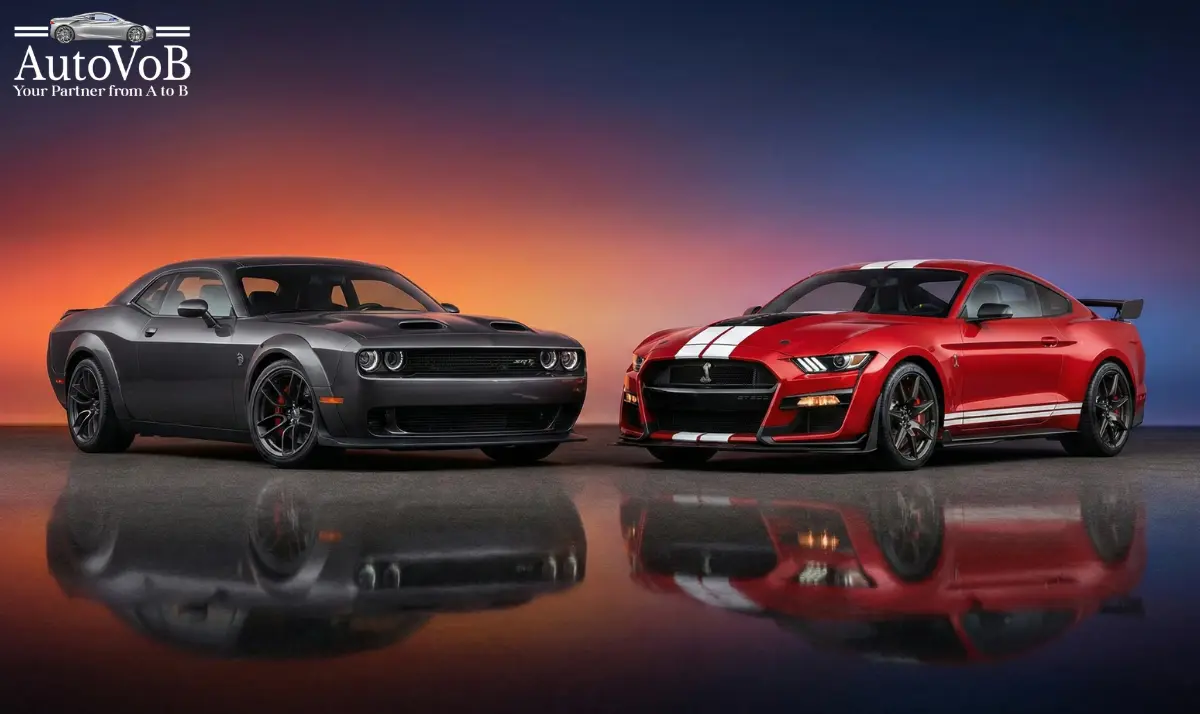
Few automotive rivalries are as timeless and emotionally charged as the Dodge Challenger and Ford Mustang. Both cars carry the essence of American muscle, dramatic styling, thunderous engines, and a personality that never blends into traffic. But while they may share a similar spirit, their paths have diverged, especially in the global market and places like the UAE where enthusiasts value power and presence just as much as practicality.
The Legacy of American Muscle
The story of these two cars goes back more than half a century. The Ford Mustang debuted in the mid-60s and became an instant sensation, sporty, affordable, and attainable. The Dodge Challenger, which arrived a few years later, took a more aggressive route: bigger body, bolder looks, and engines built to scare stoplights.
Over time, both machines evolved from simple pony cars into high-performance legends. While electric vehicles now dominate future discussions, these classics continue to draw loyalists who crave raw combustion energy and unmistakable character.
Design and Performance Differences
Let’s get to the part that excites most enthusiasts, how these two icons feel on the road.
The Ford Mustang today is more refined without sacrificing muscle. Its modern design and aerodynamics make it more usable for daily driving. The Mustang offers various trims and engines, including turbocharged four-cylinder and V8 options. The handling feels sharp and balanced, ideal for those who want both speed and control.
The Dodge Challenger, on the other hand, leans toward pure muscle car tradition. It’s bigger, heavier, and unapologetically bold. Its wide stance, aggressive hood scoops, and rumbling exhaust are part of what makes it so appealing. The car feels like an old-school heavyweight, less about cornering precision, more about straight-line power and sensation.
What this really means is that while the Mustang has evolved into a global sports car, the Challenger remains a nostalgic American brute. Your choice depends on whether you value modern refinement or old-school muscle.
Availability in the UAE
Now, for those living in or around the UAE, availability is a key factor.
The Ford Mustang continues to be sold as a brand-new model across official dealerships in the UAE. Buyers have access to multiple trims, including EcoBoost and GT variants. The starting price of a brand-new Ford Mustang is AED 221,445. With modern tech, safety assists, and global performance recognition, it remains one of the most accessible ways to experience American muscle in the Middle East.
The Dodge Challenger, however, has been discontinued from new production. That means it’s no longer available as a factory-fresh model through official UAE dealers. Still, it maintains a strong presence in the used car market, where enthusiasts can find well-maintained examples, especially the 2021 to 2023 models, listed across various platforms.
Current Market Prices for New and Used Models
When we compare prices, the difference between new and used options tells an interesting story about value retention and demand.
For the Ford Mustang, the average price of a used model ranges from AED 96,833 to AED 248,248 for model years between 2021 and 2025. The wide range reflects different trims, mileage, and specifications, from efficient EcoBoost versions to powerful GT and Mach 1 variants.
The Dodge Challenger, being available only as a used vehicle in the UAE, commands an average price between AED 73,814 and AED 160,617 for model years from 2021 to 2023. Considering its discontinuation, these prices represent good value for enthusiasts who want a slice of classic performance without paying collector premiums.
Driving Experience: Modern vs Classic
On the road, both these cars deliver the kind of excitement that’s hard to fake. The Mustang feels alive in corners, more responsive, and tuned for global driving conditions. It’s a car you could easily take on highway cruises or daily commutes without feeling out of place.
The Challenger, by comparison, is a theater on wheels. Every start-up, every rev, and every acceleration feels like a performance. It’s less practical in tight urban spaces but unmatched in straight-line acceleration and pure muscle drama.
Here’s the thing, neither is objectively better. The Mustang wins on everyday usability and balance, while the Challenger wins on personality and nostalgia.
Global Relevance and Collector Appeal
Outside the UAE, both the Dodge Challenger and Ford Mustang have global fan bases. The Mustang has expanded its footprint with right-hand-drive options and appears in markets from Europe to Australia. It’s viewed as a modern global sports car that still carries its roots in Detroit’s muscle tradition.
The Challenger, though not officially sold in all markets, has become a collector’s darling. With production officially ending, car collectors and enthusiasts are rushing to grab the final models. Its appeal lies in its defiant nature, a car that never compromised to meet mainstream expectations. That global desire for authentic driving experiences keeps the Challenger relevant long after its official end.
Ownership and Maintenance in the UAE
Owning either a Dodge Challenger or Ford Mustang in the UAE is relatively straightforward since the country is well-equipped for performance cars. Authorized Ford service centers handle Mustang maintenance effortlessly, with parts readily available. Insurance premiums are moderate for the EcoBoost variants and higher for the GT due to its higher performance tier.
The Challenger, though discontinued, benefits from a loyal community of owners. Independent workshops and specialized garages across Dubai, Abu Dhabi, and Sharjah continue to offer maintenance support. Spare parts, especially for common trims like the R/T or Scat Pack, are still accessible through local suppliers or imports.
In short, both cars are highly maintainable and popular enough that enthusiasts won’t face major service challenges.
The Lifestyle Choice
Beyond specs and numbers, this comparison comes down to identity. The Mustang represents evolution, a muscle car that adapted to the future without erasing its past. It suits drivers who want everyday comfort, modern tech, and occasional thrills.
The Challenger, by contrast, is about rebellion. It’s for those who crave that emotional connection, the sound, the torque, and the weight of nostalgia every time they drive.
If you love open highways, the Challenger will still make your heart race. If you prefer a sports car that’s as easy in the city as it is on the track, the Mustang is the logical choice.
Finding Your Next Ride on AutoVoB.com
Whether you’re shopping for a Dodge Challenger or Ford Mustang, finding the right deal matters as much as the machine itself. Websites like autovob.com make that process easier and truly global. It’s an international automobile marketplace that allows users to explore listings for cars, bikes, yachts, aircraft, buses, and heavy equipment, with 100% free listings available worldwide.
For someone in the UAE or anywhere else, this means you can list or browse new and used Mustangs or Challengers without paying any listing fees, a big advantage for private owners, resellers, and enthusiasts aiming to connect globally.
Also Read: BMW X5 vs Audi Q7: Which Luxury SUV Wins?
Final Take
The Dodge Challenger and Ford Mustang represent two sides of the same coin, one steeped in nostalgia, the other refined for the future. Both offer unmistakable character, stunning design, and heart-pounding performance.
If you want a car that keeps the spirit of the past alive while adapting to modern expectations, the Mustang stands ready in showrooms across the UAE. But if you crave something rarer, more rebellious, and destined for collector status, the Challenger’s place in the used market now makes it a timeless opportunity.
Either way, both cars remind us why real driving passion never goes out of style.