BMW X5 vs Audi Q7: Which Luxury SUV Wins?
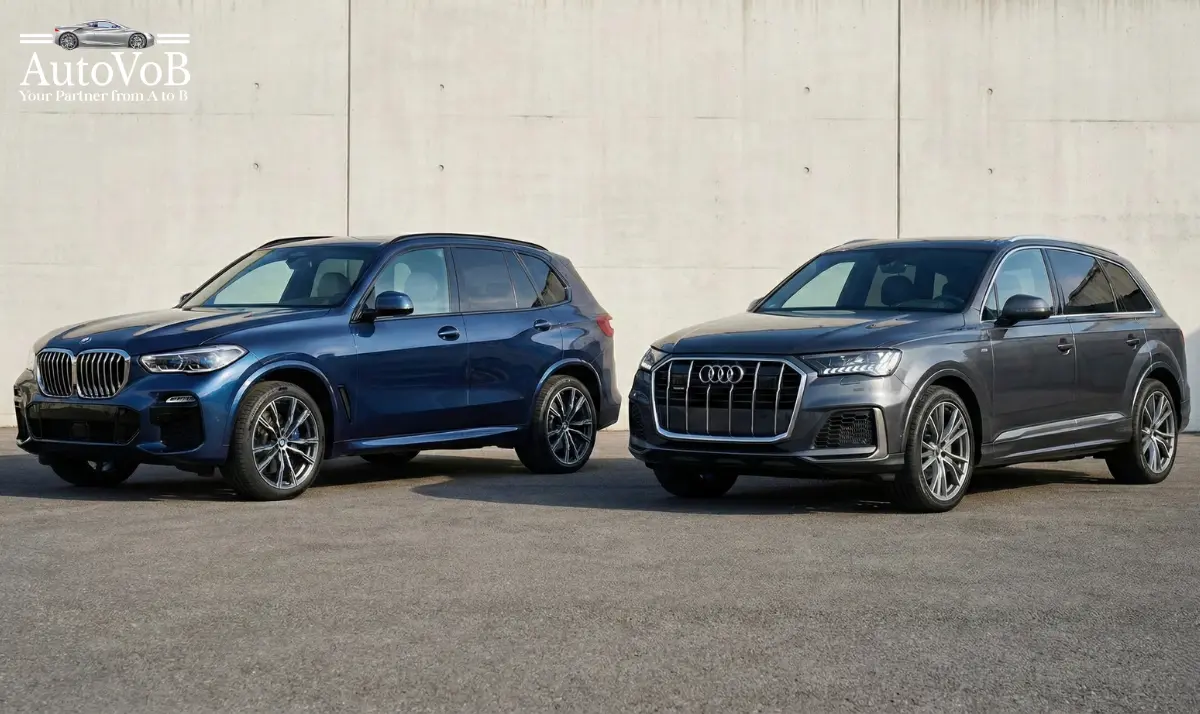
When you stack the BMW X5 vs Audi Q7 side by side, the X5 comes across as the sharper driver’s SUV, while the Q7 leans more towards space, comfort, and value, especially for families in the UAE. What this really means is you are not choosing between good and bad; you are choosing between two different priorities: driving dynamics versus three-row practicality and price.
Quick overview: BMW X5 vs Audi Q7
Let’s break it down with the basics first.
- The BMW X5 is a midsize luxury SUV with a focus on performance, strong acceleration, and a very polished, tech-heavy cabin.
- The Audi Q7 is a three-row luxury SUV that trades some sportiness for extra seats, comfort, and a slightly more relaxed driving feel.
- Both offer all-wheel drive, advanced safety tech, premium interiors, and strong brand presence, but they feel quite different once you actually drive them.
Performance and driving feel
Here’s the thing: if driving pleasure sits high on your list, the BMW X5 is hard to ignore.
- The latest X5 range offers powerful engines, including a 3.0‑liter mild-hybrid inline‑six around 375 hp and strong torque, plus even more brutal V8 and plug‑in hybrid options depending on market.
- Reviewers consistently highlight the X5’s quick 0–100 km/h times, responsive steering, and a chassis that feels closer to a sporty sedan than a bulky SUV.
The Audi Q7, on the other hand, takes a more balanced, comfort-first approach.
- In many markets the Q7 offers a 2.0‑liter turbo four-cylinder or a 3.0‑liter V6, with outputs around 261 hp for the 2.0 and about 335 hp and 500 Nm for the V6, paired with Audi’s quattro all‑wheel drive and an 8‑speed automatic.
- The Q7 still accelerates briskly and feels stable, but its character is more about smoothness and refinement than outright aggression, especially when equipped with adaptive air suspension.
So in pure performance terms, the X5 feels more eager and engaging, while the Q7 feels calm, composed, and confidence‑inspiring for long family trips.
Space, practicality, and comfort
If you regularly carry more than five people, the Audi Q7 starts to make a lot of sense.
- The Q7 comes as a 7‑seater, making it a natural fit for larger families or anyone who needs occasional third-row seating without jumping to a huge full‑size SUV.
- The second row is spacious and comfortable, and while the third row is best for kids or shorter adults, it gives you flexibility the X5 simply does not.
The BMW X5 usually prioritizes five-seat comfort, with some configurations offering an optional third row depending on market, but that row is tight.
- The X5’s cabin shines in material quality and tech, with a wide curved display running BMW’s latest iDrive system, premium finishes, and an emphasis on the front and second row experience.
- Boot space is generous, especially in five-seat form, and the X5 feels very practical for everyday use, but not as naturally family-focused as the Q7 with its standard seven seats.
What this really means is: if your life involves regular school runs with more than two kids or frequent group trips, the Q7 has the edge; if it is usually four or five people and you care more about how the SUV drives, the X5 is more satisfying.
Technology, features, and cabin experience
Both SUVs load you up with tech, but they do it with different flavors.
- The BMW X5 offers a high‑resolution curved display with iDrive 8.x, advanced driver aids, and premium features like panoramic roof, ambient lighting, ventilated seats, and high‑end audio on higher trims.
- The interface is modern and snappy, with a mix of touch, rotary controller, and voice control, appealing to drivers who like a slightly more driver‑centric cockpit.
The Audi Q7 counters with a clean, minimalist layout that still feels luxurious.
- You typically get the Audi Virtual Cockpit digital cluster, twin center screens for infotainment and climate, and features like matrix LED headlights, adaptive cruise assist, 360‑degree cameras, and multi‑zone climate control depending on trim.
- The Q7’s interface can feel more button‑light and design‑focused, which some buyers love for its simplicity and others find slightly less tactile than traditional controls.
In short, the X5 leans harder into a tech‑showcase impression, while the Q7 mixes tech with a clean, understated cabin that feels very typically Audi.
BMW X5 price in UAE and Audi Q7 price in UAE
Now to the part your UAE readers really care about: actual pricing.
New car models set the benchmark.
- The BMW X5 price in UAE typically starts around AED 391,000 for base trims, climbing to AED 520,000 or more for loaded versions like the xDrive40i M Sport or M Competition.
- The Audi Q7 price in UAE begins lower, around AED 339,000, with top trims nearing AED 415,000 depending on options and dealer deals.
Used car models offer serious value if you are smart about mileage, service history, and specs.
- Low-mileage used BMW X5 (like 2025 xDrive40i M Sport with under 20,000 km and warranty) list from AED 314,000 to AED 380,000, while older but solid 2021–2023 units drop to AED 250,000–AED 290,000.
- Used Audi Q7 (2025 models with around 17,000 km) go for about AED 185,000–AED 440,000, and recent 2019–2021 examples hover at AED 84,000–AED 215,000 for well-kept, higher-mileage units.
So in headline terms, the Audi Q7 undercuts the X5 at both new and used entry levels, which is why many UAE buyers see it as the better value proposition if they want a seven‑seat luxury SUV. At the same time, the X5 holds its premium positioning even in the used market, reflecting its performance edge. If you are writing or advising buyers, it is smart to remind them that dealer promotions, warranty packs, service contracts, and full inspections can shift the real‑world gap quite a bit, so checking current listings on sites like DubiCars or YallaMotor is essential.
Fuel economy and running costs
When you compare the BMW X5 vs Audi Q7 on efficiency, you are mostly looking at engine choice and how often the car will deal with city traffic versus long highway runs.
- For example, a diesel‑powered X5 variant can offer around 12 km/l in mixed conditions in markets where it is available, which helps with long‑distance cruising and lowers fuel costs for high‑mileage drivers.
- Petrol X5 models with mild‑hybrid tech balance performance and economy, but their focus still leans towards power rather than extreme efficiency.
The Q7, typically running petrol engines in many regions, delivers around 11 km/l for the 3.0‑liter V6 variant, with the 2.0‑liter turbo offering slightly better consumption but less punch.
In the UAE, where fuel is relatively affordable but distances and heat are real factors, both SUVs will be costlier to run than smaller crossovers, but neither is outrageous for its class. Service packages, extended warranties, and tyre choices can have just as much impact on long‑term costs as the small difference in fuel economy between them.
Also Read: Toyota Yaris vs Honda City, Practical Sedan Comparison
Which SUV should you pick?
So, when someone searches for bmw x5 vs audi q7, what answer actually helps them decide?
Choose the BMW X5 if:
- You care a lot about how the SUV drives and want stronger performance and a more engaging feel behind the wheel.
- You are fine with five seats most of the time and want a cabin that feels a bit more driver‑focused and tech‑heavy.
- You are willing to pay a premium in the UAE for that mix of performance, badge appeal, and spec.
Choose the Audi Q7 if:
- You need a true seven‑seater more often than not and want your SUV to be a comfortable, quiet, family‑friendly space.
- You prefer a smoother, more relaxed drive rather than a sportier, sharper setup.
- You want strong features and a luxury badge while keeping the initial price lower than a comparable X5 in the UAE.
Bottom line: the BMW X5 vs Audi Q7 choice boils down to your life, not some absolute champ. Go X5 if you crave that driver’s thrill and standout presence. Pick the Q7 if practicality, better value, and legit seven-seat room in the UAE fit your routine,it makes its point without shouting.