Delivery Rider Crackdown: Dubai & Sharjah's New Traffic Rules
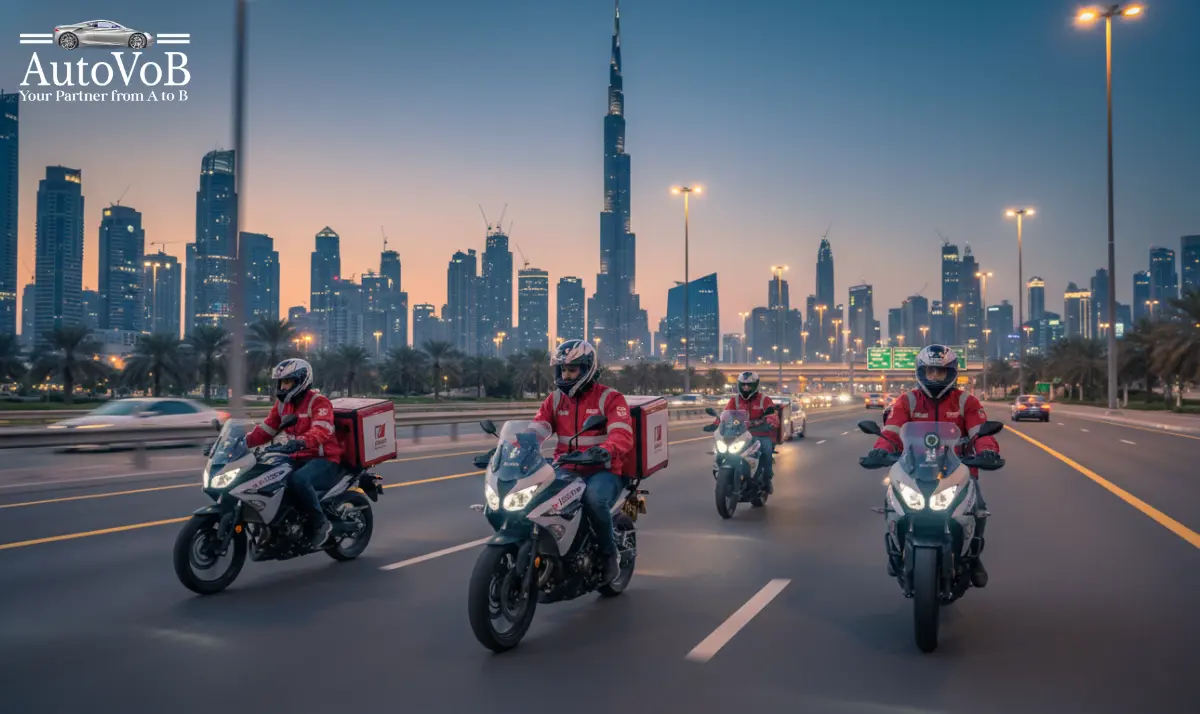
Dubai and Sharjah have seen a rapid increase in delivery motorcycle traffic, food, parcels, ecommerce, you name it. The flip side of that surge has been a spike in road accidents linked to delivery bikes, often involving risky maneuvers and high-speed lane usage. In response, authorities are now putting safety ahead of speed, moving from reactive policies to proactive governance. In short: the goal is fewer crashes, less chaos, and better protection for all road users.
Dubai’s Lane Ban: Where Riders Can Go
Starting November 1, 2025, Dubai’s Roads and Transport Authority (RTA), together with Dubai Police, is enforcing tough lane restrictions for delivery motorcycles. On roads with five or more lanes, delivery bikes are completely banned from using the two fastest (leftmost) lanes. For roads with three or four lanes, the ban applies to the leftmost lane. Two-lane roads, however, are fair game, riders can use whichever lane suits them.
The motivation here is simple: the fast lanes set the stage for risky riding, higher speeds, and quicker lane changes, prime conditions for accidents. The authorities tracked a sharp rise in incidents, plus tens of thousands of traffic violations from delivery riders in the last year alone. This rule is all about slowing things down in places where the stakes are highest.
To make compliance easier (and enforcement possible), the RTA has listed the lane bans clearly with new roadside signs and digital surveillance. If you ride for a delivery platform, staying in the right lane isn’t just about following the law, it’s about keeping your job and your delivery permit.
The Penalties: What Happens If You Break the Rules
The new regime in Dubai is tough, with escalating fines and real consequences around repeat offences. Here’s the breakdown:
- First offence: AED 500 fine
- Second offence: AED 700 fine
- Third offence: Permit suspension, meaning you can’t work as a delivery rider
Speeding violations (especially exceeding by 100 km/h) will land an AED 200 fine at first, ramping up to AED 400 for repeated offences. So not only are the lane bans enforced, your speed behavior is under sharper scrutiny too.
Companies distributing deliveries also face heat: they’re tasked with training and routing riders so they stay within permitted lanes. There’s an emphasis on digital monitoring, direct communication with the authorities, and liability for repeated infractions.
Sharjah’s Approach: Dedicated Lanes & High-Tech Enforcement
Sharjah is not taking a backseat. Authorities there have introduced a dedicated lane management system for motorcycles, heavy vehicles, and buses on major and secondary roads. On four-lane roads, motorcycles (including delivery bikes) are restricted to the two rightmost lanes; on three-lane roads, the middle or right lane only; on two-lane roads, just the far-right lane is allowed. The fast lane? Off-limits, always.
Heavy vehicles and buses must keep to the far-right lane at all times. This keeps slower, larger vehicles away from areas where speed and agility could lead to disasters.
What sets Sharjah apart is its technology-driven monitoring. Smart radars, high-def cameras, and 24-hour traffic patrols make sure violations don’t slip through the cracks. Those who break the rules face fines as steep as AED 1,500 and may accumulate 12 traffic black points if they’re driving heavy vehicles in the wrong lane or ignoring lane signs.
Why These Rules Target Delivery Riders
The delivery boom is great for convenience, but it comes with added risks. Delivery riders, under pressure from customers and companies to deliver quickly, sometimes resort to riding in fast lanes, weaving between vehicles, and taking chances that regular commuters wouldn’t dare try. The crackdown isn’t just about punishing riders; it’s about resetting expectations and creating clearer boundaries. With thousands of accidents recorded every year, and violations approaching 80,000 for delivery motorcycles alone, rules had to get stricter.
These measures signal to both riders and employers that safety cannot be sacrificed for speed. The authorities want to make sure every road user, including delivery riders themselves, gets home safely.
Impact on Delivery Platforms and Riders
Here’s the thing: delivery times may get a bit longer, especially during rush hours, since riders can’t take the quickest lane to zip through traffic. Platforms are now required to reroute deliveries, train staff, and keep a watchful eye on compliance. For freelance riders and company-employed drivers alike, understanding the new lane maps and speed limits is essential for daily survival, not just for keeping your job, but also for avoiding hefty fines.
Some riders have welcomed the rule change, saying that it brings more predictability and fairness on the road. Others point out that customer pressure is still strong, and hope the public will be patient while riders adapt to a safer way of moving.
What Customers and Drivers Should Expect
Look, your food or package might take a bit longer to reach your doorstep. But safer roads benefit everyone. The crackdown should lead to:
- Fewer accidents involving delivery motorcycles, especially at peak times and in busy districts
- Better lane discipline, clearer separation between fast movers and delivery bikes
- Improved traffic flow, especially on multi-lane roads
If you’re driving in Dubai or Sharjah, you’ll notice more signboards, more monitoring, and more disciplined movement of delivery bikes. In the bigger picture, this could mean faster commutes and fewer scary moments at intersections or during lane changes.
The Big Picture: Road Safety First
Both Dubai and Sharjah are rolling these rules into broader traffic-safety strategies that also touch on road engineering, new signs, lane markings, smart cameras, and public awareness campaigns. Authorities want drivers, riders, and platforms to be informed and responsive, for smoother, smarter urban mobility.
This isn’t about slowing down delivery for the sake of it. It’s about balancing fast commerce with meaningful safety. And in a region that thrives on rapid growth and innovation, it makes sense to put a few speed bumps in the way if it means saving lives.
Also Read: Latest Car Safety Features in the UAE Explained
Final Word
The message from Dubai and Sharjah is crystal-clear: fast food doesn’t justify fast lanes. If you’re working as a delivery rider, or operating a fleet, make compliance your top priority. For everyone else, expect your roads, and your commutes, to gradually get safer and more predictable, with delivery bikes finally having their own space to move.
By keeping riders out of the fast lane and doubling down on enforcement, both emirates are hoping for quieter emergency rooms and less tragedy pouring out from what should just be a quick meal delivery. Knowing the rules now means avoiding trouble tomorrow, and that’s something every smart driver or rider should take seriously.