Car Engine Parts and Their Functions
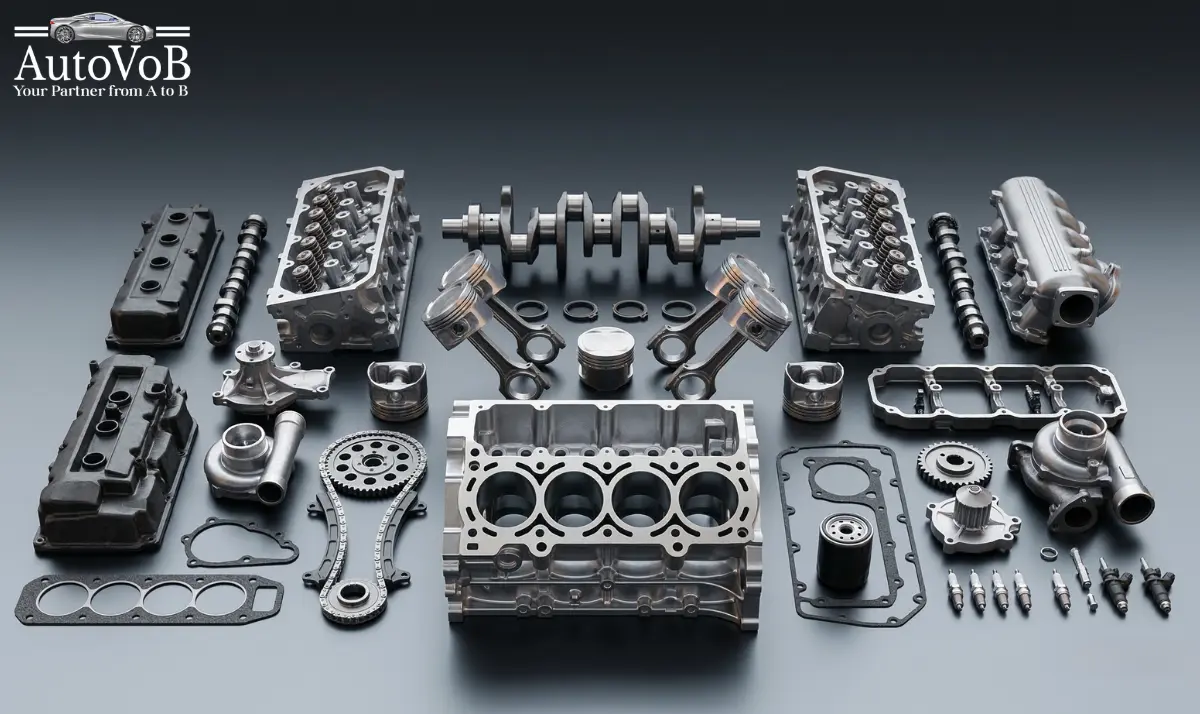
Every vehicle relies on its engine to produce power and keep the car moving. At the heart of this system are several components working together with precise timing and coordination. Understanding car engine parts and their functions helps drivers appreciate how their vehicle operates and why regular maintenance is essential.
A car engine may look complicated from the outside, but its operation follows a clear mechanical process. Air and fuel enter the engine, combustion occurs, and the resulting energy moves various components that ultimately turn the wheels. Each part has a specific role in this process.
Below is a clear breakdown of the most important engine components and what each one does.
Engine Block
The engine block is the structural foundation of the engine. Almost every other component attaches to it in some way.
It is usually made from cast iron or aluminum and contains cylinders, coolant passages, and oil galleries. The block must be strong enough to handle extreme temperatures and high pressure created during combustion.
Inside the engine block, pistons move up and down within the cylinders. These movements create the mechanical force that eventually powers the vehicle. Because the engine block houses so many vital components, any damage to it can severely affect the entire engine.
Cylinders
Cylinders are the chambers where combustion takes place. Most modern vehicles have four, six, or eight cylinders depending on the engine design.
Inside each cylinder, a piston moves vertically as fuel and air ignite. The repeated upward and downward motion produces energy that drives the crankshaft.
Engines with more cylinders typically generate more power because combustion can occur in more chambers simultaneously. However, engines with fewer cylinders are usually more fuel efficient and simpler in design.
Pistons
Pistons are one of the most important car engine parts because they convert combustion energy into mechanical motion.
A piston is a cylindrical metal component that moves up and down inside a cylinder. When the air fuel mixture ignites, expanding gases push the piston downward. This movement creates the force needed to rotate the crankshaft.
Pistons also compress the air fuel mixture before ignition. This compression is necessary for efficient combustion and proper engine performance.
Each piston is connected to the crankshaft through a connecting rod, allowing energy to move from linear motion to rotational motion.
Crankshaft
The crankshaft plays a critical role in converting piston movement into usable engine power.
As pistons move up and down, the connecting rods transfer that motion to the crankshaft. The crankshaft then converts this vertical motion into rotational motion.
This rotation ultimately powers the vehicle's transmission and drives the wheels.
Crankshafts are carefully balanced components designed to withstand continuous stress and vibration. If a crankshaft fails, the engine will stop functioning completely.
Camshaft
The camshaft controls the opening and closing of engine valves. These valves regulate the flow of air fuel mixture into the engine and allow exhaust gases to leave after combustion.
The camshaft rotates in synchronization with the crankshaft. Specially shaped lobes on the camshaft push valves open at precise moments during the engine cycle.
Accurate valve timing is critical for engine performance. If the camshaft timing is incorrect, the engine may lose power, consume more fuel, or even suffer mechanical damage.
Valves
Valves act as gates that control airflow in and out of the cylinders.
There are two main types of valves in an engine.
Intake valves allow the air fuel mixture to enter the cylinder before combustion.
Exhaust valves release burnt gases from the cylinder after combustion has occurred.
These valves must open and close thousands of times per minute while maintaining a perfect seal. Even a small malfunction can reduce engine efficiency and cause power loss.
Spark Plugs
Spark plugs are responsible for igniting the air fuel mixture inside the cylinders.
When the piston compresses the mixture, the spark plug produces a small electric spark. This spark triggers combustion, creating the explosion that pushes the piston downward.
Spark plugs must operate under extreme heat and pressure. Over time they can wear out or accumulate deposits, which may lead to misfires or poor engine performance.
Regular inspection and replacement of spark plugs helps maintain smooth engine operation.
Timing Belt or Timing Chain
The timing belt or timing chain ensures that the camshaft and crankshaft rotate in perfect synchronization.
This coordination keeps valve operation aligned with piston movement. Without proper timing, valves may open at the wrong moment, which can lead to severe engine damage.
Timing belts are typically made of reinforced rubber and need replacement after a certain mileage interval. Timing chains are metal and generally last longer but still require maintenance.
Ignoring this component can lead to costly engine repairs if it fails unexpectedly.
Fuel Injectors
Fuel injectors deliver the correct amount of fuel into the engine cylinders.
Modern engines rely on electronic fuel injection systems to control fuel delivery with precision. Injectors spray fuel in a fine mist, allowing it to mix evenly with air before combustion.
Accurate fuel injection improves engine efficiency, performance, and emissions control.
If fuel injectors become clogged or malfunction, the engine may experience rough idling, reduced power, or increased fuel consumption.
Oil Pump
The oil pump ensures that engine components remain properly lubricated.
Engines contain many moving parts that generate friction and heat. The oil pump circulates engine oil through channels in the engine block and cylinder head.
This oil forms a protective film between moving surfaces, reducing wear and preventing overheating.
Without proper lubrication, engine parts would quickly deteriorate due to friction and heat buildup.
Cooling System Components
Engines generate a tremendous amount of heat during operation. The cooling system prevents overheating by regulating engine temperature.
Key cooling system components include the radiator, water pump, thermostat, and coolant passages.
The water pump circulates coolant through the engine block, where it absorbs heat. The coolant then flows to the radiator where heat is released into the air.
Maintaining proper engine temperature ensures efficient combustion and protects sensitive components from thermal damage.
Cylinder Head
The cylinder head sits on top of the engine block and seals the combustion chamber.
It contains several critical components including valves, spark plugs, and sometimes camshafts depending on engine design.
The cylinder head also manages airflow through intake and exhaust ports. Because it is exposed to intense heat and pressure, it must be precisely engineered to maintain a tight seal with the engine block.
A damaged cylinder head gasket can lead to coolant leaks, oil contamination, and serious engine problems.
Air Intake System
The air intake system ensures that clean air enters the engine for combustion.
Air first passes through the air filter, which removes dust and debris. Clean air then travels through intake ducts and into the engine cylinders.
The correct air fuel mixture is crucial for efficient combustion. Too much fuel or too little air can reduce engine performance and increase emissions.
Regularly replacing the air filter helps maintain optimal engine operation.
Exhaust System
Once combustion occurs, exhaust gases must be safely expelled from the engine.
The exhaust system carries these gases away from the engine and reduces harmful emissions. Major components include the exhaust manifold, catalytic converter, and muffler.
The catalytic converter plays an important role in converting harmful gases into less harmful emissions before they exit the tailpipe.
A well functioning exhaust system improves fuel efficiency, reduces noise, and helps meet environmental standards.
How These Parts Work Together
While each component has its own role, the true power of an engine comes from coordination between all these parts.
The process begins when air and fuel enter the cylinder. The piston compresses the mixture, the spark plug ignites it, and the explosion pushes the piston downward. The crankshaft converts this motion into rotation, which ultimately powers the vehicle.
At the same time, the camshaft manages valve timing, the oil pump provides lubrication, and the cooling system controls temperature. Every component operates with precise timing and coordination.
If even one part fails, the entire system can suffer.
Why Understanding Engine Parts Matters
Knowing the basic car engine parts and their functions helps car owners make smarter decisions about maintenance and repairs.
It also makes it easier to understand warning signs such as unusual noises, overheating, or poor performance. Recognizing how the engine works encourages better care of the vehicle and helps extend its lifespan.
Regular servicing, oil changes, and inspections ensure that these components continue to operate efficiently for many years.
Also Read: How Does a Car Engine Work Explained Simply
Final Thoughts
A car engine may contain hundreds of individual components, but its core operation depends on a handful of essential parts working together. From pistons and crankshafts to fuel injectors and cooling systems, each component contributes to the engine's ability to generate power.
Understanding car engine parts is not only useful for mechanics. Any vehicle owner can benefit from knowing how these systems function and why proper maintenance is necessary.
For more such informative blog keep following AutoVoB blogs.