Best Cars for Careem and Uber Drivers in UAE
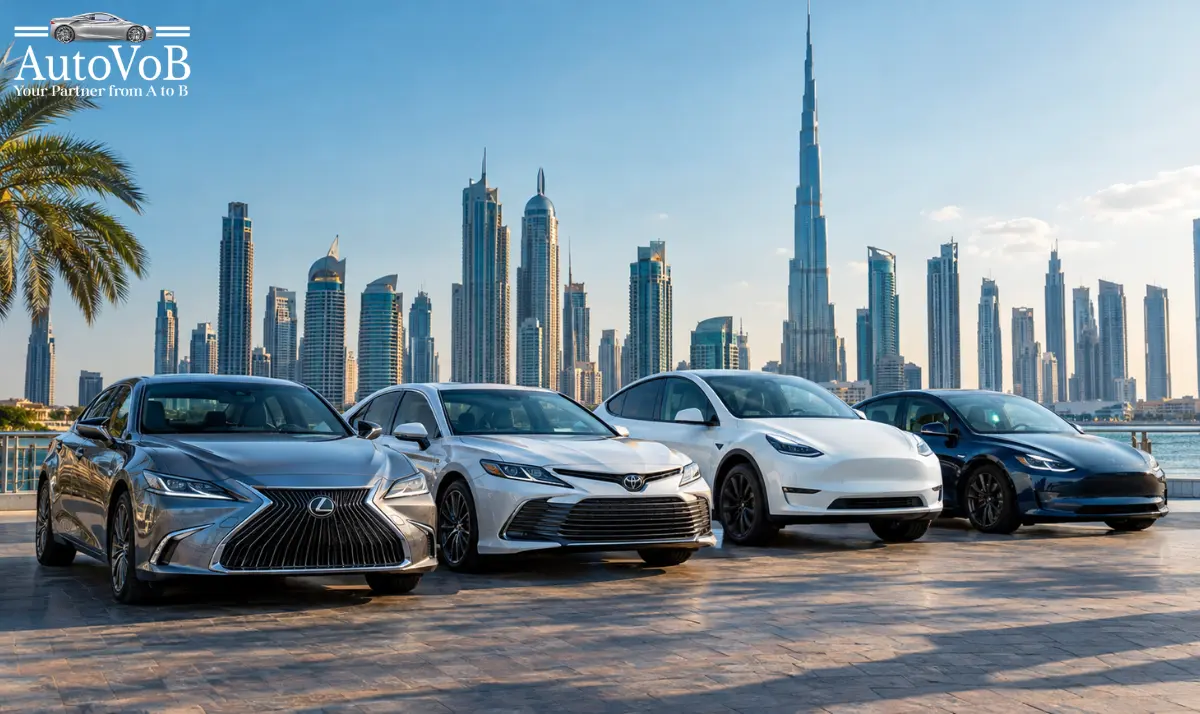
Most people hunting for the best car for Uber in the UAE start with the wrong question. In Dubai, the car you drive for Uber or Careem has to sit under an RTA-licensed limousine company, so the fleet you join decides more than the badge on the bonnet. Once you understand that, choosing the best car for Careem or Uber gets a lot simpler, and a lot of the advice floating around online stops making sense.
Here's how the rules work right now, which cars earn their keep, and what I'd ask a fleet for if the choice were mine.
Who actually picks the car
Careem is blunt about it. Your car must be owned by you or by the limousine company you're registered with, and rental cars aren't accepted. The Mulkiya has to be registered under a limousine company too.
Uber's UAE rules follow the same logic. It accepts vehicles approved by the RTA in Dubai, ITC in Abu Dhabi and SRTA in Sharjah for a limousine company, and only in the city where they're registered. Expat drivers in Dubai need to be limousine drivers on an RTA-registered company's visa. The one real exception is for Emirati nationals in Abu Dhabi, who can drive a private car registered in their own name or a first-degree relative's, as long as it's no more than five years old.
Then there's the RTA's own rulebook for limousine franchises. Vehicles have to be brand new, full option and bought from a UAE dealer. Depending on the category, a limousine can operate for five or seven years from its date of manufacture, and electric vehicles always get the full seven.
So for most drivers, the practical question is which company to join and what it runs. If a fleet offers you a tired, high-mileage sedan with a year left on its operating life, that's your answer about the fleet.
What makes the best car for Careem and Uber in the UAE
Four things matter more than anything on a brochure.
Rear legroom comes first because it decides which trips you can take. Uber Comfort in the UAE asks for a 2021 or newer car with more legroom than the compact models on UberX, plus a driver rating of at least 4.85. Comfort fares start higher, and airport passengers with two suitcases notice a cramped back seat immediately.
Fuel is the second. Special 95 costs AED 3.69 a litre this September, up from AED 3.49 in August, and it hit AED 3.83 in June. When prices swing like that, a thirsty engine eats your margin before you've paid for anything else.
Third, the AC has to cope with a car that sits idling at a mall pickup in August with the doors opening every twenty minutes. Fourth is the direction the regulator is pushing. The RTA has long targeted 90% of Dubai's limousine fleet going hybrid or electric by 2026, with 65% hybrid and 25% electric.
Put those together and a petrol-only sedan is hard to justify for full-time driving. In my view, the best car for Uber work in the UAE today is a hybrid mid-size sedan with a long back seat, and the picks below start from there.
Lexus ES 300h: the default for good reason
When the RTA announced its green limousine plan, press coverage noted that most of Dubai's private hire cars were large Lexus ES and LS saloons. That hasn't changed much, and I don't think it's an accident.
On Uber's published Dubai list, the Lexus ES qualifies for UberX from the 2017 model year and for Comfort from 2021. It's quiet, the rear seat is properly long, and passengers read the badge as a step up from a taxi, which helps ratings. The 300h is the hybrid version, so it also fits where the RTA wants fleets to go.
The catch is price. UAE pricing guides list a new ES well above AED 200,000. That's why it makes most sense as a fleet car, where the company carries the purchase and you carry the driving.
Toyota Camry Hybrid: best value, if your fleet can register it
The 2026 Camry starts at AED 122,900 for the petrol XLE and runs to about AED 152,000 for the Limited Hybrid. Toyota UAE lists the Camry Hybrid from AED 125,900.
The fuel numbers explain why hybrids keep winning. Claimed economy is 16.9 km per litre for the petrol Camry and 27.8 for the hybrid. The RTA once put average limousine mileage at about 400 km a day. At that distance and September's Special 95 price, the petrol car burns roughly AED 87 of fuel a day against about AED 53 for the hybrid. Real-world figures in Dubai traffic will be worse than the claims for both, but the gap holds. Hybrid battery cover in the UAE runs eight years or 160,000 km.
One caution, and it's a big one. Uber's published Dubai list includes the larger Toyota Avalon, but I couldn't find the Camry on it when I checked. If your heart is set on a Camry for Dubai, get the limousine company to confirm in writing that it'll be accepted before any money changes hands. Rules and lists differ by emirate.
Going electric: Tesla Model Y and BYD Han
EVs have one advantage no petrol car can match in this business. The RTA lets electric limousines operate for seven years from manufacture, while several petrol categories get only five, and those extra two years change the depreciation maths for whoever owns the car.
The Tesla Model Y qualifies in Dubai for UberX and Green from 2017, Comfort from 2020 and Black from 2022. The 2026 model starts at AED 174,900. If you want a sedan, the BYD Han EV is eligible for Green and Black, and for Comfort from the 2021 model year. It starts at AED 199,900.
Charging isn't free, though. On DEWA's public network, registered users pay AED 0.70 per kWh plus VAT on AC chargers and AED 1.20 plus VAT on DC fast chargers. A driver who lives on DC chargers between shifts gives back a good slice of the fuel saving. An RTA study cited back in 2019 estimated lifetime savings of AED 30,000 for a hybrid limousine against AED 20,000 for an electric one. Charging prices have moved since then, so treat that as a warning, not gospel. Run your own numbers on your own mileage.
If you want the bigger fares
Uber XL in Dubai needs an RTA-approved limousine-registered SUV or minivan with independently opening doors. Uber's Dubai list shows the Toyota Sienna eligible for XL from 2017, and the Toyota Granvia eligible for XL from 2017 and for Comfort from 2020. For airport groups and families with luggage, a seven-seater earns more per trip. It also costs more to fuel and more to replace, so it only works if your fleet keeps it busy.
Before you sign with a fleet
Everything here reflects current data from the RTA, the platforms and official fuel and charging tariffs as of September 2026. The UAE government, the RTA, ITC, SRTA and the platforms themselves can change vehicle age limits, eligible models and requirements at any time. Check the latest rules with your limousine company and the relevant authority before you commit to a car, and ask the fleet to show you the vehicle's manufacture date on the Mulkiya so you know how many working years it has left.
If I were choosing today, I'd want a hybrid first. The Lexus ES 300h is the safe Dubai pick, the Camry Hybrid is the value pick wherever it's accepted, and an EV makes sense if you have cheap AC charging and a fleet that wants that seven-year operating life. Whatever you drive, the car has to earn more than it costs every single shift, and fuel is the cost you control the most.
FAQs
1. Can I use a rental car to drive for Careem or Uber in Dubai?
No. Careem says the car must be owned by you or by the limousine company you are registered with, and rental cars are not accepted. Uber in Dubai also requires a vehicle registered to an RTA-approved limousine company, so a normal rental car will not qualify for either app.
2. What is the best car for Uber Comfort in the UAE?
A roomy hybrid sedan such as the Lexus ES 300h is the safest pick. Uber's Dubai list accepts the ES for Comfort from the 2021 model year, and Comfort in the UAE also needs a driver rating of 4.85 or higher plus more rear legroom than the compact UberX cars offer.
3. How old can a car be to work with Uber or Careem in Dubai?
It depends on the RTA category. Limousines can run for five or seven years from the date of manufacture, and electric vehicles get seven. Uber Comfort also sets its own minimum of a 2021 model year. Always check the manufacture date on the Mulkiya before joining a fleet.
4. Is a hybrid cheaper to run than a petrol car for ride-hailing?
Usually, yes. At 400 km a day and September 2026's Special 95 price of AED 3.69 a litre, a petrol Camry uses about AED 87 of fuel a day on claimed figures, against about AED 53 for the Camry Hybrid. Real traffic raises both numbers, but the gap stays wide.
5. Are electric cars worth it for Careem and Uber drivers in the UAE?
They can be. The RTA lets electric limousines operate for seven years, and the Tesla Model Y and BYD Han both appear on Uber's Dubai list. DEWA public charging costs AED 0.70 per kWh on AC and AED 1.20 on DC, plus VAT, so relying on DC fast chargers cuts the savings.
Stay connected with AutoVoB Blogs for the latest in the automotive world.