Car Modification Rules in UAE: What's Legal in 2026

The UAE has one of the most passionate car cultures in the world. Walk through any parking lot in Dubai or Abu Dhabi and you'll spot everything from blacked-out SUVs to lifted 4x4s built for desert runs. Modifying your car here is completely legal, but only within a defined framework. Step outside that framework and the consequences are serious: heavy fines, black points, vehicle impoundment, and in some cases, invalidated insurance.
If you're planning any kind of upgrade, understanding the car modification rules in UAE is not optional. It's the starting point.
Who Makes the Rules?
In the UAE, a modification is broadly defined as any change made to a vehicle that differs from its original manufacturer specifications. This covers everything from engine swaps and body kits to replacing standard seats, altering suspension height, or even repainting your car without notifying the relevant authority.
In Dubai, the Roads and Transport Authority (RTA) is the primary governing body. In Abu Dhabi, it falls under the Department of Municipalities and Transport. Other emirates have their own equivalent authorities, though the overarching principles remain consistent across the country.
In 2017, the UAE government introduced Decision Number 45 of 2016, requiring that any car modification must meet specific standards. This regulation became effective on June 1 of that year, outlining restrictions on changes to the engine, exhaust system, suspension, and other vehicle components. To comply, modifications must be carried out at approved garages and approved in advance.
Categories of Car Modifications
Car modifications in the UAE fall under three main categories: aesthetic modifications, which include tinted windows, exterior painting, alloy changes, and sunroof installations; performance-based modifications, which cover engine upgrades, suspension changes, brake alterations, and turbo installations; and car safety modifications, which include anti-theft devices, reversing cameras, blind-spot warning systems, and collision mitigation systems.
Each category has its own rules, and not everything within these categories is permitted by default. Some require pre-approval, some fall within defined limits, and others are outright banned.
What Modifications Are Allowed?
Several modifications are permitted in the UAE, provided they meet regulatory standards and, in most cases, receive prior approval.
Window Tinting: Tinting is legal in the UAE. Front windows can have up to 50% visibility, while rear windows can be darker. Company vehicles follow a 30% visibility rule. Anything beyond these limits on front windows is a violation.
Exhaust Systems: Many aftermarket exhaust systems are available, but they must comply with the noise limit of 95 decibels as approved by the RTA. Going beyond that threshold invites a fine and black points.
ECU Remapping: Engine remapping is allowed, but only if the modified vehicle still meets UAE emissions standards. The key is that the change must be documented and inspected.
Exterior Wraps and Paint: Changing the colour of your car is allowed, but it must be officially recorded. Once the respray or wrap is complete, you need to update your vehicle registration documents to reflect the new colour. Driving a car in a colour that doesn't match your registration card is a violation, even if the work was done professionally.
Interior Upgrades: You can upgrade seat covers, dashboard restoration, and roof upholstery, but the interior upgrade should not affect safety features. Decorative lights such as ambient or star lights are permitted as long as they do not affect visibility or distract other drivers.
Safety Additions: Adding reversing cameras, blind-spot detection systems, and anti-theft devices is generally welcomed and falls within legal modification territory.
What Is Banned?
Some modifications are completely off the table, regardless of how well the work is done or which garage carries it out.
Removing or disabling any factory-fitted safety system, including airbags, anti-lock braking systems, and electronic stability control, is flatly prohibited.
Increasing engine displacement, installing uncertified turbochargers, or using nitrous oxide kits without a special technical permit is considered unauthorized engine work. Removing catalytic converters or installing straight pipes that push noise levels beyond the legal 95-decibel limit is also illegal. Any cutting, welding, or drilling into the vehicle frame that compromises structural integrity is a chassis violation.
Neon lights and underglow LEDs are illegal unless fitted to emergency vehicles. Excessive suspension lowering that breaches the minimum ground clearance is also prohibited, as is tampering with license plates or VIN numbers, which can result in on-the-spot fines alongside legal consequences.
Window tints that block more than 50% of light on front windows are another hard line. A 70% tint is not allowed in Dubai.
How to Get RTA Approval for Car Modifications
Getting a legal modification done in the UAE follows a clear process, and skipping any step creates risk.
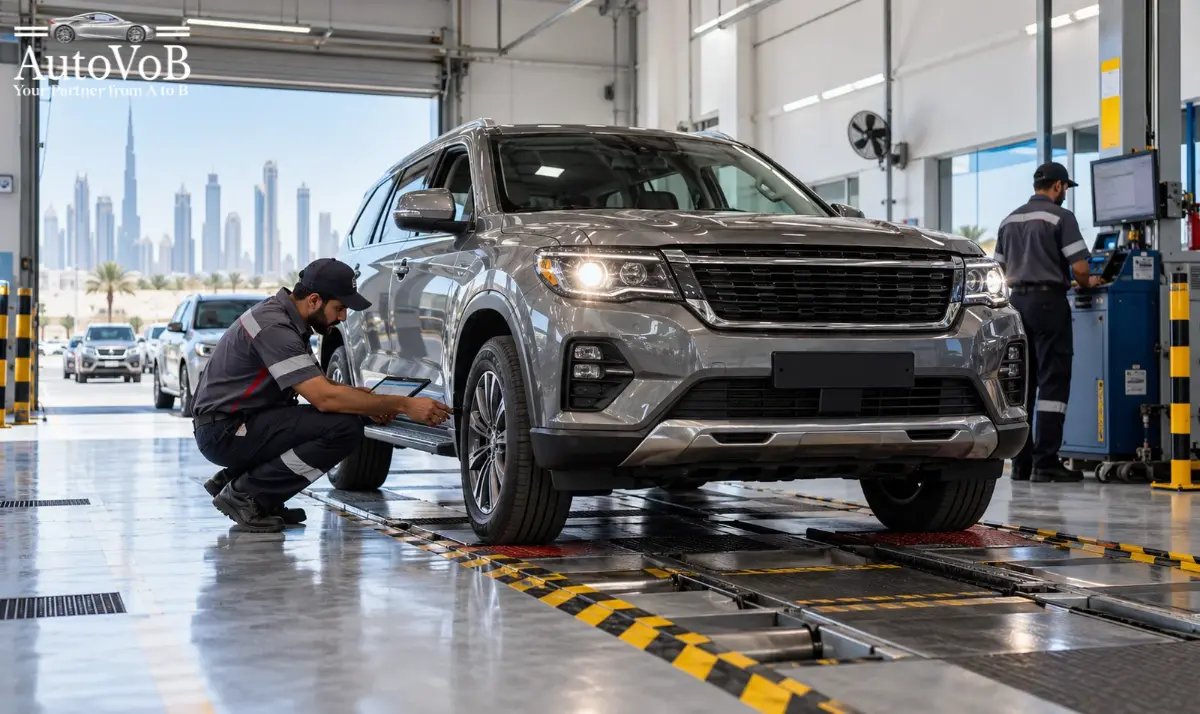
Visit an approved testing center such as Tasjeel, Shamil, or ADNOC centers. Present your car and describe the planned modifications. Submit the required documents including your Emirates ID, Vehicle Registration Card (Mulkiya), and modification details. The car will then be inspected, and if it passes, you will receive a modification approval certificate. This certification must be kept in the vehicle at all times, particularly during random inspections or when renewing registration. Once the modification is approved and certified, update your insurance policy as well. Failing to notify your insurer of significant changes can void your coverage in the event of an accident.
All modifications must be carried out in ESMA-approved garages. Always choose a licensed workshop with experience handling UAE-compliant modifications.
Fines and Penalties for Illegal Modifications
The UAE takes violations seriously, and the penalties reflect that.
Illegal engine modification can result in a fine of AED 1,000, 12 black points, and a 30-day vehicle impoundment. Police officers may also impound the vehicle on the spot. Multiple offenses can lead to license suspension or more severe penalties.
Fines can climb steeply, sometimes reaching AED 50,000 for engine or chassis modifications carried out without prior approval. In residential neighborhoods, noisy modifications can result in fines of up to AED 10,000. Many offenders also face black points on their license, impoundment of the vehicle, or invalidated insurance.
Beyond the financial hit, an illegal modification can make your car fail its annual registration renewal. At that point, the car cannot legally be driven on public roads until the modification is reversed or retroactively approved, which is not always possible.
Off-Road Vehicles: A Special Case
Dubai's love for off-roading is well established, and the 4x4 modification culture thrives in the region. However, even off-road vehicles are subject to RTA oversight. If your off-road vehicle is also your daily driver, it must pass all public road safety standards, regardless of how rugged it looks.
Lift kits, oversized tyres, and custom bumpers designed for desert use fall into a grey area. Some are approvable; others are not. The safest approach is always to consult an RTA-recognized garage before spending money on parts.
Abu Dhabi vs Dubai: Are the Rules the Same?
While the overarching principles of car modification rules apply across the UAE, Abu Dhabi has its own vehicle inspection and registration process managed separately from Dubai's RTA. The rules are very similar, but Abu Dhabi has historically been known for stricter on-the-spot enforcement, particularly around window tinting and suspension modifications. If you're registered in Abu Dhabi, verify current guidelines directly with the Department of Municipalities and Transport before proceeding.
Why Following the Rules Actually Makes Sense
There's a practical case beyond just avoiding fines. Legal modifications come with documented proof, which matters when you're selling the car. A buyer will pay more for a car with a certified modification than for one with unknown, unapproved work under the hood. Legal modifications boost a car's market value, make it safer and more reliable on the road, allow easier registration renewal, and result in better resale value with documented upgrades.
The rules around car modification rules in UAE exist for a reason, and in most cases, working within them still gives you plenty of room to personalize your vehicle the way you want.
Also Read: Vehicle Maintenance Laws in the UAE: What Owners Must Know
FAQs
1. Is car modification legal in the UAE?
Car modification is legal in the UAE, but only through an approved process. You must obtain prior authorization from the relevant authority, such as the RTA in Dubai or its equivalent in other emirates. Any modification carried out without official approval is considered illegal and may result in fines, black points, or even vehicle impoundment.
2. What is the noise limit for modified exhaust systems in the UAE?
The legal noise limit for any exhaust system in the UAE is 95 decibels. If a modification causes your vehicle to exceed this limit, it is considered illegal. Authorities strictly enforce this rule, and violations can lead to a fine of AED 1,000 along with 12 black points on your driving license.
3. Can I tint my car windows in the UAE, and what are the limits?
Window tinting is permitted in the UAE, but within specific limits. For personal vehicles, front windows must allow at least 50 percent light transmission, while rear windows can be darker. Company vehicles are subject to stricter rules, typically requiring 30 percent visibility. Using tints that exceed the allowed limits, especially on front windows, is a violation. In Dubai, 70 percent tint is specifically prohibited.
4. What documents do I need to get a car modification approved in the UAE?
To apply for modification approval, you generally need your Emirates ID, your Vehicle Registration Card (Mulkiya), and a detailed description of the proposed modifications. These documents must be submitted at an approved testing center such as Tasjeel or Shamil. Once your vehicle passes inspection, you will receive a modification certificate that should be kept in the vehicle at all times.
5. What happens if I modify my car without RTA approval in the UAE?
Driving a vehicle with unapproved modifications can result in serious penalties. Fines typically start from AED 1,000 and can go up to AED 50,000 in severe cases, especially for major engine or chassis changes. You may also receive 12 or more black points, face vehicle impoundment for up to 30 days, and risk invalidating your insurance. Additionally, the vehicle may fail its annual registration test, making it illegal to drive.
For more such informative blogs, keep following AutoVoB blogs