BYD Seal vs Tesla Model 3: Quick Verdict
If you want maximum range, efficiency, and charging convenience, the Tesla Model 3 still has the edge. If you care more about a plush cabin, generous standard kit, and a more conventional feel, the BYD Seal makes a very strong case for itself, especially in markets like India and Europe.
Design and first impressions
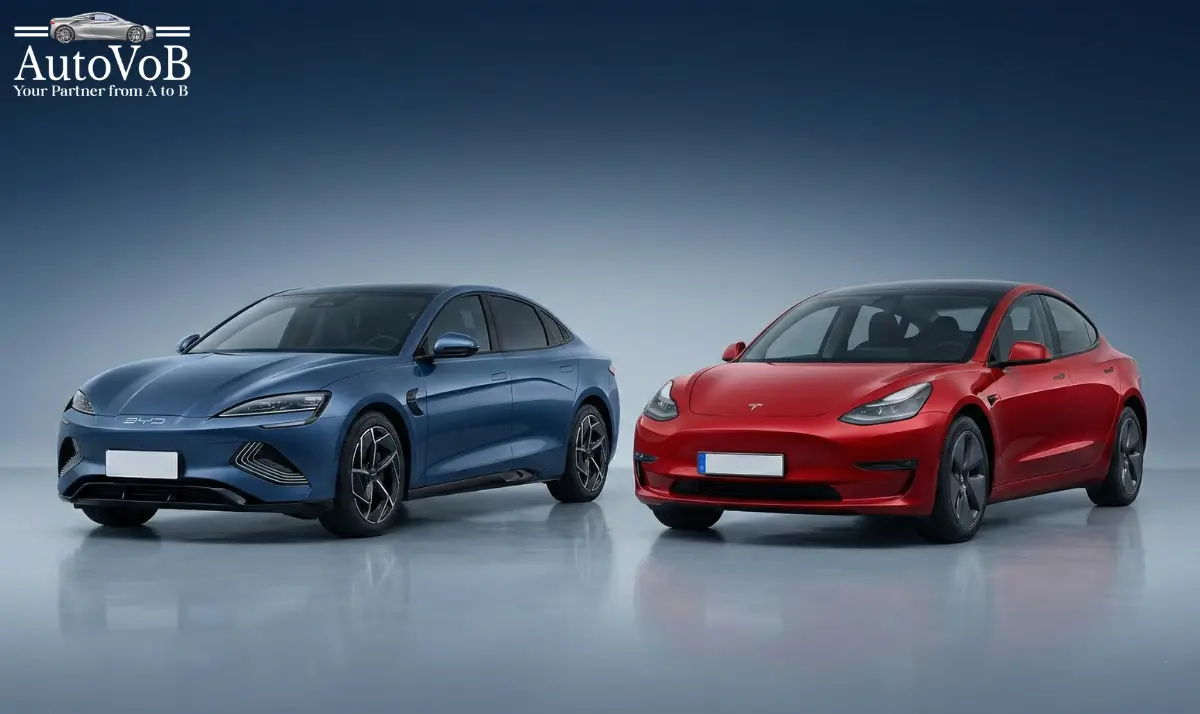
Both cars sit in the same mid-size electric sedan segment: low, sleek, and clearly aimed at buyers who want something more premium than a typical family hatchback. The Model 3 Highland refresh sharpened the styling with slimmer headlights, cleaner bumpers, and better aerodynamics, which help its efficiency story.
The BYD Seal leans into a sportier, more sculpted look with longer overall length and slightly wider stance than the Tesla. In person, it feels closer to a shrunken luxury sedan, with strong character lines and a more aggressive rear, and that resonates with buyers who still like their EV to look a bit like a traditional performance car.
Power, performance, and range
Let’s break it down. The Tesla Model 3 Highland range starts with a single‑motor rear‑wheel‑drive version and goes up to dual‑motor all‑wheel‑drive Long Range in most markets. The rear‑wheel‑drive Model 3 does 0–100 km/h in around 6.1 seconds, while the Long Range AWD cuts that to about 4.4 seconds.
The BYD Seal line-up typically starts with a rear‑wheel‑drive Dynamic or base model, then a longer‑range RWD or Premium trim, and finally a dual‑motor Performance AWD variant. The base Seal manages roughly 0–100 km/h in about 5.9 seconds, and the dual‑motor Performance version can drop that to about 3.8 seconds, making it quicker than many versions of the Model 3 except the wild Performance spec.
Range is where Tesla strikes back. The latest Model 3 Highland RWD offers up to around 513 km WLTP, while the Long Range AWD can stretch to roughly 629 km WLTP depending on wheels. The BYD Seal’s usable ranges vary by market but typically sit around 510–650 km on certain generous test cycles, with real‑world and WLTP figures usually lower than the headline numbers and generally a bit behind the best Tesla variants when you compare like‑for‑like.
Battery, charging, and efficiency
Here’s the thing: day‑to‑day ease of use depends a lot on how fast you can add meaningful range. The Model 3 Highland RWD uses around a 60 kWh battery and can accept up to about 170 kW DC fast charging, while the Long Range AWD pack is larger and can charge at up to 250 kW. In practice, you can add roughly 170–180 miles of range in 15 minutes on a capable Supercharger.
The BYD Seal typically uses a larger battery in its higher trims, around 82 kWh, but its maximum DC fast‑charge rate sits closer to 150 kW. BYD quotes 10–80 percent in about 37 minutes under ideal conditions, which is decent, but not quite as quick on a km‑per‑minute basis as a Model 3 Long Range at a strong DC station.
On efficiency, Tesla still enjoys an advantage. The Model 3 Highland’s aerodynamics and software tuning give it very competitive energy consumption numbers per kWh. The Seal is not far behind and is efficient for its size and power, but the combination of slightly higher weight and less aggressive aero means it usually trails the Tesla by a small but noticeable margin on longer journeys.
Interior, tech, and user experience
Both cars are minimalist, but they take different paths. The Model 3 strips things back to one central touchscreen, a clean dash, and almost no physical buttons, which some drivers love and others find a bit too dependent on menus. The Highland update improved materials, added ambient lighting, and refined the seats, so it no longer feels as stark as early Model 3s.
The BYD Seal goes for a more conventional cockpit: you get a digital driver display, a large central screen that can rotate in some markets, and more traditional switchgear. It often arrives fully loaded, with generous standard equipment, ventilated seats on some trims, and a cabin that feels closer to a luxury sedan than a tech gadget. If you or your passengers prefer a familiar layout with less dependence on that single central screen, the Seal has the upper hand.
One key difference is ecosystem. Even with recent opening to third‑party chargers, Tesla’s Supercharger network and tight integration between car, app, and navigation are still a major advantage for frequent long‑distance drivers. BYD relies more on the public charging landscape in each country, so your experience will depend heavily on local infrastructure.
Price, value, and ownership
Pricing shifts by region, but the pattern is fairly clear. In India, for example, the BYD Seal launches with ex‑showroom prices starting around ₹41 lakh and going up to around ₹53 lakh for the Performance variant. That places it against premium EVs like the Kia EV6 and Hyundai Ioniq 5 and makes it a significant step up over mass‑market EVs on price.
In European markets and the UK, the Model 3 often starts slightly lower than the Seal on entry trims but moves higher as you climb to Long Range and Performance versions. The Seal counters with richer standard equipment out of the box, so once you factor in options, the price gap can shrink, and sometimes the BYD feels like more metal and more kit for similar money.
Resale is another angle smart buyers watch. Tesla has a longer track record, stronger brand recognition, and proven demand in the used market, which tends to support residual values. BYD is growing quickly and improving its brand pull, but its long‑term resale profile outside China is still developing, so buyers should watch local market data closely, especially if they usually switch cars every three to five years. That’s where tracking how these models are priced among used cars over the next few years will tell an important part of the story.
Also Read: Audi A6 vs BMW 5-Series, a Clear Buyer’s Guide
So which one should you buy?
What this really means is the “right” choice depends on what you prioritise, not on a spec sheet winner. If you care most about range, charging speed, and a proven long‑distance ecosystem, the Tesla Model 3 is still the smarter bet for a lot of drivers. It’s efficient, quick enough in every trim, and backed by a mature charging network that makes life easy if you road‑trip often.
If you want a richer cabin, high equipment levels as standard, and performance that can embarrass sports cars in its top trim, the BYD Seal is hugely compelling. It feels more like a luxury EV sedan that happens to be priced below many European rivals, and in markets where BYD is aggressive on after‑sales and warranty, that value story becomes even stronger.
The smart move is to drive both. Pay attention to how you feel in traffic, how intuitive the controls are, how confident you are about charging in your actual routes, and how each monthly payment looks once incentives and home charging costs are factored in. Specs will get you close, but the car that fits your real life, your roads, and your driving style is the one that will make you happiest five years down the line.