Summer Tyre Blowouts in GCC: Causes & Prevention Tips
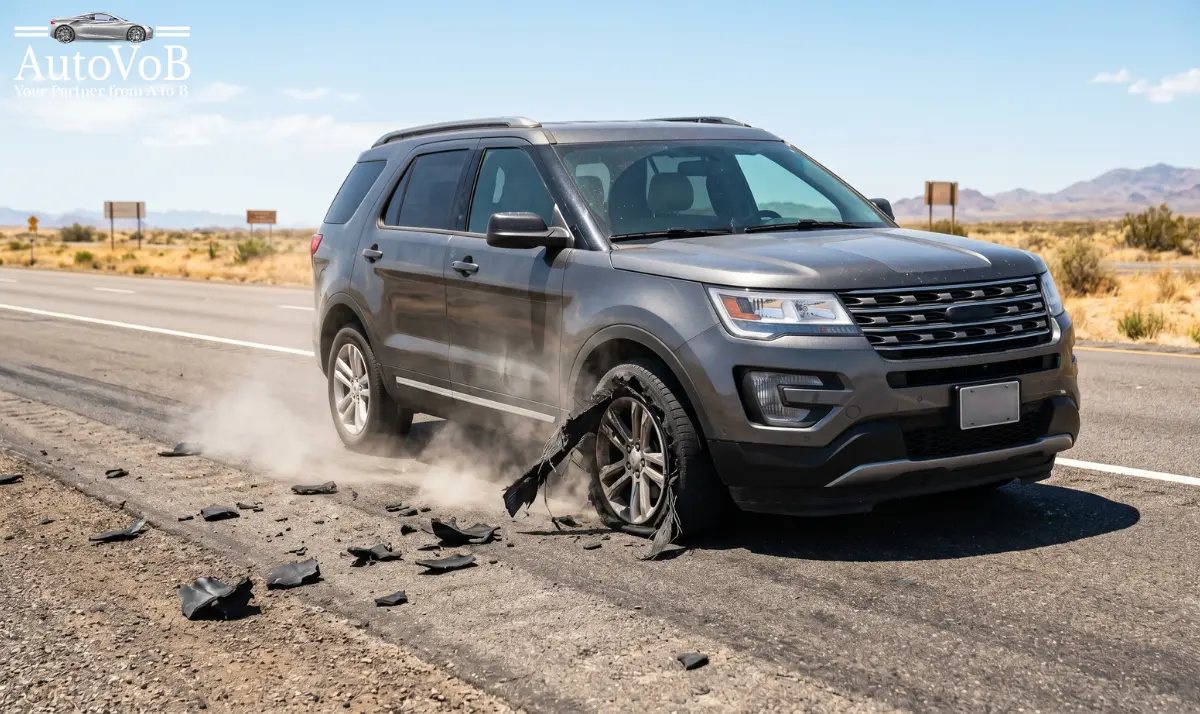
There is a reason tyre debris is a regular sight on GCC highways every June through September. Roads in the UAE, Saudi Arabia, Kuwait, and the rest of the Gulf cook under temperatures that regularly exceed 45°C, and that heat does not just make driving uncomfortable. It creates a specific set of conditions that push tyres to the edge of failure. Tyre blowouts are not just an inconvenience out here. In the UAE alone, tyre bursts account for roughly 5% of all traffic fatalities annually, and UAE traffic authorities issued over 18,000 violations for unsafe tyres in a single year. In Saudi Arabia, studies have pointed to tyre blowouts as a factor in nearly 30% of road accidents.
Understanding what actually causes a blowout, and what stops it, is something every driver in the GCC should know cold.
What Happens During a Tyre Blowout
A blowout is not a slow puncture. It is a sudden, explosive loss of air pressure. When it happens at highway speed, the vehicle lurches violently to one side, steering becomes a fight, and the window to correct course is measured in seconds. Unlike a slow leak, there is almost no warning before the tyre gives out.
The physics behind it are straightforward. A tyre fails when the internal air pressure, combined with structural stress, exceeds what the rubber and internal belts can hold. Heat is what pushes that equation over the edge.
Why Summer in the GCC Is Especially Dangerous for Tyres
Most of the world talks about summer tyre care. In the GCC, the stakes are on a different level entirely. Ambient temperatures in the Gulf regularly hit 45–50°C during peak summer months. But what your tyres are actually riding on is worse. Black asphalt in direct sunlight can reach surface temperatures of 70°C or higher. That is the actual environment your tyres are operating in for every kilometre of your commute or highway drive.
Heat accelerates every single failure mode a tyre has. Rubber compounds degrade faster. Steel belts lose tensile strength. Air pressure rises unpredictably. And drivers who have not checked their tyre pressure in weeks are rolling on tyres that are already compromised before they even turn the key.
The Main Causes of Tyre Blowouts in Summer
Underinflation: The Leading Cause
The single biggest cause of heat-related tyre failure is underinflation. It seems counterintuitive at first. You might expect overinflation to be the bigger risk in summer. But here is what actually happens with a tyre running low on pressure.
An underinflated tyre has a larger contact patch with the road. That means more surface area generating friction with every rotation. More friction means more heat generated inside the tyre itself. Add the already scorching road surface and ambient temperature, and the internal temperature of the tyre climbs quickly. Eventually, the bonds between the internal layers of rubber, fabric, and steel start breaking down. The result is a blowout.
For every 10°C rise in temperature, tyre pressure can increase by approximately 1–2 PSI. So a tyre that was slightly low in the cooler morning hours may be dangerously low in terms of structural support by afternoon, even if the gauge reads higher than it did at 7am.
Overinflation Is Not Safe Either
Drivers sometimes overcorrect, assuming more air means more protection in the heat. Overinflated tyres become rigid. They lose their ability to absorb road impacts. A pothole, a speed bump, or debris on the road that a properly inflated tyre would handle becomes a structural threat to an overinflated one. Uneven tread wear follows, creating weak spots. In GCC conditions, where roads can have hidden damage and debris, this matters.
The right answer is neither. It is maintaining the manufacturer-specified cold pressure, checked consistently.
Rubber Degradation from UV and Heat Exposure
Tyres are made from rubber compounds, and those compounds have a lifespan. Sustained UV exposure and extreme heat accelerate that degradation significantly. The rubber becomes brittle, develops micro-cracks, and loses its flex. This is particularly relevant in the GCC, where vehicles can sit on open parking lots in direct sun for hours every day. A tyre that looks fine to the naked eye can have compromised internal structure simply because of its age and exposure history.
UAE regulations require passenger car tyres to be sold within two years of manufacture and replaced within five years. That regulation exists for exactly this reason. In Gulf conditions, the five-year mark is not an aggressive standard. It is a sensible one.
Overloading the Vehicle
Every tyre has a load rating. Exceeding your vehicle's gross weight limit pushes more stress onto each tyre, generates additional heat, and raises blowout risk, especially when combined with summer temperatures. This applies to everything from family SUVs packed for a road trip to delivery vehicles running heavy loads on long desert stretches.
Old or Worn Tyres
Tread depth is not just about wet-road grip. Tyres with worn tread also have less material to dissipate heat. Thin tread means the heat generated at the contact patch has less distance to travel before reaching the internal structure. In summer GCC conditions, a tyre at minimum tread depth is significantly more vulnerable than most drivers realise. The legal minimum in UAE is 1.6mm of tread depth, but replacing at that exact threshold leaves no safety margin on 50°C asphalt.
High-Speed Highway Driving
Long stretches on the Abu Dhabi to Dubai corridor, the Riyadh ring roads, or any Gulf highway at 120–140 km/h generate substantial heat through tyre flex and road friction. The longer the journey at high speed, the more heat accumulates. For a tyre that was already compromised by low pressure or wear, extended highway driving in summer is often the final trigger.
How to Prevent Tyre Blowouts in the GCC Summer
Check Pressure Regularly and at the Right Time
Check tyre pressure every two weeks during summer, and always before a long trip. The critical detail: check when the tyres are cold. That means the vehicle has been stationary for at least three hours or driven less than one kilometre. A hot reading after driving will be 4–8 PSI higher than the true cold reading and will give you a false sense of security.
The recommended pressure is on the sticker inside your driver-side door or in the owner's manual. Use that number, not what the tyre sidewall says (that is the maximum, not the target).
Do Not Let Out Air on a Hot Day
A common myth: releasing air from tyres in summer heat prevents blowouts by reducing pressure. This is wrong and dangerous. The cold-pressure recommendation from your vehicle manufacturer already accounts for the expected pressure rise during driving in hot weather. Releasing air only adds underinflation to the equation, which, as covered above, is the leading cause of heat blowouts.
Inspect Tyres Before Long Journeys
Look at each tyre. Bulges or bubbles on the sidewall indicate internal damage. Visible cracks in the rubber signal degradation. Uneven wear patterns across the tread surface mean something is off with alignment, inflation, or load distribution. Any of these should be addressed before you drive, not after.
Know Your Tyre's Age
The DOT code on the tyre sidewall contains a four-digit number showing the week and year of manufacture. A tyre made in the 22nd week of 2019 shows "2219." If your tyres are approaching five years old, have them inspected by a professional, even if they look fine. In GCC heat, internal degradation can be well ahead of visible signs.
Rotate Tyres Every 10,000 km
Rotation ensures even wear across all four tyres. Uneven wear creates hot spots, and hot spots are where blowouts start. It is one of the lowest-cost maintenance steps available and one of the most effective for extending tyre life in demanding conditions.
Park in Shade Wherever Possible
Parking in direct sun adds hours of UV exposure and heat soak to your tyres every day. Over weeks and months, this compounds rubber degradation significantly. Underground parking or shaded spots are not just more comfortable. They are genuinely better for your tyres.
Choose Tyres Rated for Heat
Not all tyres are built equal for desert conditions. When replacing tyres in the GCC, look for products from reputable brands rated for high-heat performance. The GCC Standardization Organization (GSO) mandates compliance certification for all tyres sold in the region. Stick to certified products from established manufacturers. The cost difference between a budget tyre and a quality one is far less than the cost of a blowout at highway speed.
What to Do If a Blowout Happens
Stay off the brakes immediately. Braking on a blown tyre makes loss of control worse. Hold the steering wheel firmly, keep the car as straight as possible, and let the vehicle decelerate naturally. Only once the speed is down to around 40 km/h should you gently steer toward the hard shoulder or emergency lane and bring the car to a controlled stop. Switch on hazard lights and exit the vehicle away from traffic before calling for assistance.
Also Read: When to Change Car Tyre, Complete Guide for Smart Drivers
FAQs
1. Why are tyre blowouts more common in GCC countries during summer?
The GCC experiences some of the harshest driving conditions for tyres anywhere in the world. Ambient temperatures above 45°C, combined with asphalt surface temperatures that can reach 70°C or higher, push tyre materials well beyond what most roads globally demand. These conditions accelerate rubber degradation, increase air pressure inside tyres, and amplify the consequences of underinflation or wear. When you add long highway drives and a high proportion of vehicles running on older or under-maintained tyres, the blowout rate rises sharply during summer months.
2. Should I release air from my tyres in summer to avoid blowouts?
No. This is one of the most persistent and dangerous tyre myths in circulation. Your vehicle manufacturer’s recommended cold pressure already accounts for the temperature-related pressure increase that happens during normal summer driving. Releasing air creates underinflation, which is the number one cause of heat-related blowouts. Never adjust pressure based on a hot reading. Always check cold and inflate to the number on your door sticker or owner’s manual.
3. How often should I check tyre pressure during summer in the UAE or Saudi Arabia?
Every two weeks at minimum, and always before any journey that involves significant highway driving. The key is checking when the tyres are cold, meaning the vehicle has not been driven for at least three hours. Hot readings taken immediately after parking are meaningfully higher than actual cold pressure and can mask an underinflation problem. A quality tyre pressure gauge costs very little and takes under five minutes to use. It is worth the habit.
4. How do I know if my tyres are too old to be safe in summer heat?
Check the DOT code on the tyre sidewall. It ends in a four-digit number: the first two digits are the week of manufacture, the last two are the year. A tyre showing "1820" was made in the 18th week of 2020. UAE regulations require tyres to be replaced within five years of manufacture. In GCC conditions, approach the five-year mark as a firm limit rather than a rough guideline, and have any tyre beyond three years inspected regularly by a professional, even if it appears to have good tread remaining.
5. What are the warning signs that a tyre might blow out?
The most visible sign is a bulge or bubble on the tyre sidewall. That indicates internal structural damage and the tyre should be replaced immediately without further driving if possible. Other warning signs include visible cracking in the rubber, tread that is worn unevenly or down to the wear indicator bars, a vehicle that pulls noticeably to one side, and any soft or spongy feeling through the steering. If your TPMS warning light comes on, do not dismiss it. Check the pressure on all four tyres before continuing.
For more such informative blogs, keep following AutoVoB blogs.