Car Insurance in UAE: Comprehensive vs Third-Party Explained
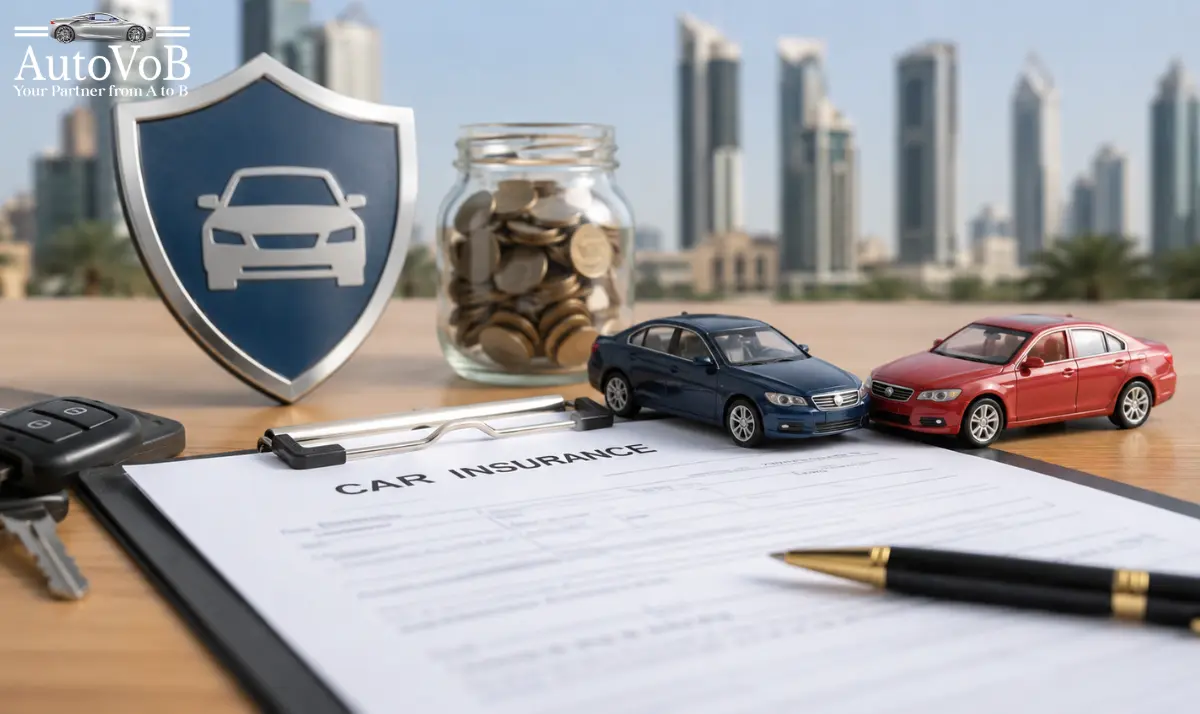
You cannot register a car in the UAE without insurance. The law settles that part for you. What it leaves open is the decision that actually costs or saves you money: comprehensive or third-party. Car insurance in UAE comes in exactly two legal forms, and picking the wrong one means either overpaying by a couple of thousand dirhams a year or eating an uncovered repair bill that runs into five figures. Here is how to get it right.
What the Law Actually Requires
Every registered vehicle must carry third-party liability cover at minimum. That is federal law, and the RTA in Dubai or the licensing authority in your emirate will not renew your Mulkiya without a valid policy. The market is regulated by the Central Bank of the UAE, which absorbed the old Insurance Authority in 2020, and every insurer sells cover built on the same Unified Motor Vehicle Insurance Policy wording. That matters more than people realize. The legal minimums are identical across all licensed insurers, so a cheap third-party policy and an expensive one deliver the same core protection.
Those minimums are serious. Third-party property damage is covered up to AED 2 million per accident. Bodily injury carries no fixed cap; courts decide compensation, including blood money of AED 200,000 per death. Drive without insurance and you are looking at a AED 500 fine, four black points, and your car impounded for a week.
One legal quirk is worth knowing before you buy. UAE motor policies run 13 months, not 12. The extra month exists to cover the 30-day registration grace period. Read the fine print, though. On many comprehensive policies the 13th month covers third-party liability only, while agency repair, GCC cover, and own-damage protection quietly expire at month 12. If you plan an Oman trip in that window, confirm your cover in writing first.
Third-Party Insurance: The Legal Floor
Third-party cover pays for damage you cause to other people, their cars, and their property. That is the whole product. Your own car gets nothing, even if the crash was not your fault and the other driver turns out to be uninsured or untraceable.
It is cheap because it is thin. Expect to pay somewhere between AED 650 and AED 1,500 a year for a standard sedan, depending on the insurer and your record. For a ten-year-old Corolla worth AED 14,000, that is a rational bet.
The gaps hurt when they hit. Theft, fire, vandalism, and flooding are all excluded. The April 2024 storms made that lesson expensive: cars parked in low-lying parts of Sharjah, Deira, and Ajman were written off with zero payout because their owners held third-party policies. If your car sleeps outdoors in a flood-prone area, weigh that before congratulating yourself on a cheap premium.
Comprehensive Cover: What You Are Actually Paying For
Comprehensive insurance includes everything third-party does, plus damage to your own vehicle from collisions, fire, and theft. Most policies on the market now include or offer natural disaster cover, personal accident benefits for the driver and passengers, and off-road or GCC extensions as add-ons.
Pricing typically lands between 1.5 and 3 percent of your car's current market value per year. A sedan worth AED 80,000 should cost roughly AED 1,500 to AED 2,800 to insure comprehensively on a clean record. Luxury cars, modified cars, and drivers under 25 pay more, sometimes dramatically more.
The single biggest variable inside a comprehensive quote is repair type. Agency repair sends your car to the official dealership workshop with original parts. It costs more, but it protects resale value and service history, which matters for cars still under warranty. Garage repair uses the insurer's approved workshops and is noticeably cheaper. My rule after years of watching this play out: agency repair for the first three years or while the warranty runs, garage repair after that. Paying agency-repair premiums on a 2018 car you already service at an independent workshop is burning money.
Two add-ons deserve a hard look. First, natural disaster or flood cover, because standard wording at some insurers still excludes it, and plenty of comprehensive policyholders discovered that the hard way in 2024. Second, GCC cover if you ever drive to Oman or Saudi Arabia, because a UAE policy stops cold at the border without it.
Comprehensive vs Third Party Insurance: The Math That Decides It
Strip away the marketing and comprehensive vs third party insurance is an arithmetic problem. Take your car's current market value, get a comprehensive quote, and divide.
If the premium sits at 3 percent of the car's value or less, comprehensive is usually worth it. Flip the numbers and it falls apart fast. If your car is worth AED 12,000 and comprehensive costs AED 1,400, you are paying nearly 12 percent of the car's value every year to protect it, and even a total-loss payout barely justifies that. Somewhere around a market value of AED 15,000 to 20,000, comprehensive stops making financial sense for most drivers, and third-party becomes the smarter buy.
Three situations override the math. If your car is financed, the bank requires comprehensive cover, so the choice is made for you. If a sudden AED 15,000 repair bill would genuinely hurt, comprehensive is your buffer regardless of what the car is worth. And if your daily commute involves Sheikh Zayed Road at 8am, your accident exposure is simply higher than the person doing short suburban runs, and the premium buys real protection rather than peace of mind.
What Moves Your Car Insurance Price in UAE
Insurers here price risk in layers. Age matters: drivers under 25 carry heavy loading. Your UAE driving history matters more than your home-country record, and a fresh UAE license can cost you 10 to 40 percent extra even with 15 years behind the wheel elsewhere. Some insurers will honor a no-claims certificate from the UK, Europe, or other GCC states, but ask before buying rather than assume.
The no-claims discount is the lever most people underuse. Each claim-free year builds a discount that transfers between insurers with a certificate, while a single at-fault claim can inflate your car insurance price in UAE for up to three renewal cycles. That is exactly why experienced drivers here pay for small scratches out of pocket instead of claiming.
The market itself rewards shopping. Quotes for identical driver profiles routinely vary 10 to 30 percent between insurers. Loyalty buys you nothing; the renewal notice your current insurer sends is an opening offer, not a final price.
Buying Online Car Insurance in UAE Without Getting Burned
Buying online car insurance in UAE is now the default, and it is genuinely faster: enter your Emirates ID and plate number, get live quotes from licensed insurers, pay, and receive an e-policy that links straight through to the registration system. The convenience creates its own trap, which is sorting by price and clicking the cheapest number.
Before you pay, check four things. The deductible, because a AED 1,600 policy with a AED 3,000 excess is not actually cheap. The repair type, agency or garage. Whether natural disaster cover is included or sold separately. And what the 13th month really covers. Five minutes of reading beats a very bad afternoon at claim time.
Neither policy type is better in the abstract, and anyone who tells you otherwise is selling something. Comprehensive is the right call for anything new, financed, or expensive to fix. Third-party is the right call for an aging car you could replace out of pocket without losing sleep. Do the percentage math on your own vehicle, read the exclusions once, and requote every renewal. That is the whole game.
Also Read: Car Modification Rules in UAE: What's Legal in 2026
FAQs
1. Which car insurance is best in UAE?
No single insurer is best for everyone. The best car insurance in the UAE is the policy that matches your risk: comprehensive with agency repair for new or financed cars, third-party for vehicles worth under roughly AED 20,000. Compare at least three quotes and check the deductible before deciding.
2. How to check car insurance policy online in UAE?
Log into your insurer's website or app to view your e-policy, or check the insurance linked to your vehicle through the RTA site or app in Dubai and your emirate's licensing portal elsewhere. Enter your plate or chassis number to confirm the policy type, the insurer, and the exact expiry date.
3. What is the difference between comprehensive and third-party insurance in the UAE?
Third-party insurance covers only the damage and injury you cause to others; your own car gets nothing. Comprehensive covers that liability plus your own vehicle against collision, fire, and theft, with add-ons like flood and GCC cover. Third-party is the legal minimum; comprehensive is optional.
4. How much does car insurance cost in the UAE?
Third-party policies typically run AED 650 to 1,500 per year. Comprehensive usually costs 1.5 to 3 percent of your car's market value, meaning about AED 1,500 to 2,800 for an AED 80,000 sedan on a clean record. Age, UAE license tenure, claims history, and insurer choice all shift the final number.
5. Is third-party insurance enough for an old car in the UAE?
Usually, yes. Once a car's market value falls below roughly AED 15,000 to 20,000, a comprehensive premium becomes a large slice of what the car is worth, and third-party is the rational buy. Remember it pays nothing for theft, fire, or flood damage to your own car, so park and drive accordingly.
Keep reading AutoVoB blogs for more informative articles.
AutoVoB, the trusted global marketplace for every kind of vehicle.