Synthetic vs Mineral Oil: Which One Does Your Engine Need?
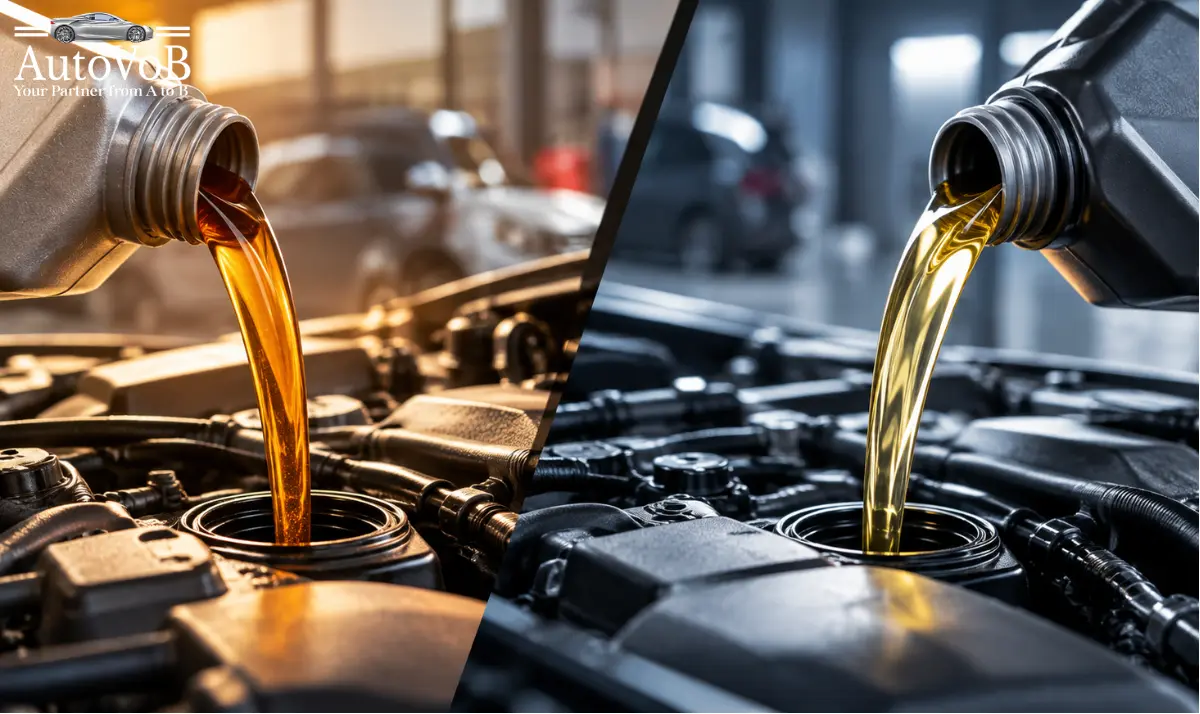
Pour mineral oil into a modern turbocharged engine and it’ll probably run. That doesn’t mean it should. The synthetic vs mineral oil debate gets louder than it needs to, because for most cars the answer is already printed in the owner’s manual, and the rest comes down to how you drive and how long you plan to keep the vehicle.
How synthetic vs mineral oil differs at the refinery
Mineral oil starts as crude. Refiners strip out impurities such as sulfur and wax, but the molecules that remain vary in size and shape. Synthetic oil is built to a tighter design, so its molecules are far more uniform. That uniformity is where the lower friction and the better behavior in heat and cold come from.
The American Petroleum Institute sorts base oils into five groups. Groups I, II and III come from crude. Group IV is polyalphaolefin, or PAO, a fully synthesized fluid. Group V covers everything else, including esters. Base oil makes up roughly 90 percent of a finished product, and additives fill the rest.
Group III is where the arguments start. It’s crude oil hydrocracked so hard that it behaves like a synthetic, and most countries let marketers sell it as one. Purists hate that. I think the label matters less than they claim, since a well-additized Group III oil can beat a poorly built PAO oil. Judge an oil by its approvals, not by the word on the front.
Synthetic oil benefits worth paying for
The best independent evidence comes from AAA. In a 2017 study, it compared 5W-20 synthetic oils from five major brands against their conventional equivalents across eight industry-standard tests. The synthetics came out an average of 47 percent better. The tests covered shear stability, deposit formation, volatility, cold pumpability and oxidation resistance.
Here’s what that looks like in daily use. Synthetic flows better in cold weather, so it reaches moving parts sooner on a cold start. It also resists breaking down and building deposits when the engine runs hot, which is why AAA pointed to turbocharged engines, stop-and-go traffic, towing and extreme temperatures as the places where synthetic helps most.
Age matters as much as heat. Mineral oil breaks down faster, and oil that’s pushed past its interval thickens and leaves sludge, which is how engines actually die. Synthetic gives you more margin when a service slips by a few weeks, though I wouldn’t treat that as permission to skip one.
It lasts longer in the sump too. General guidance puts mineral oil changes at roughly 5,000 to 8,000 km (3,000 to 5,000 miles) and synthetic at 12,000 to 24,000 km (7,500 to 15,000 miles), depending on the manufacturer’s approval. Your manual sets the real number, and hard driving shortens it.
None of this is free. Synthetic costs more per change, and the gap varies by market and brand. The longer interval claws some of that back, though not always all of it. If you follow the manufacturer’s schedule anyway, you’re paying for protection rather than savings. On any engine you plan to keep, I’d call that a fair trade.
The study is a few years old, but newer oil standards have only tightened the requirements for wear and high-temperature performance.
When mineral oil is still the smarter buy
Synthetic isn’t automatically the right answer. AAA itself said a manufacturer-approved conventional oil won’t harm an engine. If your manual allows mineral oil and you change it on time, you’re covered.
That usually describes older engines designed before synthetics became standard, and cars that cover few kilometers a year. Short intervals keep the oil fresh, and an engine that rarely sees long highway runs or heavy loads never pushes it hard. Paying more for a premium oil in that situation buys protection the car won’t use.
High-mileage engines need more thought. Deposits from years of conventional oil can mask worn seals, so a switch to synthetic sometimes exposes a leak that was already there. The new oil didn’t cause it. It just stopped hiding it. If an older engine already seeps at the gaskets or drinks oil, fix the seal before you blame the oil or spend extra on a premium grade.
Mixing is mostly a non-issue. Topping up synthetic with a little mineral oil won’t wreck anything, because a blend is exactly that. You just dilute what you paid for.
Synthetic blends and the label problem
A synthetic blend combines synthetic and mineral base oils. It sounds like a sensible middle, and sometimes it is. The trouble is that the ratio isn’t standardized, so one bottle might carry a meaningful share of synthetic stock and another very little. AAA left blends out of its testing because the category is loosely defined.
Treat a blend as a step up from mineral oil for a lightly stressed engine, not as a discount version of full synthetic. If your car is turbocharged, skip the blend and buy the real thing. And if a workshop offers a blend as an upgrade, ask what approval it carries before you say yes. A price that sits between mineral and full synthetic tells you nothing about what’s in the bottle.
Read the specification, not just the front label
Viscosity grade and approvals decide whether an oil suits your engine. API SQ and ILSAC GF-7 began licensing on March 31, 2025, for gasoline engines. They’re backward compatible, so a GF-7A oil can go where GF-6A or earlier oils were recommended. The new standards add stronger protection against low-speed pre-ignition, a problem in turbocharged direct-injection engines, along with better timing chain wear protection and high-temperature performance.
API SQ also covers ultra-thin grades such as 0W-8 and 0W-12, which some automakers now call for. If your manual asks for something that thin, mineral oil is effectively off the table. API has already pointed to ILSAC GF-8 for late 2028, and some automakers add their own approvals on top of API ratings. Diesel engines follow separate specifications, so if you drive one, read the diesel grade in your manual rather than the petrol standards above.
Everything here reflects current data and industry standards. Specifications, labeling practices and local regulations set by your country’s authorities can change at any time, so confirm with your manufacturer before you buy.
Also Read: Best Engine Oil in UAE: Price, Change & Expert Tips
What your oil history means when you buy or sell a car
Service records are where this choice pays off or costs you. If you’re buying used, ask which oil went in and how often it was changed. A car with receipts showing the correct specification on schedule is a safer bet than one where the seller thinks it was done recently. A clean dipstick tells you something, but paperwork tells you more.
If you’re selling, those receipts are cheap proof that the car was looked after. A line in the listing naming the oil type and the last change date builds trust faster than adjectives do. And don’t pay extra for a high-mileage car just because the seller mentions synthetic. Fresh oil can’t undo years of neglect.
Pick the oil your manual specifies, buy the best grade you’re willing to keep paying for, and change it on time. That routine matters more than the base oil debate. Drive a modern turbocharged car and you should buy synthetic without agonizing over it. Drive an older engine that’s happy on mineral oil, and staying put won’t hurt it.
FAQs
1. Is synthetic oil better than mineral oil?
Synthetic oil usually protects better. A 2017 AAA study found synthetics beat conventional oils by an average of 47 percent across eight standard tests. The gap matters most in turbocharged, stop-and-go, towing and extreme-temperature use, though approved mineral oil won’t harm an engine.
2. How often should I change synthetic vs mineral oil?
As general guidance, mineral oil needs changing roughly every 5,000 to 8,000 km (3,000 to 5,000 miles), while synthetic runs about 12,000 to 24,000 km (7,500 to 15,000 miles). Your manufacturer’s interval overrides both, and harsh driving shortens either one.
3. Can I switch an older car from mineral oil to synthetic?
Usually yes. Synthetic won’t damage an older engine, but if the seals are worn, cleaner oil can expose a leak that old deposits were hiding. Check the manual first, watch the dipstick after the switch, and fix any seepage instead of blaming the oil itself.
4. Can I mix synthetic and mineral oil?
Mixing won’t wreck an engine, since a synthetic blend is exactly that: a mix of synthetic and mineral base oils. You will dilute the synthetic you paid for, though. When topping up, stick to the viscosity grade and approval your owner’s manual calls for.
5. Is a synthetic blend worth buying?
A blend is a reasonable step up from mineral oil for lightly stressed engines. The synthetic share varies by brand, and AAA skipped blends in its testing because the category is loosely defined. For a turbocharged engine, full synthetic is the safer buy.
Stay tuned to AutoVoB Blogs for more such detailed automotive guides.